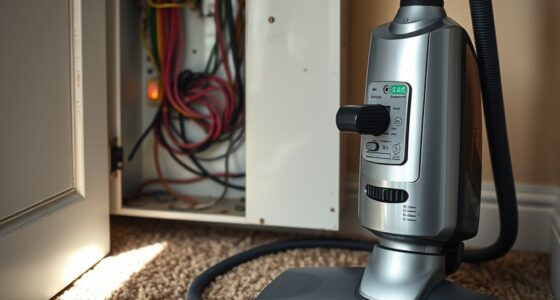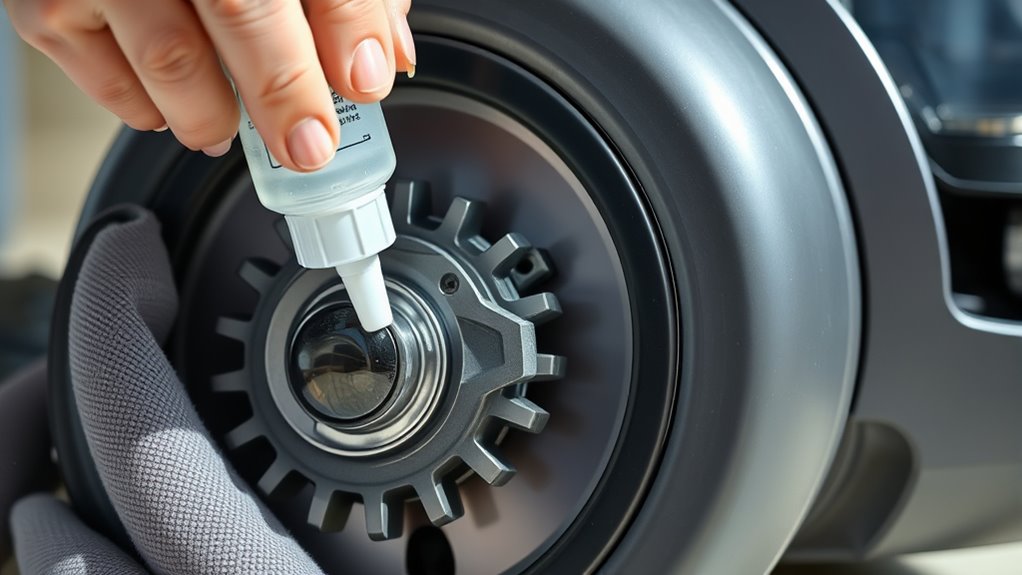

To stop squeaky wheels on your vacuum, first turn it off and unplug it. Check the wheels and moving parts for dirt or debris, then apply a small amount of light lubricant like machine oil to the wheel axles or bearings. Be careful not to over-lubricate, which can attract dirt, and wipe off excess. Performing regular maintenance helps reduce noise and prolongs your vacuum’s lifespan—continue with these steps to learn more about safe, effective lubrication.
Key Takeaways
- Turn off and unplug the vacuum before starting any lubrication to ensure safety.
- Inspect wheels for dirt, debris, or damage before applying lubricant.
- Use a small amount of light machine oil or manufacturer-recommended lubricant on moving wheel parts.
- Avoid over-lubricating to prevent dirt accumulation and ensure smooth rotation.
- Regularly clean and maintain wheels and bearings to prevent squeaks and prolong component life.

Proper lubrication of vacuum components is essential to guarantee smooth operation and extend their lifespan. When your vacuum starts squeaking or making unusual noises, it’s often a sign that some parts need attention, and lubricating the moving parts can make all the difference. One of the first things you should check is the belt. Over time, belts can wear out, become brittle, or slip, causing squeaks and reducing efficiency. Replacing the belt promptly not only stops the noise but also ensures your vacuum maintains ideal suction. Before replacing the belt, turn off the vacuum and unplug it to avoid accidents. Remove the vacuum cover or access panel as per your model’s instructions, and carefully take out the old belt, noting how it’s positioned. Installing the new belt is straightforward—just loop it around the motor pulley and the brush roll—making sure it sits snugly and evenly. Regular belt replacement prevents unnecessary strain on your motor and keeps your vacuum running smoothly.
Speaking of the motor, proper motor maintenance is vital to keep your vacuum functioning properly. Many issues like overheating, strange noises, or decreased suction can stem from a poorly maintained motor. Lubricating the motor’s moving parts, such as bearings or brushes, can considerably improve performance and longevity. Use a lubricant recommended by the manufacturer—usually a light machine oil or a specific motor lubricant—to avoid damage. Apply the lubricant sparingly to the motor shaft or bearing points, turning the motor gently by hand afterward to distribute it evenly. If your vacuum’s motor has brushes, inspect them regularly and replace them if they’re worn down. Cleaning the motor’s vents and filters also helps prevent overheating and guarantees proper airflow. Always follow your vacuum’s manual for detailed maintenance instructions, especially when it comes to motor care.
In addition to replacing the belt and maintaining the motor, don’t forget to keep other components well-lubricated and clean. Bearings, wheels, and other moving parts benefit from periodic lubrication to reduce friction and wear. Use the correct lubricants and avoid over-application, which can attract dirt and cause more harm than good. By staying on top of belt replacement and motor maintenance, you prevent squeaks and mechanical issues, ensuring your vacuum operates quietly and efficiently. Regular upkeep not only saves you money on repairs but also guarantees that your vacuum remains a reliable cleaning tool for years to come. With proper care, your vacuum will continue to perform at its best, making your cleaning routines easier and more effective.
Frequently Asked Questions
Can I Use Household Oils on Vacuum Parts?
You might wonder if household oils are suitable for vacuum maintenance. While it’s tempting, using household oils on vacuum parts isn’t recommended because they can damage seals and attract dirt. Instead, opt for specialized vacuum lubricants designed for these components. They provide proper lubrication without harming your vacuum’s mechanisms. Always follow the manufacturer’s instructions to guarantee safe and effective maintenance, keeping your vacuum running smoothly and quietly.
How Often Should I Lubricate Vacuum Components?
You should lubricate your vacuum components based on their maintenance frequency and lubrication schedule. Typically, check moving parts every three to six months, or when you notice squeaks or stiffness. Regular lubrication keeps parts running smoothly and prevents damage. Follow the manufacturer’s guidelines for the best results, and avoid over-lubricating. Staying consistent with your maintenance schedule guarantees your vacuum stays efficient and quiet.
Are There Any Risks of Over-Lubricating?
Like trying to keep a dial-up connection steady, over-lubricating can lead to component damage. You should be cautious about over-lubrication risks because too much oil can attract dirt, cause buildup, or make parts slip. Applying just the right amount guarantees smooth operation without harm. Remember, more isn’t always better. Proper lubrication maintains your vacuum’s longevity and performance, so avoid the temptation to overdo it.
What Signs Indicate a Need for Lubrication?
You’ll notice a need for lubrication if your vacuum belt squeaks or the wheels feel stiff when turning. These signs show that parts aren’t moving smoothly, often due to lack of lubrication. Ignoring these cues can lead to more damage or wear. Regularly check your vacuum and apply lubricant where needed to keep everything running quietly and efficiently, preventing further issues down the line.
Can Lubrication Damage the Vacuum’S Seals?
Ever wonder if lubrication could harm your vacuum’s seals? It’s a valid concern. Using the wrong lubricant or one incompatible with your vacuum’s materials can damage the vacuum seal, causing leaks or reduced efficiency. Always check the manufacturer’s recommendations for lubricant compatibility. Properly chosen lubricants won’t harm your vacuum seal and will keep your vacuum operating smoothly. Would you risk damaging your appliance with an unsuitable lubricant? Probably not.
Conclusion
By lubricating your vacuum components regularly, you keep it running smoothly like a well-oiled machine. Just remember, a little care goes a long way—neglect can turn a squeaky problem into a noisy nightmare. Think of your vacuum as a dance partner; with gentle moves and proper maintenance, you’ll enjoy a silent, efficient performance every time. So don’t let squeaks steal the show—give your vacuum the TLC it deserves, and it’ll serve you quietly for years to come.