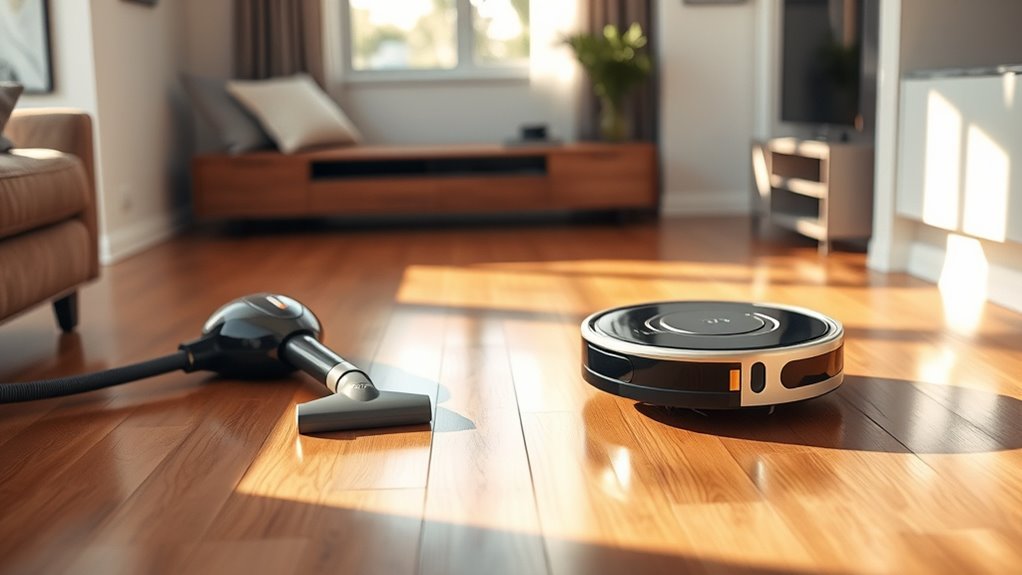

When it comes to cost and convenience, robot vacuums offer hands-free cleaning that’s perfect for busy lives. They save you time with automated routes and smart navigation. However, they usually come with a higher upfront cost. On the other hand, manual vacuums are budget-friendly and offer direct control, ideal for larger spaces requiring extensive cleaning. You’ll want to weigh the benefits of automation against the price. There’s a lot more to contemplate when choosing the right vacuum for you.

Get cleaning gear delivered free — and shop member deals
- Fast, free delivery on millions of items
- Access to Prime Big Deal Days deals on October 6–7
- Prime Video, Amazon Music and more included
Key Takeaways
- Robot vacuums have higher upfront costs but offer long-term savings through automated cleaning, ideal for busy lifestyles.
- Manual vacuums are generally more budget-friendly and lack battery limitations, making them suitable for extensive cleaning tasks.
- Robot vacuums provide hands-free convenience, while manual vacuums require physical effort and direct control over cleaning.
- Battery life for robot vacuums ranges from 60 to 120 minutes, potentially limiting cleaning in larger homes without auto-return features.
- The choice between robot and manual vacuums depends on individual preferences for convenience versus hands-on control in cleaning routines.
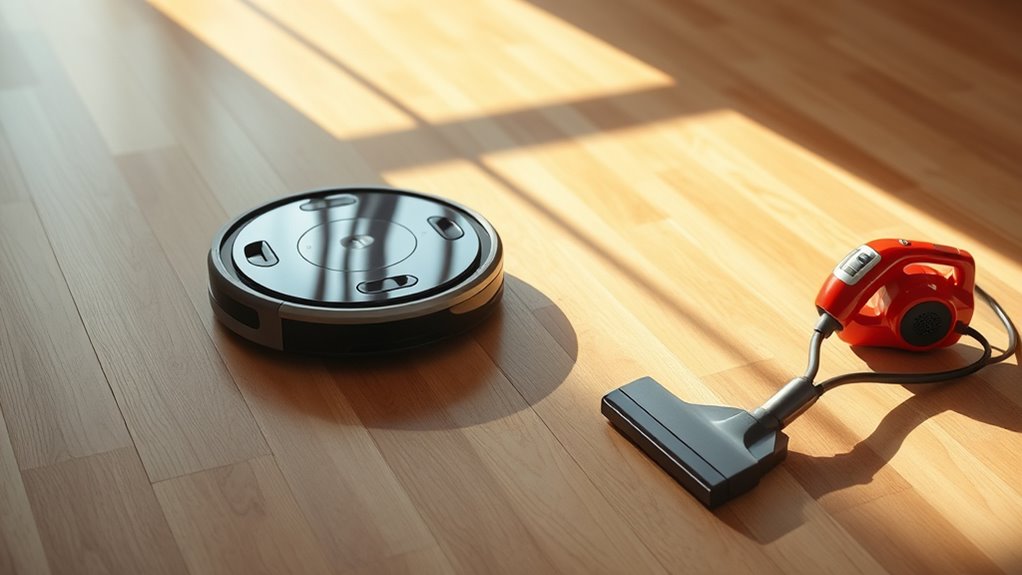
As technology advances, you might find yourself wondering if a robot vacuum is worth the investment compared to a traditional manual vacuum. With the hustle and bustle of daily life, the convenience of a robot vacuum can be tempting. Imagine coming home to a clean floor without lifting a finger. However, before diving in, it’s vital to weigh the pros and cons, especially when it comes to cost and convenience.
Robot vacuums come equipped with smart navigation systems, allowing them to map out your home and plan efficient cleaning routes. You’ll appreciate how they can avoid obstacles and adjust their cleaning patterns based on the layout of your space. This feature saves you time, as you won’t have to guide them around furniture or other barriers. On the flip side, manual vacuums require your attention and effort. You’ll need to push them around, which can be tiring, especially if you have a large area to clean.
Robot vacuums use smart navigation to efficiently clean your home, saving you time and effort compared to traditional manual vacuums.
Battery life is another essential aspect to consider. A good robot vacuum can clean for 60 to 120 minutes on a single charge, depending on the model and the size of your home. If you have a smaller space, that battery life might be more than sufficient. However, for larger homes, you might need to invest in a model with a longer battery life or one that automatically returns to its charging dock when it’s low on power. On the other hand, manual vacuums don’t have this limitation. You can use them continuously as long as they’re plugged in, which can be more convenient for extensive cleaning tasks.
Cost is also a significant factor when deciding between the two. Robot vacuums generally have a higher upfront cost, while traditional vacuums are often more budget-friendly. However, consider the time you’ll save with a robot vacuum. If you can automate your cleaning routine, you may find that the investment pays off in the long run by freeing up valuable time for other activities. Additionally, just like Kia Sedona tuning, investing in a robot vacuum may enhance your overall home cleaning experience.
Ultimately, choosing between a robot vacuum and a manual vacuum boils down to your lifestyle and cleaning preferences. If you value convenience and can manage the upfront costs, a robot vacuum with smart navigation features might be worth it. But if you prefer a hands-on approach and need something reliable for larger spaces, a traditional vacuum could suit your needs better.
robot vacuum cleaner with smart navigation
As an affiliate, we earn on qualifying purchases.
As an affiliate, we earn on qualifying purchases.
Frequently Asked Questions
How Long Do Robot Vacuums Typically Last Before Needing Replacement?
Robot vacuums typically last around 3 to 5 years before needing replacement. Their battery lifespan considerably affects this duration, as batteries usually last 2 to 3 years, depending on usage and maintenance. If you notice reduced suction or frequent charging, it might be time to contemplate a new model. Replacement frequency can vary, so keeping an eye on performance will help you decide when it’s time to invest in a new vacuum.
Can Manual Vacuums Effectively Clean Pet Hair Compared to Robots?
Yes, manual vacuums can effectively clean pet hair compared to robots. With strong manual suction, you can directly target and remove stubborn hair from carpets and upholstery. Unlike some robots, which may struggle with thick fur, a good manual vacuum often includes specialized attachments designed for pet hair removal. By using these tools, you can achieve a deeper clean, ensuring your home stays fur-free and fresh without hassle.
What Are the Best Brands for Manual Vacuums Currently Available?
When you think of cleaning, imagine wielding a trusty sword against the dust dragons in your home. For the best manual vacuum brands, consider options like Dyson, Shark, and Bissell. They’ve earned their reputation for durability and performance. If you’re looking for top handheld vacuums, check out Black+Decker and Hoover; they’re lightweight and perfect for quick clean-ups. With these brands, you’ll conquer pet hair and dirt effortlessly!
Are Robot Vacuums Safe for Homes With Small Children or Pets?
Yes, robot vacuums can be safe for homes with small children or pets, but you’ll need to take into account a few factors. Make sure the model you choose has features like obstacle detection and safety sensors to avoid accidents. Check for reviews on child safety and pet safety, too. You might also want to set boundaries with virtual walls or schedule cleanings when your kids or pets are out of the way.
How Do I Troubleshoot Common Issues With Robot Vacuums?
To troubleshoot common issues with your robot vacuum, start by checking for any blockages in the brushes and wheels. Regularly clean these parts for peak performance. Make sure you’re doing software updates, as these can fix bugs and improve functionality. If it’s not charging, inspect the charging dock for debris. Finally, consult the user manual for specific error codes and maintenance tips to keep your vacuum running smoothly.
Conclusion
In the battle of robots vs. manual vacuums, convenience and cost come into play like a dance of pros and cons. You’ve got the effortless glide of a robot, tirelessly cleaning while you relax, versus the hands-on control of a manual vacuum, giving you precision with every push. Whether you crave the freedom of automation or the satisfaction of doing it yourself, each choice brings its own rhythm to your cleaning routine. Choose what suits your lifestyle best!
Fall Picks
fall essentials
As an affiliate, we earn on qualifying purchases.