To fix your breaker tripping during vacuuming, start by checking if other high-power appliances run simultaneously on the same circuit, which can overload it. Vacuum motor startups also cause power surges that trip breakers, especially if they’re old or faulty. Consider spreading devices across different circuits, upgrading outdated wiring or breakers, and adding surge protectors for extra safety. Want to uncover more tips to prevent this issue? Keep exploring to find the best solutions.
Key Takeaways
- Identify if the breaker trips only during vacuum startup or when used with other high-demand devices.
- Ensure the vacuum is plugged into a dedicated circuit to prevent overloads from sharing outlets.
- Check for faulty or worn-out circuit breakers that may trip under normal operating conditions.
- Use surge protectors or upgrade wiring to manage power surges during motor startup.
- Regularly inspect your electrical system for outdated wiring or overloaded circuits to prevent frequent trips.
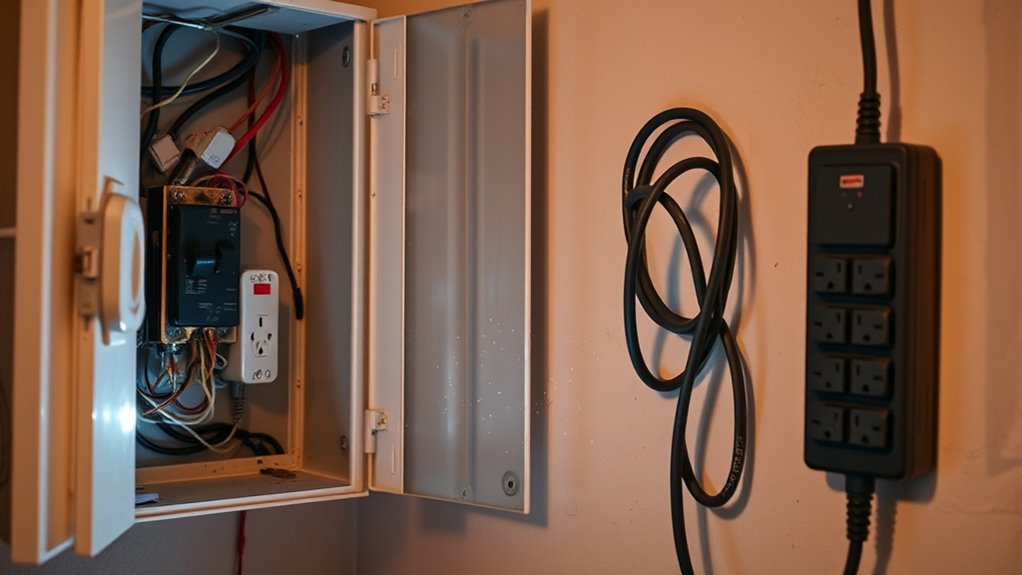
If your circuit breaker keeps tripping unexpectedly, it’s a sign that something’s wrong with your electrical system. One common cause is circuit overloads, which happen when you draw more current than the circuit can handle. During vacuuming, this is especially likely if you’re using the vacuum alongside other appliances plugged into the same circuit. When the vacuum’s motor kicks on, it demands a surge of power, and if the circuit is already close to its limit, the breaker trips to prevent damage. Recognizing this pattern is key to preventing future issues. To reduce the risk of circuit overloads, think about spreading out your high-demand devices across different circuits or upgrading your system if it’s outdated. Proper circuit management not only minimizes trips but also ensures your appliances operate safely.
Another aspect to contemplate is power surge prevention. Vacuum motors can cause sudden spikes in electrical current, especially when the motor starts up or encounters resistance. These power surges can trip your breaker even if the overall load isn’t excessive. Installing surge protectors or dedicated circuits for high-powered appliances like vacuums can help prevent these unnecessary trips. Surge prevention devices absorb or divert excess current, protecting your wiring and appliances from damage. If your breaker trips during vacuuming, it might be worth checking whether your system is properly equipped to handle these power spikes. Upgrading your wiring or adding surge suppressors can provide a more stable power flow, reducing the chances of nuisance trips.
Another factor to consider is the condition of your circuit breaker itself. Sometimes, a breaker trips because it’s faulty or worn out, not necessarily because of overloads or surges. If your breaker trips repeatedly under normal use, it might need replacement. Always test or have a professional evaluate your breaker to ensure it’s functioning correctly. Regular maintenance of your electrical system, including circuit inspections, helps identify potential problems before they cause frequent interruptions. Additionally, using air purifiers with smart features and auto functions can help reduce the load on your electrical system by managing power more efficiently.

METROVAC Electric DataVac Pro Series | Model MDV-1BA | Computer Vacuum | Blower |Cleaner | Duster | Made in The USA
- Includes 5 Disposable Bags: Extra bags for convenience
- Leading Computer Cleaning System: Removes tiny dust and debris
- Powerful 120V Motor: Vacuum and blower functions
As an affiliate, we earn on qualifying purchases.
As an affiliate, we earn on qualifying purchases.
Frequently Asked Questions
Can a Damaged Vacuum Cord Cause Breaker Trips?
Yes, a damaged vacuum cord can cause breaker trips. When the cord is compromised, it may create a ground fault, allowing electrical current to escape where it shouldn’t. This can lead to an electrical surge that trips your breaker to prevent further damage or fire risk. Always inspect your vacuum cord for frays or exposed wires, and replace it immediately to avoid ground faults and protect your home’s electrical system.
Should I Replace My Circuit Breaker After Multiple Trips?
Did you know that circuit overloads cause over 80% of breaker trips? If your breaker trips repeatedly, you should consider replacing it. Breakers wear out over time and can become less effective at safeguarding your home’s wiring. Ignoring multiple trips risks damage to your electrical system. Replacing a worn breaker ensures safety and reliability, preventing potential hazards from circuit overloads and breaker wear.
How Often Should I Have My Electrical System Inspected?
You should have your electrical system inspected regularly to guarantee electrical safety and proper appliance maintenance. Experts recommend scheduling an inspection every 3 to 5 years, or sooner if you notice frequent breaker trips or flickering lights. Regular checkups help identify potential hazards early, preventing damage and keeping your home safe. Stay proactive with inspections to maintain a reliable electrical system and avoid costly repairs down the line.
Can Using Extension Cords Increase Breaker Trip Risk?
Using extension cords can increase breaker overload risks because they often aren’t designed to handle high power loads, which can lead to hazards. Extension cords hazards include overheating and potential fires, especially if they’re damaged or too long. When you overload a circuit with an extension cord, you risk tripping the breaker. To stay safe, avoid overloading circuits and use properly rated outlets for your appliances.
Are Certain Vacuum Models More Prone to Tripping Breakers?
You might notice some vacuum models trip breakers more often because their vacuum motor draws a higher power surge, especially during startup. These powerful motors can overload circuits, causing trips. If your vacuum has a particularly strong motor, it’s more prone to causing breaker trips, especially if your electrical system isn’t designed for such high loads. Using models with moderate power consumption or upgrading your circuit can help prevent this issue.
Conclusion
Next time your breaker trips while vacuuming, remember it’s often a simple overload issue. For example, imagine plugging in your vacuum and turning it on, only to have the breaker trip immediately. By checking for tangled cords or overloaded outlets, you can prevent future trips. Keep your circuit safe and avoid surprises—regularly inspecting your appliances and outlets helps keep your home running smoothly. With a little attention, you won’t be left in the dark or stuck with a tripped breaker.