To keep fine dust out of the air while cleaning, wear a properly fitted N95 respirator and protective goggles to reduce inhalation and eye irritation. Use microfiber cloths and damp mops to trap dust rather than spread it. Opt for HEPA-filter vacuums for carpets and upholstery. Always ventilate your space with open windows or exhaust fans, and consider using air purifiers to filter airborne particles. Practicing these techniques can markedly improve your indoor air quality—discover more tips to make your space healthier.
Key Takeaways
- Use HEPA-filter vacuums and air purifiers to capture microscopic dust particles during cleaning.
- Wear protective gear like N95 masks, goggles, and gloves to minimize inhalation and skin contact.
- Dampen surfaces and cloths before cleaning to trap dust and prevent airborne dispersion.
- Ventilate rooms with open windows or exhaust fans to dilute and remove airborne dust.
- Avoid dry sweeping; opt for damp wiping or microfiber tools to contain dust effectively.

Cleaning can kick up a lot of fine dust that pollutes the air and affects your health. When you’re sweeping, dusting, or vacuuming, tiny particles become airborne, drifting into your breathing space and potentially causing respiratory issues or allergies. To minimize this risk, you need to focus on effective air filtration. Using a HEPA filter vacuum cleaner is one of your best options because it captures microscopic dust particles that standard vacuums often miss. Additionally, running an air purifier in the room you’re cleaning can help filter out airborne dust, making the environment safer while you work. Keep windows open if possible, to improve ventilation and allow fresh air to dilute the dust particles that escape during cleaning.
However, just relying on air filtration isn’t enough. You should also wear protective gear to shield yourself from inhaling fine dust. A properly fitted mask, such as an N95 respirator, can considerably reduce the amount of airborne particles you breathe in during cleaning. Pair this with goggles or glasses to protect your eyes from dust that can irritate or cause discomfort. Gloves are equally important, especially if you’re handling cleaning chemicals or dust-collecting materials, to prevent skin contact with irritants. Wearing protective gear not only keeps dust out of your respiratory system but also minimizes contact with any allergens or pollutants that might be present. Incorporating proper ventilation, such as opening windows or using exhaust fans, helps to further reduce the buildup of airborne dust during cleaning. Additionally, choosing cleaning tools made from microfiber materials can enhance dust trapping and reduce the amount of dust released into the air.
Before you start cleaning, take some extra steps to contain dust and prevent it from spreading further. Dampen surfaces with a damp cloth or mop to trap dust rather than stir it up into the air. For areas with carpets or upholstery, consider vacuuming with a machine that has a HEPA filter, ensuring the dust is captured rather than blown back into the air. When using dusters or cloths, opt for microfiber options, which trap dust more effectively than traditional materials. Using damp cloths and avoiding dry sweeping can significantly reduce dust dispersion. After cleaning, dispose of used cloths and dust bags properly to prevent re-releasing dust into your environment. Incorporating proper air filtration, like HEPA filters, can significantly improve indoor air quality during these activities.
Incorporating good practices like maintaining air filtration devices and wearing protective gear keeps your indoor air cleaner during cleaning sessions. These measures help you breathe easier and reduce potential health risks associated with fine dust. Remember, a little preparation and the right equipment can make a big difference in maintaining healthier indoor air quality while you tackle dust and dirt.

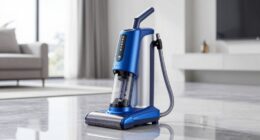
Shark Navigator Lift-Away Vacuum, HEPA, Carpet and Pet Hair, Blue, NV360
- Powerful Multi-Surface Suction: Cleans carpets and hard floors effectively
- Lift-Away for Above-Floor Cleaning: Detachable pod for stairs and furniture
- Pet Hair Removal: Specialized tools for pet hair cleanup
As an affiliate, we earn on qualifying purchases.
As an affiliate, we earn on qualifying purchases.
Frequently Asked Questions
Can Air Purifiers Effectively Remove Fine Dust During Cleaning?
Yes, air purifiers can effectively remove fine dust during cleaning if you maintain them properly. Regular air purifier maintenance guarantees it functions at peak performance, capturing dust particles as small as 0.3 microns. Since dust particle size varies, choose a purifier with a HEPA filter, which traps even the tiniest particles. Keep the filter clean, replace it when needed, and run the purifier during and after cleaning for cleaner, healthier air.
What Types of Masks Are Best for Dust Protection?
Did you know that N95 masks filter out at least 95% of airborne particles, making them ideal for dust protection? For dust protection, opt for surgical masks or respirators like N95 or P100 masks. These mask types fit snugly and seal tightly around your face, preventing fine dust from bypassing the filter. Always guarantee your mask fits well for maximum protection during cleaning tasks.
How Often Should I Replace or Clean My Vacuum Filters?
You should replace or clean your vacuum filters every three to six months, depending on usage and filter type. Regular vacuum maintenance is essential to maintain maximum filter lifespan and guarantee effective dust removal. Check your vacuum’s manual for specific recommendations, and if you notice a decline in performance or bad odors, it’s time to replace or clean the filters. Proper upkeep helps keep fine dust out of the air.
Are There Natural Remedies to Reduce Dust in the Air?
Think of natural remedies as your home’s gentle guardians against dust. You can reduce dust in the air by placing houseplants like peace lilies and spider plants, which naturally filter airborne particles. Regularly wiping surfaces with a damp cloth traps dust instead of spreading it. Ventilate your space daily, and use essential oils like eucalyptus or tea tree to help purify the air, making your environment fresher and healthier.
Does Opening Windows Increase or Decrease Dust in the Air?
Opening windows generally decreases dust accumulation indoors by improving air circulation and bringing in fresh air, which helps to filter out dust particles. Better indoor air quality results because stale air with dust gets replaced. However, if outdoor air is dusty or polluted, opening windows might temporarily increase dust in the air. To maintain ideal indoor air quality, open windows during low pollen or pollution times, and use air purifiers when needed.
Conclusion
By controlling dust, you breathe easier, and your home feels fresher. While cleaning stirs up tiny particles, using proper techniques keeps them at bay. Remember, sealing vents and dampening dust with a damp cloth creates a barrier, making cleanup less stressful. So, embrace these simple steps—because sometimes, the quietest actions leave the loudest impact. Clear the air, clear your mind, and enjoy a healthier, dust-free space with every careful sweep.