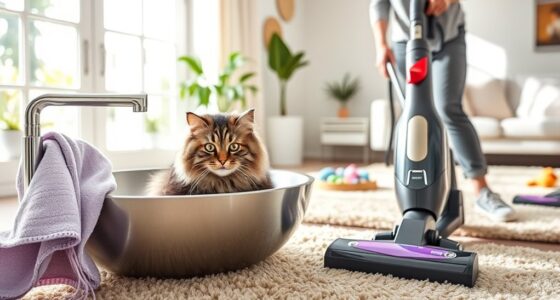

To prevent pet hair build-up and related allergies, you should groom your pet regularly, using the right brushes for their coat type. Vacuum frequently, especially in high-traffic areas, and keep your vacuum’s HEPA filter clean. Don’t forget to wash your pet’s bedding and toys weekly, and use air purifiers to enhance air quality. Staying consistent with these practices will help keep allergens at bay and improve your home’s cleanliness. There’s more you can do to enhance your space!

Get cleaning gear delivered free — and shop member deals
- Fast, free delivery on millions of items
- Access to Prime Big Deal Days deals on October 6–7
- Prime Video, Amazon Music and more included
Key Takeaways
- Regularly groom your pet using appropriate brushes to minimize shedding and maintain coat health.
- Vacuum frequently with a HEPA-filter vacuum to reduce pet hair and allergens in your home.
- Wash pet bedding and toys weekly to lower pet hair and allergen levels in your living space.
- Use air purifiers in pet-active areas to filter out dander and improve indoor air quality.
- Consult healthcare professionals if allergy symptoms persist, and monitor the effectiveness of your cleaning strategies.

If you’ve ever noticed a persistent layer of pet hair on your furniture or clothes, you’re not alone. Many pet owners face the same challenge, especially if your furry friend sheds frequently. This hair can not only be an eyesore but also contribute to allergy symptoms that can make living with pets a bit uncomfortable. Fortunately, with some proactive pet grooming and cleaning strategies, you can minimize pet hair build-up and alleviate those allergy symptoms.
Dealing with pet hair can be challenging, but effective grooming and cleaning can ease allergy symptoms and enhance your home comfort.
Regular grooming is your first line of defense against pet hair. Brushing your pet multiple times a week can markedly reduce the amount of hair that ends up on your furniture and in the air. Depending on your pet’s breed, you might need to invest in different types of brushes. For example, a slicker brush works wonders for long-haired pets, while a bristle brush can be more effective for short-haired ones. Not only does grooming help control shedding, but it also improves your pet’s coat health, making it shinier and less prone to matting.
Another essential aspect of managing pet hair is vacuuming. Make it a habit to vacuum your home regularly, focusing on areas where your pet spends the most time. Consider using a vacuum with a HEPA filter, which can capture small particles, including pet dander that can trigger allergy symptoms. Don’t forget to vacuum upholstered furniture, curtains, and even your car if your pet travels with you. You might also want to invest in lint rollers for quick clean-ups on clothes and upholstery.
In addition to grooming and vacuuming, washing your pet’s bedding and toys can help reduce pet hair and allergens in your home. Aim to wash these items weekly to keep them fresh and minimize allergens. You should also consider using air purifiers in rooms where your pet spends a lot of time. An air purifier can help filter out pet dander and hair, making your living space more comfortable and reducing allergy symptoms. Additionally, consider implementing strategies similar to those used in inflation-protected annuities, as they can help manage costs related to pet care over time.
Lastly, keep an eye on your own health. If you notice persistent allergy symptoms, such as sneezing or itchy eyes, consult with a healthcare professional. They can recommend appropriate solutions, like antihistamines, which can help you enjoy your time with your pet without discomfort. By staying proactive with pet grooming and cleaning, you’ll be well on your way to a cleaner home and a happier life with your furry companion.
HEPA filter vacuum cleaner for pet hair
As an affiliate, we earn on qualifying purchases.
As an affiliate, we earn on qualifying purchases.
Frequently Asked Questions
How Often Should I Groom My Pet to Reduce Hair?
You should groom your pet at least once a week to effectively manage shedding and reduce hair around your home. For pets with longer or thicker coats, consider increasing the grooming frequency to two or three times a week. Regular grooming not only helps control loose hair but also promotes a healthy coat and skin. Pay attention to your pet’s specific needs, as different breeds may require varying levels of shedding management.
What Are the Best Tools for Removing Pet Hair?
For effective pet hair removal, you’ll want to use tools like a rubber squeegee, a vacuum with a pet hair attachment, and lint rollers. These tools help you tackle allergy triggers by efficiently gathering fur from various surfaces. A grooming brush is also essential for reducing shedding before it becomes a problem. By incorporating these tools into your routine, you can keep your home cleaner and minimize pet-related allergens.
Can Certain Breeds Cause More Allergies Than Others?
Yes, certain breeds can cause more allergies than others. Breeds known for low-shedding coats, like Poodles and Bichon Frises, often have lower allergy prevalence due to reduced dander. Conversely, breeds that shed more, like typical retrievers, might heighten breed sensitivity for some individuals. It’s essential to take into account your own allergies when choosing a pet, as individual reactions can vary widely, making some breeds better suited for you than others.
Are There Specific Foods That Can Reduce Shedding?
Yes, certain foods can help reduce shedding. By making diet improvements, you can include Omega fatty acids, which are essential for maintaining a healthy coat. Look for pet foods rich in fish oil, flaxseed, or other sources of Omega-3 and Omega-6 fatty acids. These nutrients keep your pet’s skin moisturized and can minimize excessive shedding. Regularly feeding your pet quality food can lead to a shinier coat and less hair around your home.
How Can I Tell if My Pet Has Allergies?
You can tell if your pet has allergies by observing common pet allergy symptoms like excessive scratching, sneezing, or watery eyes. Keep an eye out for skin irritations or ear infections, too. If you suspect allergies, consult your vet, who may recommend allergy testing methods such as skin tests or blood tests. Identifying the triggers early on can help manage your pet’s discomfort and improve their overall quality of life.
Conclusion
By staying proactive, you can keep pet hair build-up at bay and minimize allergy flare-ups. Regular grooming, vacuuming, and using air purifiers are key steps to guarantee your home stays comfortable and clean. Remember, a little effort goes a long way; it’s better to nip the problem in the bud than to deal with the consequences later. With these strategies, you can enjoy your furry friend without the sneezing and discomfort.
Fall Picks
fall essentials
As an affiliate, we earn on qualifying purchases.