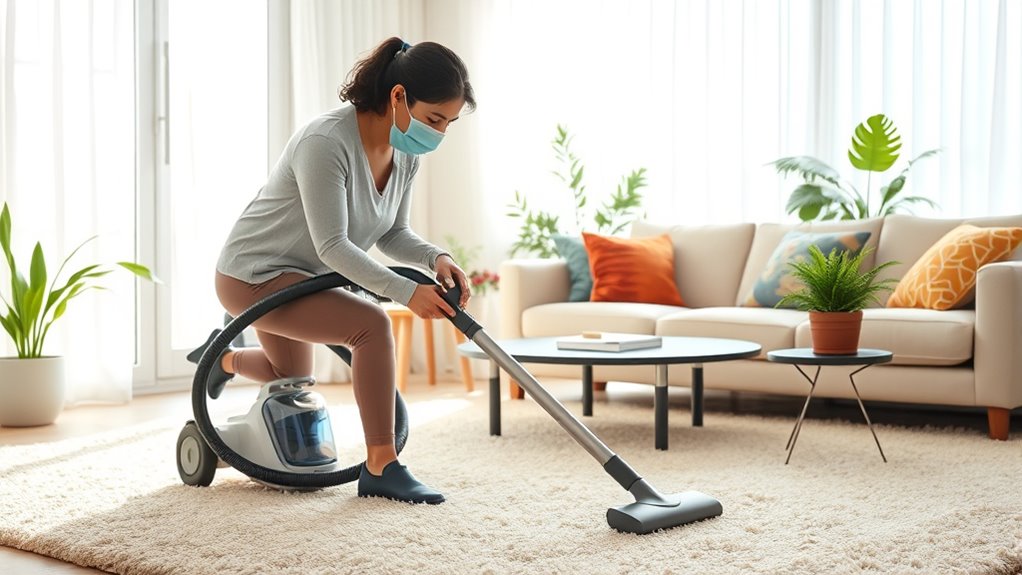

To create an air-safe routine for vacuuming and asthma, use a vacuum with a HEPA filter to trap allergens effectively, and vacuum slowly over high-traffic areas, carpets, and upholstery. Empty the canister outdoors and clean filters regularly to prevent allergen buildup. Reduce clutter, wash bedding weekly in hot water, and cover pillows and mattresses with allergen-proof covers. Keep these habits consistent, and you’ll find your indoor air quality improves, helping to manage asthma symptoms better.

Get cleaning gear delivered free — and shop member deals
- Fast, free delivery on millions of items
- Access to Prime Big Deal Days deals on October 6–7
- Prime Video, Amazon Music and more included
Key Takeaways
- Use HEPA-filter vacuums to effectively capture dust and allergens, reducing asthma triggers.
- Vacuum slowly and systematically, focusing on high-traffic areas and upholstery for thorough cleaning.
- Empty and clean vacuum filters regularly to prevent allergen buildup inside the machine.
- Complement vacuuming with allergen-proof bedding covers and regular washing to minimize indoor allergens.
- Maintain a clutter-free environment and incorporate other allergen control strategies for comprehensive indoor air safety.
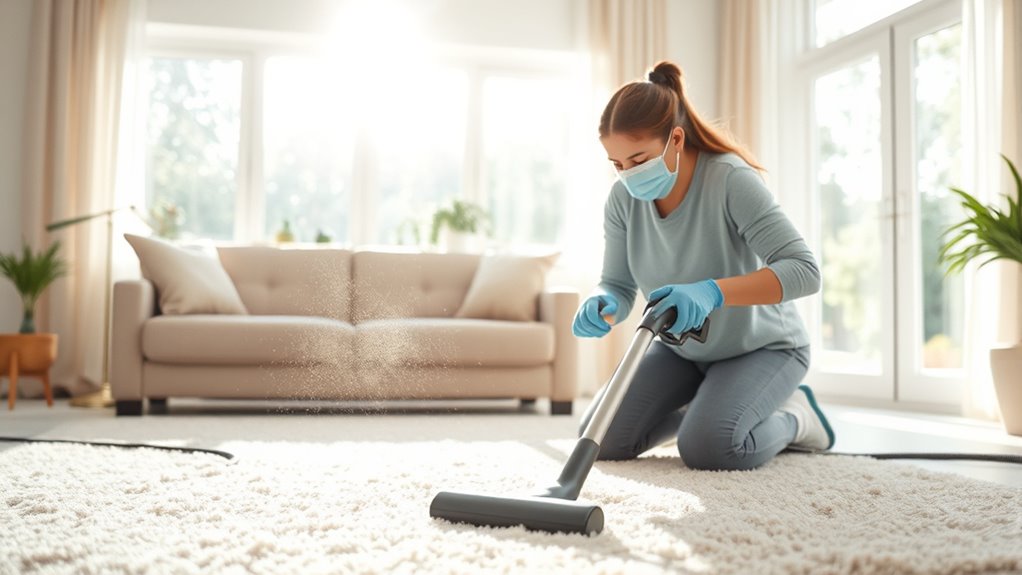
Using a vacuum with HEPA filters ensures that when you clean, you’re not just stirring up dust but actually removing it from your environment. This is especially important because many vacuums without proper filters tend to blow allergens back into the air, worsening asthma symptoms. The key is to vacuum thoroughly and regularly, targeting high-traffic areas, carpets, and upholstery where allergens tend to settle. Keep in mind that frequent vacuuming with an effective filter system helps create an environment with better air quality, ultimately reducing asthma flare-ups. Additionally, selecting a vacuum with a dog names compatible design can make cleaning more efficient and enjoyable.
Besides investing in a HEPA-filter vacuum, it’s vital to follow proper cleaning techniques. Always vacuum slowly to allow the filter to trap as many particles as possible. Empty the vacuum bag or canister outdoors to prevent allergens from escaping back into your home. If your vacuum has a bag, replace it as soon as it’s full. For bagless models, empty the canister frequently and clean the filters regularly according to the manufacturer’s instructions. This maintenance keeps the vacuum functioning at peak performance and prevents allergens from accumulating inside the machine.
In addition to vacuuming, consider other allergen control strategies such as reducing clutter, washing bedding weekly in hot water, and using allergen-proof covers on pillows and mattresses. Combined with a HEPA-filter vacuum, these steps can make a noticeable difference in your home’s air quality. Remember, creating an air-safe routine isn’t just about cleaning more; it’s about cleaning smarter. By prioritizing HEPA filtration and allergen control, you help guarantee that your cleaning efforts support better respiratory health and fewer asthma attacks.
As an affiliate, we earn on qualifying purchases.
Frequently Asked Questions
Can Switching Vacuum Bags Improve Asthma Symptoms?
Switching vacuum bags can improve your asthma symptoms by enhancing air quality and dust containment. Old or full bags tend to release more dust and allergens back into the air, aggravating asthma. By replacing bags regularly with high-efficiency, sealed options, you reduce airborne irritants. This simple change helps create a cleaner environment, minimizes triggers, and supports better breathing during and after vacuuming.
Are Cordless Vacuums Better for Asthma Sufferers?
Imagine you’re cleaning and your cordless vacuum’s convenience helps you quickly remove dust without the hassle of cords. For asthma sufferers, cordless vacuums can improve air quality by reducing airborne dust and allergens during cleaning. Their portability allows for thorough, targeted cleaning, minimizing irritants. Overall, cordless vacuums are often better for asthma sufferers because they promote a safer, more efficient cleaning routine, helping you breathe easier.
How Often Should I Replace Vacuum Filters?
You should replace HEPA filters regularly to maintain ideal air quality, typically every 6 to 12 months, depending on usage and the filter’s lifespan. Check your vacuum’s manufacturer guidelines for specific recommendations. Replacing filters ensures they continue to trap allergens effectively, reducing asthma triggers. If you notice decreased suction or must clean filters more often, it’s time for a replacement. Regular filter changes help keep your home air-safe and asthma-friendly.
Do Robotic Vacuums Reduce Asthma Triggers Effectively?
You might think robot vacuums are just fancy gadgets, but their real advantage lies in allergen containment. Surprisingly, they can reduce asthma triggers by consistently cleaning hard-to-reach spots. Their precise navigation helps keep dust and allergens at bay, making your air safer. So, yes, robotic vacuums do reduce asthma triggers effectively, turning what seems like a convenience into a smart health move. Who knew technology could be so considerate?
Can Vacuuming Cause Asthma Flare-Ups?
Vacuuming can cause asthma flare-ups if it stirs up dust and allergens, affecting your air quality and making symptoms worse. You might not realize that improper vacuuming techniques or using an inefficient vacuum can reduce allergen control. To protect yourself, use a vacuum with a HEPA filter, vacuum regularly, and guarantee good ventilation. This helps maintain better air quality and minimizes triggers, keeping your asthma under control.
Conclusion
By now, you know that vacuuming can both trigger and help manage asthma symptoms. While some say regular vacuuming stirs up allergens, recent studies suggest that using HEPA filters and proper techniques can actually improve indoor air quality. So, don’t avoid vacuuming altogether—just do it wisely. Creating a safe routine not only keeps your home cleaner but also reduces your asthma risks, proving that with the right tools, you can breathe easier every day.
Fall Picks
fall essentials
As an affiliate, we earn on qualifying purchases.