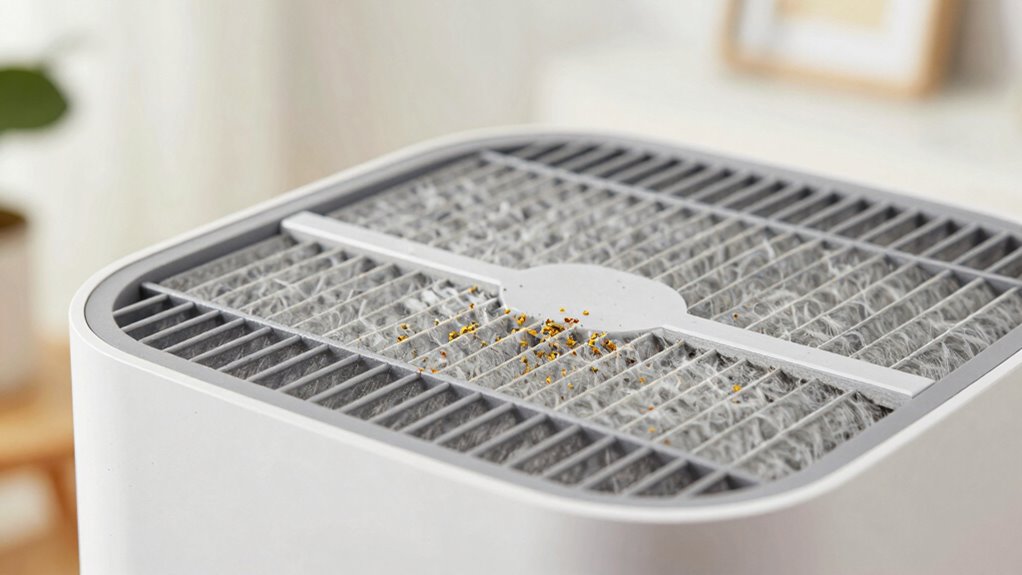
Allergy-friendly cleaning starts with your filter because it directly affects how well airborne allergens like dust, pollen, and pet dander are removed from your indoor air. If your filter is dirty or clogged, it won’t trap particles effectively, making your air purifier less efficient and causing allergens to circulate freely. Regularly maintaining and replacing filters guarantees you’re reducing airborne irritants. Keep going to discover more tips for maintaining a healthier indoor environment.

Get cleaning gear delivered free — and shop member deals
- Fast, free delivery on millions of items
- Access to Prime Big Deal Days deals on October 6–7
- Prime Video, Amazon Music and more included
Key Takeaways
- Clean filters effectively trap airborne allergens, preventing them from circulating in your home.
- Regular filter maintenance ensures optimal air purifier performance and allergen removal.
- Proper filter choice enhances allergen filtration, supporting a healthier indoor environment.
- Neglecting filters allows dust and pollen to bypass, worsening allergy symptoms.
- Consistent filter replacement reduces airborne contaminant buildup, promoting cleaner, allergy-friendly air.

Have you ever wondered how much dust, pollen, and allergens hide in your home’s air? It’s a common concern for allergy sufferers, and the key to combating these irritants starts with your air purifier’s filter. Proper air purifier maintenance is vital to guarantee it continues to effectively trap airborne particles. If your filter isn’t clean or replaced regularly, it can become less efficient, allowing allergens to circulate freely. This not only diminishes your purifier’s performance but can also worsen allergy symptoms. So, staying on top of filter upkeep is critical for allergen reduction techniques that work.
Regularly maintaining your air purifier ensures effective allergen removal and a healthier home environment.
When you neglect air purifier maintenance, you risk letting accumulated dust and pollen bypass the filter altogether. A dirty or clogged filter can cause the device to work harder, using more energy but removing fewer allergens. Regularly checking your filter’s condition and replacing it when necessary keeps the purifier functioning at peak performance. Most filters need changing every three to six months, but this can vary depending on usage and the air quality in your home. By establishing a routine for filter replacement, you guarantee your purifier continues to eliminate airborne allergens effectively. Additionally, filter lifespan can be impacted by factors such as pet dander or indoor smoking, making regular checks even more important. Proper filter maintenance and understanding the factors that influence filter longevity are crucial for optimal air quality. Maintaining a clean filter also helps prevent the buildup of airborne contaminants, which can worsen allergy symptoms over time.
Moreover, choosing the right filter type can significantly improve allergen removal, especially when considering advanced options like HEPA filters, which are designed to trap the tiniest particles. Incorporating these filters into your allergen reduction techniques enhances overall air quality. However, the main focus should always be on consistent air purifier maintenance. This guarantees that your investment in an air purifier continues to pay off by providing cleaner, allergen-free air. When you prioritize regular filter upkeep, you’re actively reducing airborne allergens, making your home a more comfortable space for allergy sufferers. Ultimately, starting with a clean filter sets the foundation for effective allergy-friendly cleaning and a healthier indoor environment. Proper maintenance of air purifier filters is essential for maintaining optimal air quality and protecting respiratory health.
HEPA air purifier filter replacement
As an affiliate, we earn on qualifying purchases.
As an affiliate, we earn on qualifying purchases.
Frequently Asked Questions
How Often Should I Replace My Allergy-Friendly Filter?
You should replace your allergy-friendly air filter every 1 to 3 months to maintain ideal air quality. The lifespan of your filter depends on factors like usage and air quality, but regular changes ensure it captures allergens efficiently. Over time, allergens can clog the filter, reducing its capture efficiency. Checking the filter monthly helps you know when it’s time for a replacement to keep your indoor air fresh and allergy-free.
Can Filters Remove All Types of Allergens Effectively?
Filters can’t remove all allergenic particles completely, but they considerably improve indoor air quality. Their effectiveness depends on the filter type and maintenance. High-efficiency filters like HEPA can trap most common allergens such as pollen, pet dander, and dust mites. To maximize filter effectiveness, change filters regularly and choose ones rated for allergen removal. This way, you reduce allergenic particles and breathe easier in your space.
Are There Specific Filters Recommended for Asthma Sufferers?
Yes, asthma sufferers should use HEPA filters, as they effectively trap airborne pollutants like dust mites, pollen, and pet dander. Regular filter maintenance is essential to keep these filters working efficiently, preventing allergen buildup that can worsen symptoms. Choose high-quality filters designed for allergy and asthma relief, and replace them as recommended to guarantee superior air quality. This proactive approach helps reduce triggers and creates a healthier environment.
Do Filter Upgrades Improve Overall Indoor Air Quality?
Yes, upgrading your filters can substantially improve indoor air quality, but only if you focus on airflow optimization and regular filter maintenance. Better filters trap more allergens and pollutants, enhancing your environment’s freshness. Yet, without proper airflow and timely replacements, the benefits diminish. So, don’t just upgrade—maintain and optimize your filter system, and you’ll notice a real difference in the air you breathe every day.
How Do I Know if My Filter Is Working Properly?
You can tell if your filter is working properly by checking for visible dust buildup or decreased airflow, which indicates it’s clogged. Regular filter maintenance is essential—change or clean your filter as recommended by the manufacturer. If airborne particles still circulate or you notice allergies worsening, it’s time to replace the filter. Ensuring your filter is functioning at its best helps reduce allergens and improves indoor air quality.
Conclusion
By paying close attention to your filter, you set the stage for a healthier home. It’s like gently guiding the air to be softer, cleaner, and more welcoming for everyone. When you choose the right filter, you’re quietly nurturing a space where allergens drift away, and freshness lingers a little longer. Remember, it’s the small, mindful steps that create the smooth, comforting rhythm of a truly allergy-friendly environment.
Evergreen bestsellers Picks
bestsellers
As an affiliate, we earn on qualifying purchases.