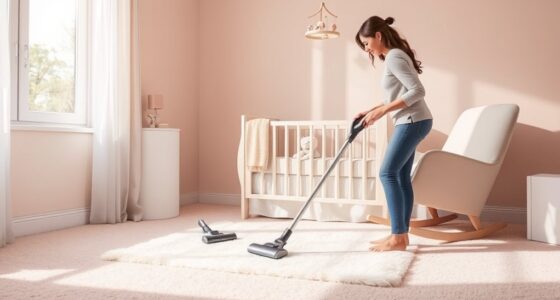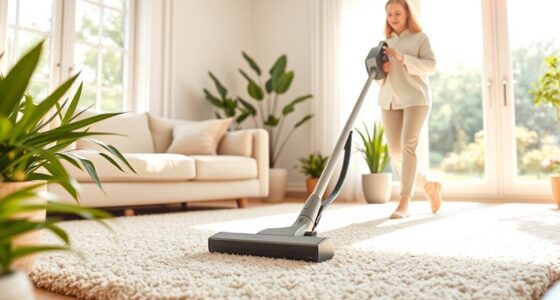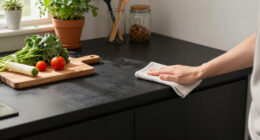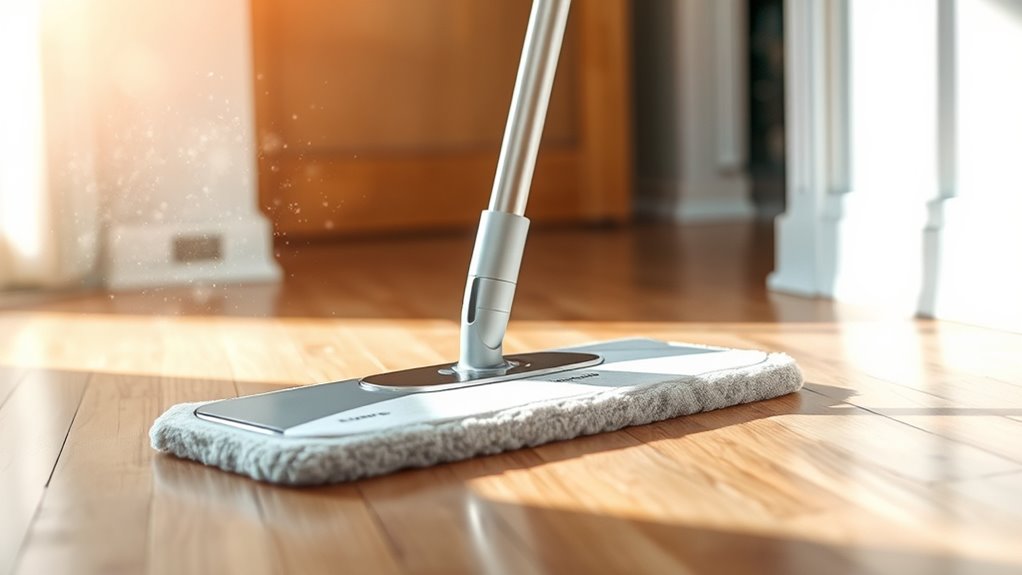

Vacuum mops reduce allergens by combining vacuuming and mopping, efficiently capturing dust mites, pet dander, and pollen. With a HEPA filter, they trap 99.97% of particles as small as 0.3 microns, preventing allergens from re-entering the air. This dual action cleans various surfaces like hardwood, tile, and carpet without damage. Regular use markedly improves indoor air quality, helping you breathe easier and feel better at home. There’s even more to learn about the benefits, so keep going!

Get cleaning gear delivered free — and shop member deals
- Fast, free delivery on millions of items
- Access to Prime Big Deal Days deals on October 6–7
- Prime Video, Amazon Music and more included
Key Takeaways
- Vacuum mops combine vacuuming and mopping, effectively capturing dust mites, pet dander, and pollen from surfaces.
- HEPA filters in vacuum mops trap 99.97% of allergens, preventing them from being released back into the air during cleaning.
- These devices are versatile and efficient on various surfaces, ensuring thorough cleaning without damaging flooring.
- Regular use of vacuum mops significantly improves indoor air quality, reducing allergy symptoms and promoting better health.
- The dual-action cleaning helps maintain a consistent reduction of allergens, supporting long-term health benefits for occupants.

When you clean your home, you might not realize how much allergens linger on your floors. Dust mites, pet dander, and pollen can accumulate in your carpets and hard surfaces, making it essential to choose the right cleaning tools. Vacuum mops are an excellent choice for tackling these issues head-on. They combine the power of a vacuum cleaner with the efficiency of a mop, helping you remove allergens from your home effectively.
Using a vacuum mop can considerably reduce the presence of dust mites, which thrive in warm, humid environments. These microscopic creatures feed on dead skin cells and can trigger allergy symptoms like sneezing, runny noses, and itchy eyes. By regularly using a vacuum mop, you can minimize dust mite populations, keeping your living space healthier. The vacuum mop’s dual action ensures that when you suck up dirt and dust, you’re also capturing the allergens that often go unnoticed.
Regularly using a vacuum mop can significantly reduce dust mites and allergens, promoting a healthier living space for you and your family.
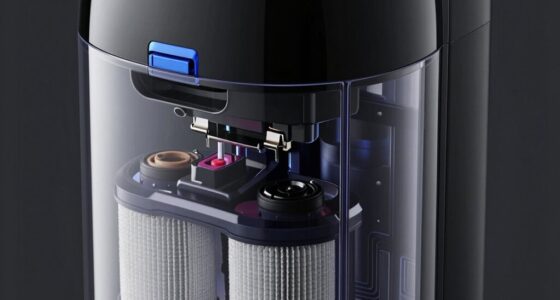
One of the standout features of many vacuum mops is their HEPA filters. These filters are designed to trap 99.97% of particles, including allergens as small as 0.3 microns. When you use a vacuum mop equipped with a HEPA filter, you’re not just moving dust around; you’re capturing it and preventing it from being released back into the air. This is particularly important for people with allergies or asthma, as minimizing airborne allergens can lead to improved health and comfort.
Another advantage of vacuum mops is their versatility. Whether you’ve got hardwood floors, tile, or carpet, these devices adapt to different surfaces, ensuring that you’re cleaning effectively without damaging your flooring. You’ll find that using a vacuum mop is often quicker and more efficient than traditional cleaning methods, making it easier to maintain a clean environment. Plus, many models are lightweight and easy to maneuver, allowing you to tackle those hard-to-reach areas where allergens like to hide.
Incorporating a vacuum mop into your cleaning routine can lead to a noticeable difference in your home’s air quality. By regularly eliminating dust mites and other allergens, you’re creating a healthier living space for yourself and your family. Additionally, many vacuum mops offer HEPA filter advantages that enhance their allergen-trapping capabilities. So, the next time you clean, consider using a vacuum mop with a HEPA filter. It’ll help you breathe easier and enjoy a more comfortable home. You might just find that it’s the best tool for reducing allergens and promoting a healthier lifestyle.
As an affiliate, we earn on qualifying purchases.
Frequently Asked Questions
How Often Should I Use a Vacuum Mop for Best Results?
For best results, you should use a vacuum mop at least once a week, especially in high-traffic areas. If you have pets or allergies, consider increasing your cleaning frequency to two or three times a week. Maintaining an ideal schedule helps you keep your floors spotless and reduce allergens effectively. Don’t forget to adjust your routine based on seasonal changes and the amount of foot traffic in your home!
Are Vacuum Mops Effective on Pet Hair and Dander?
Yes, vacuum mops are effective on pet hair and dander removal. They combine vacuuming and mopping, which helps lift and trap pet hair while simultaneously cleaning surfaces. When you use a vacuum mop regularly, you’ll notice a significant reduction in allergens, making your home healthier for you and your pets. Just make sure to choose a model designed for pet owners, as these typically have stronger suction and specialized attachments for better results.
Can Vacuum Mops Be Used on All Floor Types?
Yes, vacuum mops can be used on various floor types, but you need to take into account floor compatibility and surface considerations. For hard surfaces like tile, laminate, and hardwood, they work great. However, avoid using them on delicate surfaces like unsealed wood or certain carpets, as moisture could damage them. Always check the manufacturer’s guidelines to ensure you’re using the vacuum mop correctly and safely on your specific flooring type.
Do Vacuum Mops Require Special Cleaning Solutions?
Using vacuum mops is like having a trusty sidekick in your cleaning routine. You don’t necessarily need special cleaning solutions, but chemical compatibility with your mop is essential. Always check the manufacturer’s recommendations to avoid damaging your device. Some mops work great with just water, while others may benefit from specific solutions to enhance cleaning power. Just remember, it’s best to stick with what’s safe for your mop to keep everything running smoothly.
What Maintenance Do Vacuum Mops Need to Function Properly?
To keep your vacuum mop functioning properly, make sure you regularly replace the filters as needed, usually every few months depending on usage. Check the battery maintenance too; if your vacuum mop runs on batteries, ensure they’re charged and replace them when they start losing power. Cleaning the mop pads after each use will also help sustain performance. With these simple steps, you’ll maximize your vacuum mop’s efficiency and longevity.
Conclusion
In conclusion, using vacuum mops can notably reduce allergens in your home, making it a healthier space for you and your family. By combining vacuuming and mopping, you’re tackling dust, pet dander, and other irritants in one go—talk about a two-for-one deal! So, next time you’re cleaning, think of your vacuum mop as a trusty sidekick, like Batman and Robin, helping you create a cleaner, allergy-free environment that everyone can enjoy.
Fall Picks
fall essentials
As an affiliate, we earn on qualifying purchases.