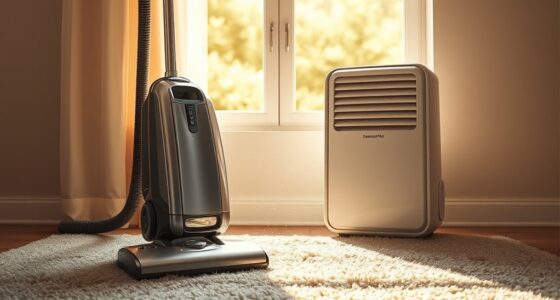
If you don’t maintain your vacuum properly, it can worsen indoor air quality instead of improving it. When filters get clogged or your vacuum isn’t cleaned, dust and allergens don’t get removed—they get pushed back into the air. This can make your home feel stuffy, trigger allergies, or cause respiratory issues. Neglected vacuums turn cleaning into a source of pollution. Keep going to discover how proper maintenance can truly improve your indoor environment.

Get cleaning gear delivered free — and shop member deals
- Fast, free delivery on millions of items
- Access to Prime Big Deal Days deals on October 6–7
- Prime Video, Amazon Music and more included
Key Takeaways
- Clogged filters release trapped dust and allergens back into the air, worsening indoor air quality.
- Poor vacuum maintenance allows dust to settle deeper, which is then disturbed and becomes airborne during cleaning.
- Ineffective vacuum performance fails to remove airborne pollutants, increasing indoor air heaviness and stale feelings.
- Dust accumulation from neglected maintenance increases allergens and respiratory irritants in the environment.
- A poorly maintained vacuum can become a source of indoor air pollution, making the air feel more contaminated.
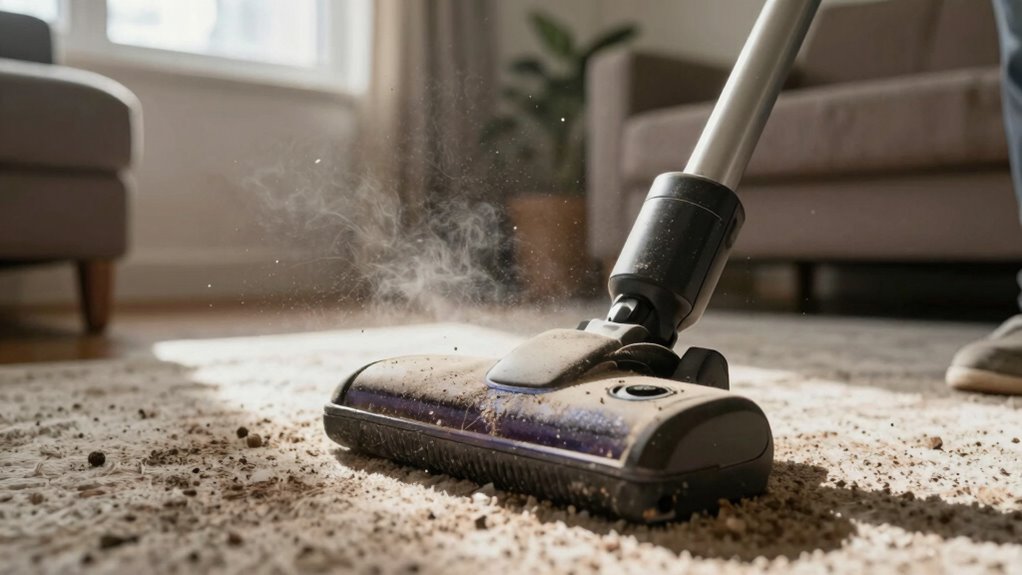
Have you ever wondered how the air inside your home affects your health? It’s easy to overlook, especially when your home feels comfortable. But poor vacuum maintenance can considerably impact your indoor air quality, making the air seem worse rather than better. When you neglect your vacuum cleaner’s upkeep, dust and debris don’t get properly removed from your floors and carpets. Instead, they settle deeper into the fibers, creating a dense layer of dust that can become airborne again when disturbed. This dust accumulation effects not only your carpets but also your overall indoor environment, contributing to allergies, respiratory issues, and a constant feeling of stuffiness.
One essential factor often overlooked is the air filter lifespan of your vacuum. If you don’t change or clean the filter regularly, it quickly becomes clogged with dust and debris. A clogged filter reduces the vacuum’s efficiency, causing it to work harder without effectively removing dirt. As a result, dust that should be captured instead gets blown back into the air you breathe. Over time, this cycle worsens indoor air quality, especially if you rely on your vacuum as a primary cleaning tool. Regularly checking and replacing the filter guarantees that your vacuum maintains top performance, preventing unnecessary dust circulation. Proper maintenance also ensures that filters are replaced at optimal intervals, which helps in reducing airborne allergens and pollutants.
Dust accumulation effects are particularly concerning because they can lead to a buildup of allergens and pollutants in your home. When your vacuum isn’t functioning properly, dust particles are more likely to escape back into your living space, aggravating allergy symptoms and respiratory problems. This is especially true if you have pets or someone in your household with asthma. The more dust that escapes, the worse your indoor air can feel—more irritants floating around and making the air seem heavy or stale. Keeping your vacuum clean and in good working order reduces these effects greatly, helping you breathe easier and maintain a healthier environment. Additionally, understanding air filtration systems can help you choose the best tools to improve your indoor air quality.
Ultimately, poor vacuum maintenance doesn’t just mean less clean floors; it directly impacts your indoor air quality. It’s essential to pay attention to your vacuum’s air filter lifespan by replacing or cleaning filters as recommended by the manufacturer. Doing so minimizes dust accumulation effects and ensures that your cleaning efforts genuinely improve your home’s air. When your vacuum performs well, it reduces airborne dust, allergens, and debris, making the air feel fresher and healthier. Neglecting this simple yet important maintenance step can turn what should be a cleaning routine into a source of indoor air pollution, undermining your efforts to create a safe, comfortable space. Regular maintenance also helps prevent filter clogging, which is crucial for optimal air purification.
As an affiliate, we earn on qualifying purchases.
Frequently Asked Questions
How Often Should I Replace My Vacuum Filter?
You should replace your vacuum filter every 3 to 6 months, depending on filter lifespan and usage. Check the manufacturer’s recommendations, as replacement frequency varies by model and how often you vacuum. If you notice reduced suction or increased dust, it’s time for a change. Regularly replacing your filter guarantees peak air quality and keeps your vacuum functioning efficiently, preventing dust and allergens from recirculating in your indoor air.
Can Vacuum Maintenance Improve Allergy Symptoms?
Yes, regular vacuum maintenance can dramatically improve your allergy symptoms. When you keep your vacuum in top shape, it traps airborne allergens more effectively, preventing them from recirculating into your indoor air. This boosts vacuum efficiency and reduces dust and pollen in your environment. Neglecting maintenance turns your vacuum into a sneezing, itchy nightmare, but proper care transforms it into a powerful allergy-fighting machine, giving you cleaner, healthier air.
What Are Signs of a Poorly Maintained Vacuum?
Signs of a poorly maintained vacuum include weak vacuum suction, which struggles to pick up dirt effectively. You’ll notice the brush roll appears clogged or tangled with hair and debris, reducing cleaning efficiency. Additionally, strange noises or excessive vibrations indicate motor or belt issues. If your vacuum isn’t performing as it used to, these signs point to the need for maintenance to guarantee ideal air quality and cleaning power.
Does Vacuum Type Affect Indoor Air Quality?
Ironically, your vacuum type truly does impact indoor air quality. While some vacuums promise better air filtration, cheap models often recirculate dust, spreading allergens and dust circulation issues. HEPA filters excel at trapping tiny particles, improving air quality, whereas lower-grade models may worsen it. So, choosing the right vacuum isn’t just about cleaning power—it’s about preventing dust from lingering and ensuring your indoor air stays fresh and healthy.
How Can I Tell if My Vacuum Is Cleaning Effectively?
You can tell if your vacuum is cleaning effectively by checking for dust buildup on filters and behind the brush roll, which indicates it’s not removing debris properly. Also, listen for reduced suction or motor inefficiency, which suggests it’s not performing well. Regularly replacing filters and cleaning the brush roll guarantees peak motor efficiency, helping your vacuum pick up dust better and improve indoor air quality.
Conclusion
Remember, a clean home is a happy home. Poor vacuum maintenance can stir up dust, allergens, and pollutants, making your indoor air feel worse rather than better. Regularly checking and replacing filters, and cleaning your vacuum thoroughly, guarantees it works efficiently. Don’t forget, “A stitch in time saves nine”—keeping your vacuum in top shape now prevents bigger health issues later. Prioritize maintenance, and breathe easier in your own space.
Fall Picks
fall essentials
As an affiliate, we earn on qualifying purchases.