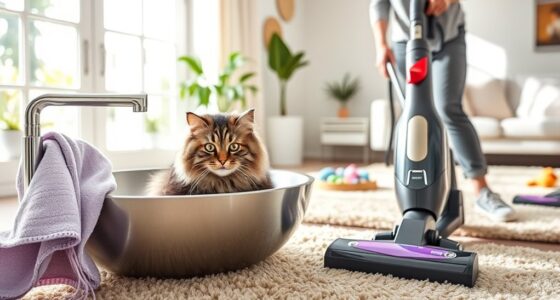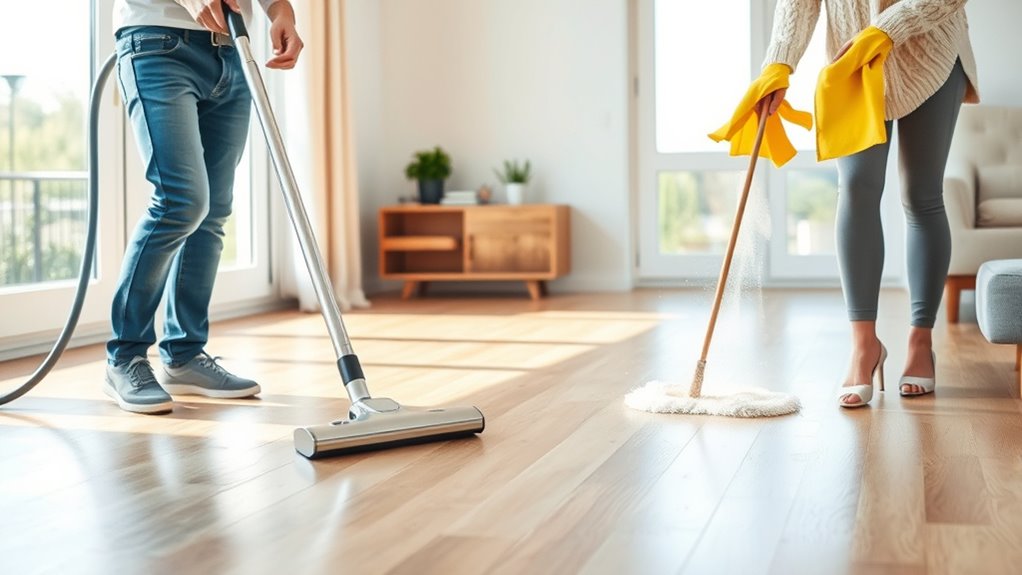

To effectively control allergens, vacuum carpets and rugs regularly, especially with a HEPA filter, to remove dust, pet dander, and irritants trapped deep in fibers. Use mopping on hard floors like tile or hardwood to lift dust and prevent allergens from becoming airborne again. Switch between these methods based on surface type: vacuum for soft surfaces and mopping for hard ones. Keep going to discover how combining both approaches improves your home’s air quality.
Key Takeaways
- Use vacuuming on carpets and rugs to remove embedded allergens and dust from soft surfaces.
- Opt for mopping on hard floors like tile or hardwood to lift dust and prevent airborne allergens.
- Combine both methods regularly for comprehensive allergen control across different surface types.
- HEPA-filtered vacuums are most effective for deep allergen removal from soft furnishings.
- Mopping is especially beneficial after vacuuming to trap remaining allergens on hard surfaces.
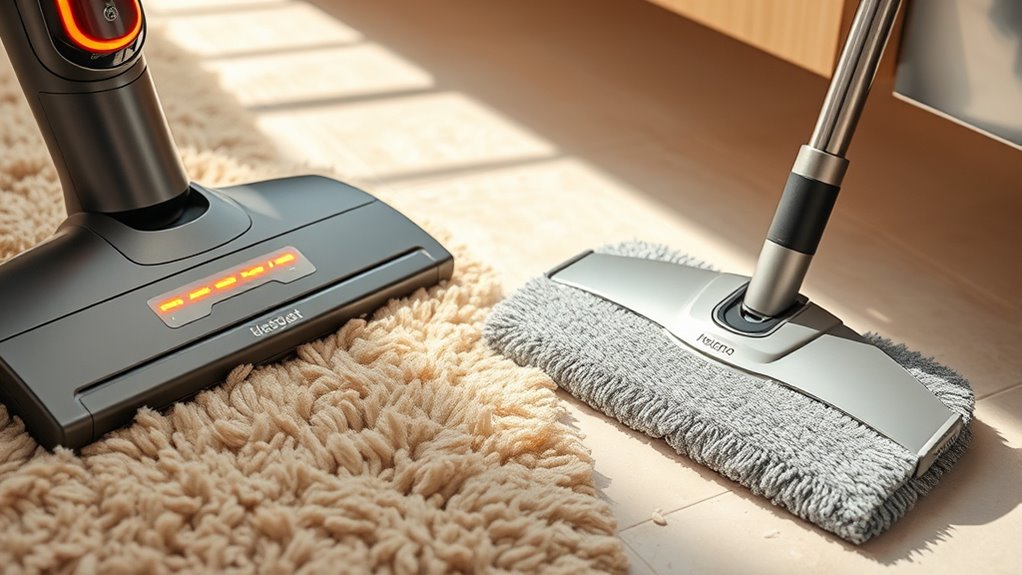
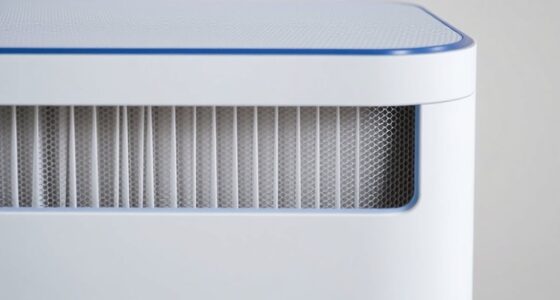
When it comes to reducing allergens in your home, choosing between mopping and vacuuming can make a vital difference. Both methods serve their purpose, but understanding when to use each can help you keep your environment healthier. Vacuuming is particularly effective at removing dust, pet dander, and other airborne allergens from surfaces, especially if your vacuum is equipped with HEPA filters. These filters trap tiny particles that can trigger allergies, preventing them from recirculating back into the air. If you have carpets of different types—whether plush, Berber, or low-pile—vacuuming becomes even more essential because carpets tend to trap allergens deep within their fibers. Regular vacuuming with a HEPA-equipped cleaner can considerably reduce these hidden irritants, creating a cleaner, more breathable space.
However, not all carpets are created equal. Thick, shaggy carpets may require more frequent, thorough vacuuming, while low-pile carpets tend to be easier to clean. For certain carpet types, a vacuum with adjustable settings can help you optimize suction and agitation, ensuring you dislodge embedded allergens effectively. In contrast, mopping is best reserved for hard floor surfaces such as tile, hardwood, or laminate. When you mop, you physically lift dust and allergens from the surface, preventing them from becoming airborne again. Using a damp mop with a microfiber cloth can trap allergens more efficiently than a dry mop, especially when combined with a cleaning solution designed to neutralize dust mites and other irritants.
While vacuuming is essential for carpets and rugs, mopping works better for hard floors and surfaces that don’t trap allergens as deeply. It’s also a good idea to regularly clean your vacuum filters, especially HEPA filters, to maintain their efficiency. If you notice that your carpets still harbor dust after vacuuming, consider upgrading to a vacuum with a better filtration system. Conversely, if you’re dealing with persistent dust on hard floors, mopping more frequently can help keep your surfaces allergen-free. By combining both techniques—vacuuming for carpets and mopping for hard floors—you create a comprehensive approach to allergen control. This strategy ensures you’re tackling dust and dander at their source and maintaining a cleaner, healthier home environment. Regular maintenance of your cleaning equipment, including filter replacement, can further enhance effectiveness and indoor air quality.

Shark NV352 Navigator Lift Away Upright Vacuum, Hepa Filter, Anti-Allergen Technology, Swivel Steering, Ideal for Carpet, Stairs, & Bare Floors, with Wide Upholstery & Crevice Tools, Lavender
LIFT-AWAY FUNCTIONALITY: lift away the detachable pod and easily clean above-floor areas like stairs, furniture, and more.
As an affiliate, we earn on qualifying purchases.
As an affiliate, we earn on qualifying purchases.
Frequently Asked Questions
Can Mopping or Vacuuming Reduce Indoor Mold Spores Effectively?
Mopping and vacuuming can both help reduce indoor mold spores, but vacuuming with a HEPA filter is more effective for mold spore removal. It captures tiny spores from carpets and upholstery, improving cleaning effectiveness. Mopping may help clean hard floors, but it’s less efficient at removing airborne spores. For best results, combine both methods regularly and make certain your vacuum has a HEPA filter to keep indoor air healthier.
Which Method Is Better for Pet Allergen Removal?
Vacuuming is better for pet allergen removal because it effectively captures pet dander from carpets and upholstery. Use a vacuum with a HEPA filter to maximize allergen reduction, especially in areas where your pet spends a lot of time. Mopping can help remove pet dander from hard floors, but it doesn’t trap allergens as well as vacuuming. Regular vacuuming combined with mopping keeps your home cleaner and reduces pet allergens more effectively.
How Often Should I Switch Between Mopping and Vacuuming?
You should switch between mopping and vacuuming at least twice a week to avoid allergen buildup that can rival a mountain. A consistent cleaning schedule keeps allergens at bay and maintains a healthier environment. Use vacuuming for carpets and rugs, especially in high-traffic areas, and mop hard floors regularly to trap dust and pet dander. This routine guarantees your home stays fresh, clean, and free of stubborn allergens.
Are There Specific Cleaning Products That Enhance Allergen Removal?
You should look for specialized cleaning products and allergen-specific solutions to enhance allergen removal. These products are formulated to target dust mites, pet dander, and other common allergens more effectively than regular cleaners. Always choose solutions that are labeled for allergy sufferers, and use them according to instructions. Incorporating these into your cleaning routine, along with vacuuming and mopping, can markedly reduce allergens and improve your indoor air quality.
Does Hardwood Flooring Require Different Cleaning Techniques for Allergens?
Yes, hardwood flooring needs specific cleaning techniques for allergens. For wood floor maintenance, you should regularly vacuum with a HEPA filter to remove dust and allergens without scratching the surface. Follow up with damp mopping using a hardwood cleaning solution to pick up remaining particles. Avoid excessive water, which can damage the wood. This routine helps keep your hardwood floors allergen-free and well-maintained.

Microfiber Mops for Hardwood Floor Cleaning – BPAWA Flat Floor Mop with 4 Washable Pads for Laminate Wood Tile Vinyl Home Kitchen Bathroom – 59" Adjustable Handle
Microfiber Mops for Floor Cleaning: Flat floor mop with adjustable long handle, flexible lightweight but sturdy, great for…
As an affiliate, we earn on qualifying purchases.
As an affiliate, we earn on qualifying purchases.
Conclusion
Ultimately, think of mopping as a gentle rain washing away surface allergens and vacuuming as a powerful storm pulling debris from deep within the carpet. Use both wisely—mopping to calm stubborn dust and vacuuming to release a whirlwind on hidden irritants. Together, they create a balanced dance, clearing the air and making your home a sanctuary. When you combine their forces, you’re wielding a mighty shield against allergens, turning your space into a breath of fresh air.
Shark NV352 Navigator Lift Away Upright Vacuum, Hepa Filter, Anti-Allergen Technology, Swivel Steering, Ideal for Carpet, Stairs, & Bare Floors, with Wide Upholstery & Crevice Tools, Lavender
LIFT-AWAY FUNCTIONALITY: lift away the detachable pod and easily clean above-floor areas like stairs, furniture, and more.
As an affiliate, we earn on qualifying purchases.
As an affiliate, we earn on qualifying purchases.

Shark Plus 2in1 Robot Vacuum & Mop with Sonic Mopping, Home Mapping, HEPA Bagless Self Empty Base, CleanEdge, for Pet Hair, WiFi, Black/Mocha, AV2630WA, for Carpets & Hardfloors
INCREDIBLE SUCTION AND SONIC MOPPING: First, it’s an ultra-powerful whole home vacuum on carpets and floors that empties…
As an affiliate, we earn on qualifying purchases.
As an affiliate, we earn on qualifying purchases.