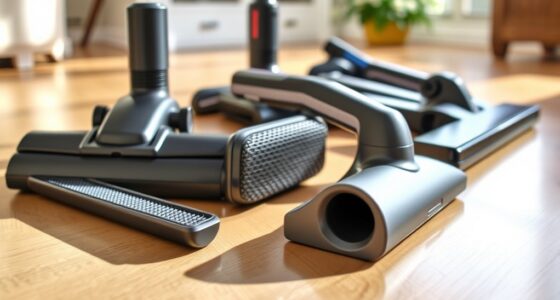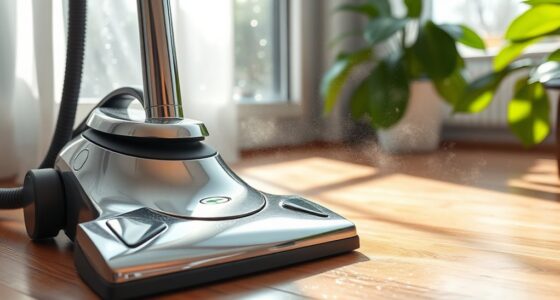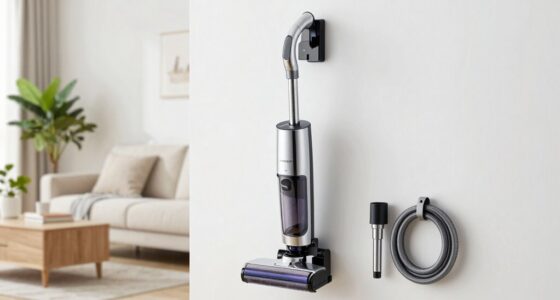
Vacuuming once or twice a week greatly reduces allergens in your home. By regularly removing dust, pet dander, and pollen, you help prevent these irritants from accumulating. This consistent routine not only improves air quality but also lowers the risk of allergy and respiratory issues. Using a vacuum with a HEPA filter traps even the smallest particles, ensuring they stay inside the vacuum instead of being released back into the air. There’s more to learn about how this all works.

Get cleaning gear delivered free — and shop member deals
- Fast, free delivery on millions of items
- Access to Prime Big Deal Days deals on October 6–7
- Prime Video, Amazon Music and more included
Key Takeaways
- Regular vacuuming removes dust, pet dander, and pollen, preventing allergen accumulation in the home.
- HEPA filters in vacuums capture 99.97% of airborne allergens, ensuring cleaner indoor air.
- Twice-weekly vacuuming of plush carpets effectively reduces allergens trapped within their fibers.
- Maintaining a consistent cleaning schedule prolongs carpet life and minimizes allergen release.
- Combining vacuuming with air purifiers enhances overall indoor air quality and reduces allergen circulation.
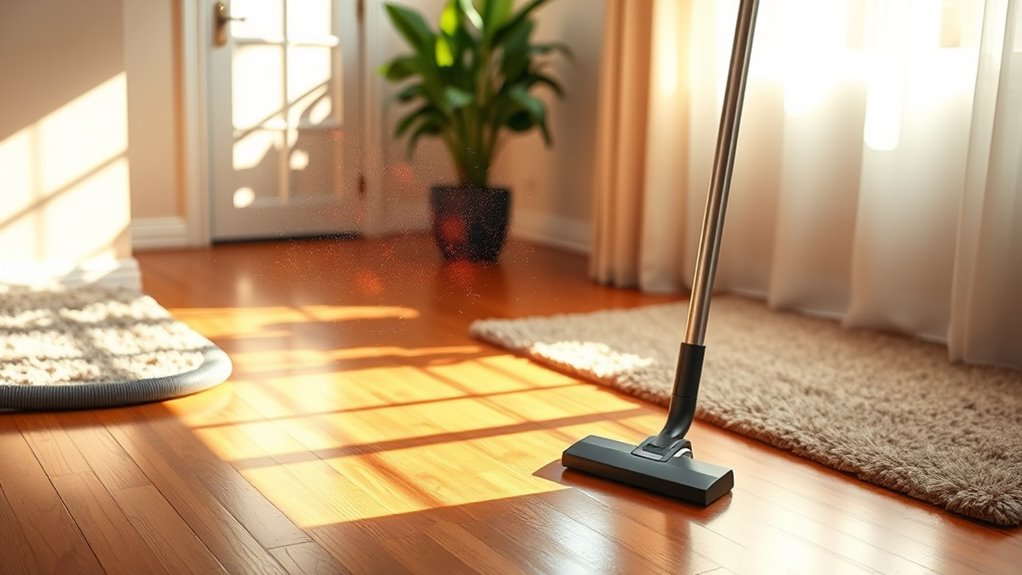
When you consider how often to vacuum, aiming for once or twice a week can make a vital difference in your home’s cleanliness. Regular vacuuming not only keeps your carpets looking fresh but also plays an essential role in reducing allergens in your living space. Over time, dust, pet dander, pollen, and other irritants accumulate in various carpet types, creating an environment that can trigger allergies and respiratory issues. By committing to a consistent vacuuming routine, you can considerably improve the air quality in your home.
Using a vacuum with HEPA filters is necessary for capturing the fine particles that ordinary vacuums might miss. HEPA filters are designed to trap 99.97% of particles as small as 0.3 microns, which means they can effectively capture allergens that float around in your home. When you vacuum your carpets, a HEPA filter helps guarantee that those allergens don’t just get stirred up and released back into the air. Instead, they’re trapped inside the vacuum, making your home cleaner and safer.
Different carpet types may require varying vacuuming techniques or frequencies. For example, plush carpets tend to hold onto dirt and allergens more tightly than low-pile options. If you have plush carpeting, you might consider vacuuming twice a week to keep it in check. On the other hand, if you’ve got hardwood floors or low-pile carpets, once a week may suffice. Understanding your specific carpet type can guide your vacuuming schedule and help you make the most of your efforts.
In addition to reducing allergens, regular vacuuming can also prolong the life of your carpets. Dirt and debris can wear down carpet fibers over time, leading to premature aging and the need for costly replacements. By maintaining a schedule of vacuuming, you not only enhance your home’s cleanliness but also invest in the longevity of your flooring. Additionally, using an air purifier with HEPA filters can further improve indoor air quality by capturing airborne allergens that may escape during vacuuming.
As an affiliate, we earn on qualifying purchases.
Frequently Asked Questions
How Often Should I Vacuum if I Have Pets?
If you have pets, you should vacuum at least two to three times a week. This frequency helps with pet hair removal and keeps your carpets in good shape. Regular vacuuming prevents dirt and dander from building up, making your home cleaner and more comfortable. Plus, it’s easier to maintain your carpets when you stay on top of pet hair. Trust me, your furry friends will appreciate a clean space too!
Can Vacuuming Help With Dust Mite Allergies?
Yes, vacuuming can considerably help with dust mite allergies. By regularly vacuuming your home, you implement effective dust mite prevention and allergen removal strategies. It removes dust, dander, and mites from carpets and upholstery, reducing exposure to allergens. Make sure your vacuum has a HEPA filter for the best results. Also, consider vacuuming once or twice a week to keep your environment clean and minimize symptoms related to dust mite allergies.
What Type of Vacuum Is Best for Allergens?
The best vacuum for allergens is one with a HEPA filter. These filters trap tiny particles, including dust mites and pollen, ensuring they don’t get released back into your home. When choosing a vacuum, consider the carpet types in your space; a vacuum designed for both low-pile and high-pile carpets will be more versatile. Regularly using a vacuum with a HEPA filter can markedly improve your indoor air quality and reduce allergy symptoms.
Does Vacuuming Affect Indoor Air Quality?
Yes, vacuuming does affect indoor air quality. When you vacuum, you’re removing airborne particles that can trigger allergies and respiratory issues. Using a vacuum with a good filtration system guarantees that those particles don’t just get stirred up; they’re captured and contained. Regularly vacuuming helps maintain a cleaner environment, reducing the number of allergens in the air you breathe. It’s a simple way to improve your home’s air quality considerably.
Should I Vacuum Before or After Dusting?
You should vacuum after dusting. When you dust first, you remove particles that settle onto surfaces, and then vacuuming picks up any dust that’s fallen to the floor. This way, you guarantee a thorough clean. It’s smart to establish a dusting schedule and maintain a regular vacuuming frequency to keep your space fresh. Doing this helps minimize allergens and keeps your indoor environment healthy and comfortable for everyone.
Conclusion
By vacuuming once or twice a week, you’re not just tidying up your space; you’re crafting a sanctuary free from allergens. Just as a gardener prunes away dead leaves to nurture vibrant blooms, regular vacuuming helps eliminate dust, pet dander, and pollen that can trigger allergies. Embrace this simple habit, and watch your home transform into a healthier haven. With each sweep, you’re taking a powerful step toward clearer air and a more comfortable life.
Fall Picks
fall essentials
As an affiliate, we earn on qualifying purchases.