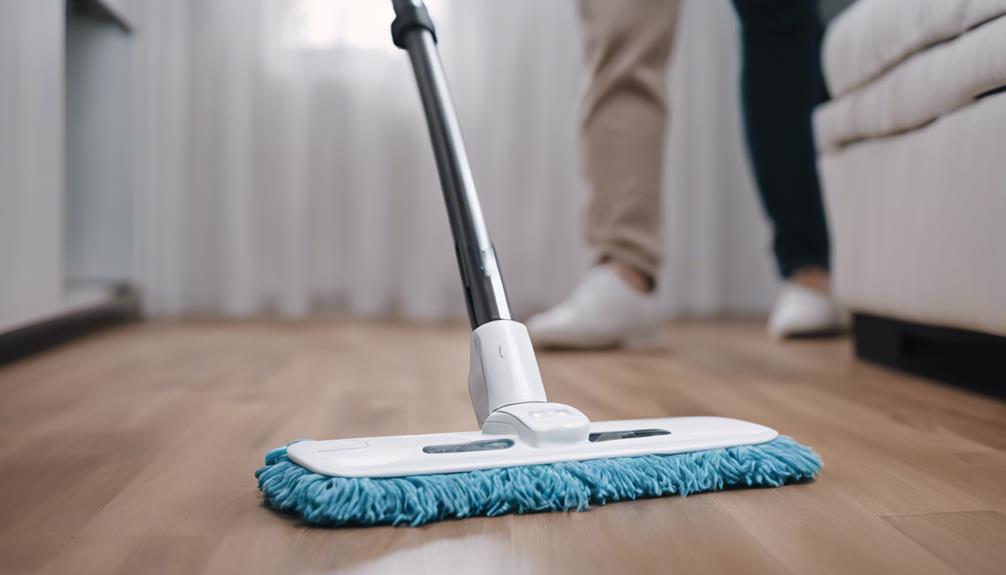
To keep indoor dust from building up between deep cleans, regularly dust surfaces with a damp cloth to prevent dispersing particles. Vacuum with a HEPA filter twice a week and wipe down electronics and vents frequently. Maintain humidity below 50% with dehumidifiers or air conditioners, and keep clutter minimal for easier cleaning. Investing in air purifiers and filtration systems also helps reduce airborne dust. Discover more ways to maintain a dust-free space below.

Get cleaning gear delivered free — and shop member deals
- Fast, free delivery on millions of items
- Access to Prime Big Deal Days deals on October 6–7
- Prime Video, Amazon Music and more included
Key Takeaways
- Use air purifiers and filtration devices to continuously remove airborne dust particles.
- Maintain indoor humidity below 50% to inhibit dust mite proliferation.
- Regularly dust surfaces with a damp cloth to prevent dust dispersal.
- Vacuum carpets and rugs twice weekly with a HEPA-filter vacuum.
- Keep clutter minimal to reduce dust accumulation and simplify cleaning efforts.
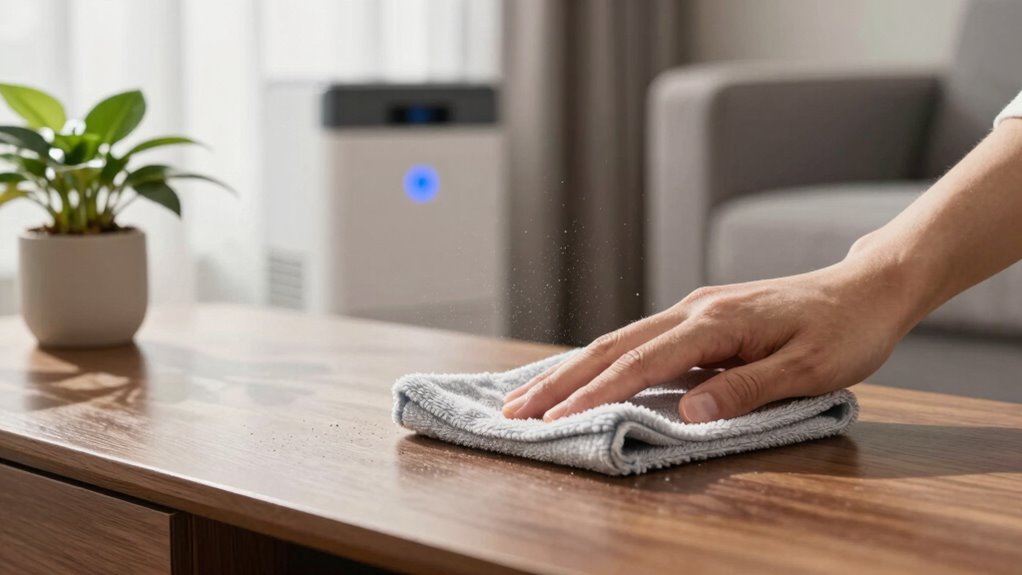
Have you ever wondered why your home feels perpetually dusty, despite regular cleaning? Dust tends to settle quickly, making your space feel unclean even after you’ve tidied up. The good news is, there are practical ways to keep indoor dust from building up between deep cleans, and it often involves simple adjustments to your routine and some helpful tools. One effective approach is using air purifiers, which can considerably reduce airborne dust particles and allergens. These devices pull in air, filter out dust mites, pet dander, and other tiny particles, and then release cleaner air back into your home. By investing in a good air purifier, especially in bedrooms and living areas, you create an environment where dust doesn’t linger as much, making your regular cleaning sessions less burdensome.
Another key to controlling indoor dust is dust mite prevention. Dust mites thrive in humid environments and on fabrics like bedding, curtains, and upholstery. To prevent them from becoming a persistent problem, you should aim to keep humidity levels below 50%. Using a dehumidifier or air conditioner can help maintain ideal humidity and make your home less inviting to these tiny pests. Additionally, wash bedding, pillowcases, and curtains regularly in hot water—at least once a week—to eliminate dust mites and their allergens. Encase mattresses and pillows in allergen-proof covers, which act as barriers against mites and reduce their proliferation. This not only improves air quality but also reduces the amount of dust and allergens that settle on surfaces. Maintaining proper indoor air quality is essential for keeping dust levels manageable and preventing allergens from accumulating. Incorporating air filtration systems into your home can further enhance dust control by capturing even smaller particles that traditional filters may miss.
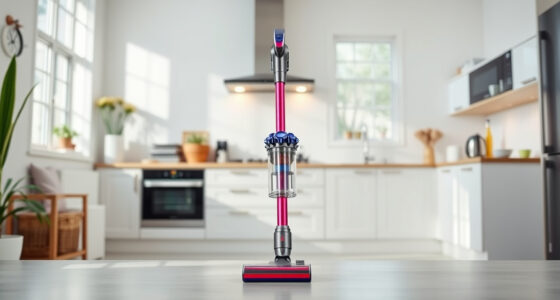
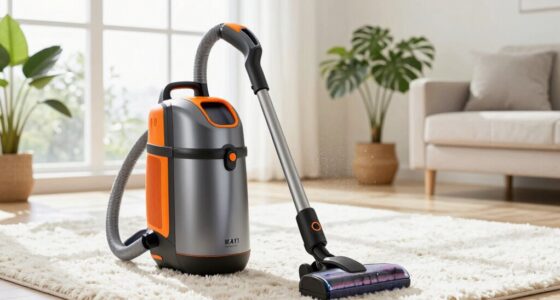
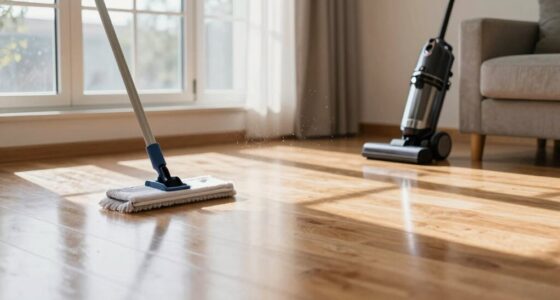
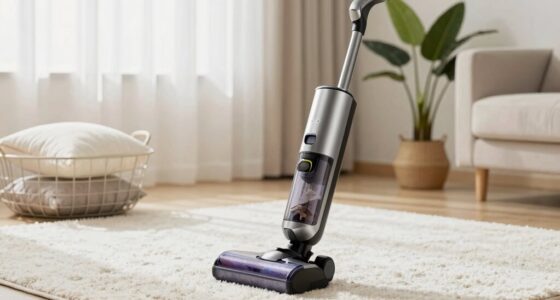
Beyond these measures, maintaining a consistent cleaning routine is crucial. Dust surfaces with a damp cloth rather than a dry duster, as dry dusting tends to spread particles into the air. Vacuum carpets and rugs at least twice a week using a vacuum equipped with a HEPA filter, which traps tiny particles and prevents them from recirculating. Don’t forget to clean your vacuum regularly to keep it functioning efficiently. Also, keep clutter to a minimum, as items like books, toys, and decorative objects collect dust easily and make cleaning more difficult. Regularly wiping down electronics, light fixtures, and vents prevents dust buildup that can quickly re-enter the air when disturbed.
As an affiliate, we earn on qualifying purchases.
Frequently Asked Questions
How Often Should I Replace My Air Filters?
You should replace your air filter every 1 to 3 months, depending on the air filter lifespan and your filter maintenance schedule. Regularly checking the filter guarantees it’s not clogged, which can reduce indoor dust buildup. If you have pets or allergies, consider replacing filters more frequently. Keeping track of replacement dates and choosing the right filter type will help maintain good air quality and prevent dust accumulation between deep cleans.
Can Houseplants Reduce Indoor Dust Effectively?
Yes, houseplants can help reduce indoor dust effectively. Plant varieties like pothos, snake plants, and peace lilies are known for their dust reduction benefits. They trap airborne particles on their leaves, improving air quality. Regularly dusting and watering your plants also boosts their dust-absorbing abilities. Incorporating these plants into your space not only enhances decor but also actively contributes to a cleaner, dust-reduced environment between deep cleans.
Do Air Purifiers Prevent Dust Buildup?
Yes, air purifiers help prevent dust buildup by trapping airborne particles effectively. To maximize their dust trap effectiveness, you need regular air purifier maintenance, such as changing filters as recommended. Keeping your purifier clean guarantees it continues to trap dust efficiently, reducing the amount settling on surfaces. This way, you can maintain a cleaner indoor environment between deep cleans, making dust less of a persistent problem.
What Are the Best Vacuum Settings for Dust Removal?
You should set your vacuum to high suction power for dust removal, especially on carpets and upholstery. For example, Jane increased her vacuum’s suction and used the brush attachment on her rugs, noticing less dust settling afterward. Adjust the vacuum brush to be gentle on delicate surfaces, while maximizing suction power to lift embedded dust particles effectively. This combination guarantees thorough cleaning between deep cleans.
How Does Humidity Affect Indoor Dust Levels?
Humidity control considerably impacts indoor dust levels by affecting dust absorption. When humidity is too low, dust particles become airborne more easily, settling on surfaces and causing buildup. Maintaining a moderate humidity level—around 40-50%—helps dust adhere to surfaces, reducing airborne dust. Using a humidifier or dehumidifier can help you manage humidity effectively, making cleaning easier and keeping dust from accumulating quickly between deep cleans.
Conclusion
To keep indoor dust from building up between deep cleans, stay consistent with your dusting and vacuuming routine. Use air purifiers and keep windows open to improve air circulation. Think of it like sweeping away tiny clouds before they settle into a thick fog—you want to clear the air before dust becomes a visible cloud. With these simple steps, you’ll maintain a cleaner, healthier home, making your deep cleans much easier and less frequent.
Fall Picks
fall essentials
As an affiliate, we earn on qualifying purchases.