HEPA filters considerably improve indoor air quality by trapping harmful particles like dust, pollen, pet dander, and smoke. This helps create a cleaner and healthier living environment for you and your family. When you regularly replace these filters and maintain your air purifier, you reduce allergens and irritants, ensuring ideal performance. Keeping your air clean is essential for your health, and there’s more to discover about maintaining a healthy space.
Key Takeaways
- HEPA filters trap harmful particles like dust, pollen, and pet dander, significantly improving indoor air cleanliness.
- They reduce allergens and irritants, contributing to a healthier living environment.
- Regularly maintained HEPA filters prevent pollutants from being released back into the air.
- They are essential components of effective air purifiers, enhancing their overall performance.
- Clean air promoted by HEPA filters supports better respiratory health for occupants.
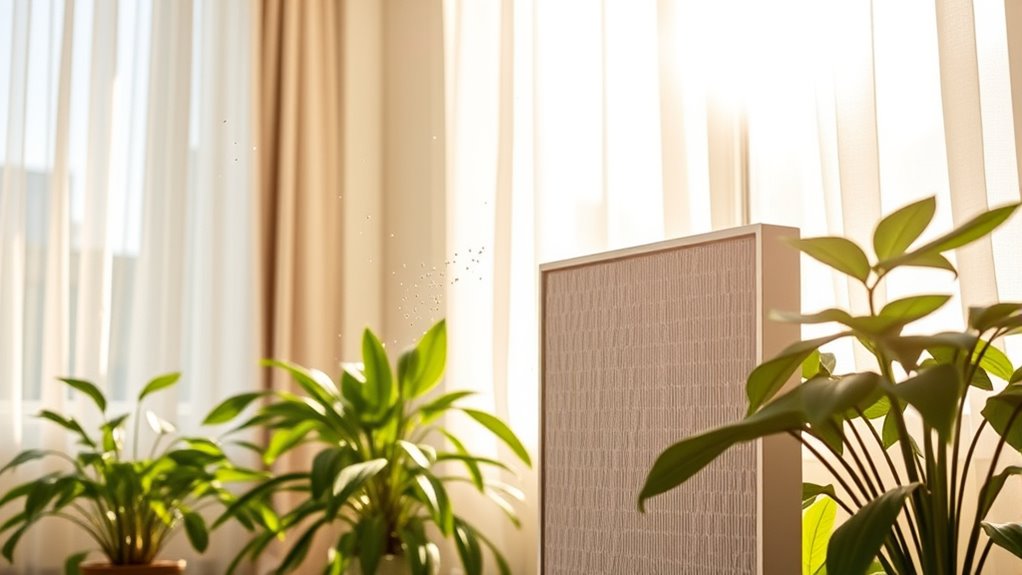
When it comes to maintaining a healthy home environment, HEPA filters play an essential role in enhancing indoor air quality. They’re designed to trap harmful particles like dust, pollen, pet dander, and even smoke, ensuring that the air you breathe is cleaner and healthier. By investing in a good air purifier equipped with a HEPA filter, you’re taking a significant step toward reducing allergens and irritants in your home. But to maximize their effectiveness, you need to pay attention to air purifier maintenance.
Regular maintenance is indispensable for ensuring your HEPA filter continues to perform well. One of the most important aspects of this maintenance is sticking to a filter replacement schedule. Over time, filters can become clogged with particles, making them less effective and potentially even releasing trapped pollutants back into the air. This can lead to poor air quality, which defeats the purpose of having an air purifier in the first place. Depending on your usage, you should typically replace your HEPA filter every six to twelve months. If you have pets or live in a high-pollen area, you might want to replace it more frequently.
Regularly replacing your HEPA filter every six to twelve months is crucial for maintaining optimal air quality.
Keep an eye on your air purifier’s performance indicators, if available. Many modern devices come equipped with reminders or indicators showing when it’s time for a filter change. If your air purifier doesn’t have such features, you’ll need to set a reminder for yourself. You can jot it down in your calendar or set an alarm on your phone to help you remember. By sticking to this schedule, you’re ensuring that the air purifier continues to run efficiently, protecting your indoor air quality. Additionally, regular filter replacement is critical for capturing small particles effectively, ensuring better air quality.
Don’t forget that proper air purifier maintenance goes beyond just replacing the filter. Regularly cleaning the outside of the unit and checking for any dust buildup around the intake and exhaust vents can also help maintain best performance. A clean air purifier works more efficiently and lasts longer, which saves you money in the long run.

2 Pack Core Mini Filter H13 True HEPA Filters for LEVOIT Core Mini Core Mini-P Air Purifier Replacement Filter 3-in-1 HEPA, High-Efficiency Activated Carbon, Replace Part Core Mini-RF
- Compatibility: Fits LEVOIT Core Mini models only
- Pack Size: Includes 2 replacement filters
- Filtration Efficiency: H13 True HEPA filters 99.97% particles
As an affiliate, we earn on qualifying purchases.
As an affiliate, we earn on qualifying purchases.
Frequently Asked Questions
How Often Should I Replace My HEPA Filter?
Replacing your HEPA filter is like changing the oil in your car; it keeps everything running smoothly. Generally, you should replace it every 6 to 12 months, depending on usage and air quality. For a longer filter lifespan, check it every few months for dust buildup. If you notice reduced airflow or increased dust, it’s time for a change. Following these replacement tips guarantees your indoor air stays fresh and clean.
Can HEPA Filters Remove Odors From the Air?
HEPA filters can’t effectively remove odors from the air, as they’re designed to capture particles like dust and allergens, not gases or odors. However, they can contribute to air freshening by reducing the number of irritants that might amplify unpleasant smells. For better odor absorption, you might consider using activated carbon filters alongside your HEPA filter. This combination helps tackle both particles and odors, creating a fresher indoor environment for you.
Are HEPA Filters Safe for Pets?
Yes, HEPA filters are safe for pets! You might be wondering if they can cause any harm, but rest assured, they’re designed to trap allergens without releasing harmful substances back into the air. Just remember, proper filter maintenance is key. Regularly changing the filters keeps the air clean and your pets healthy. So, you can enjoy fresh, filtered air while knowing your furry friends are safe and sound. Isn’t that a relief?
Do HEPA Filters Work in All Air Purifiers?
HEPA filters don’t work in all air purifiers due to filter compatibility issues. Some air purifier types are designed to use specific filters, while others may accept HEPA filters. Before purchasing, check your purifier’s specifications to make certain it can accommodate a HEPA filter. If it’s compatible, you’ll benefit from improved air quality, but always verify first to avoid wasting time and money on the wrong filter.
Can I Wash and Reuse My HEPA Filter?
You can’t wash and reuse your HEPA filter. In fact, studies show that a typical HEPA filter can capture 99.97% of particles, but its lifespan is generally around six months to a year, depending on usage. While some cleaning methods may seem tempting, washing can damage the filter’s fibers and reduce its effectiveness. It’s best to replace your HEPA filter regularly to guarantee maximum air quality and performance in your space.
Conclusion
Incorporating HEPA filters into your indoor space can markedly enhance air quality, making it healthier for you and your loved ones. Did you know that HEPA filters can capture up to 99.97% of airborne particles as small as 0.3 microns? That’s impressive! By investing in these filters, you’re not just reducing allergens; you’re creating a cleaner, more comfortable environment. So, take the step to breathe easier and enjoy the benefits of fresher air every day!