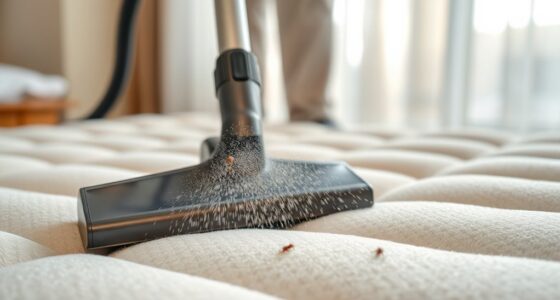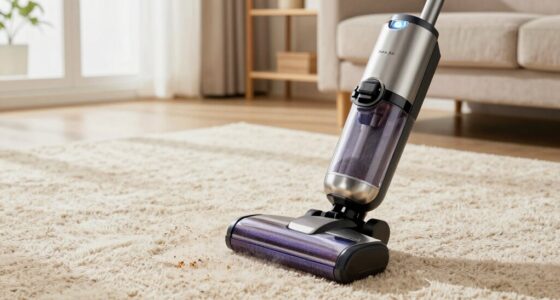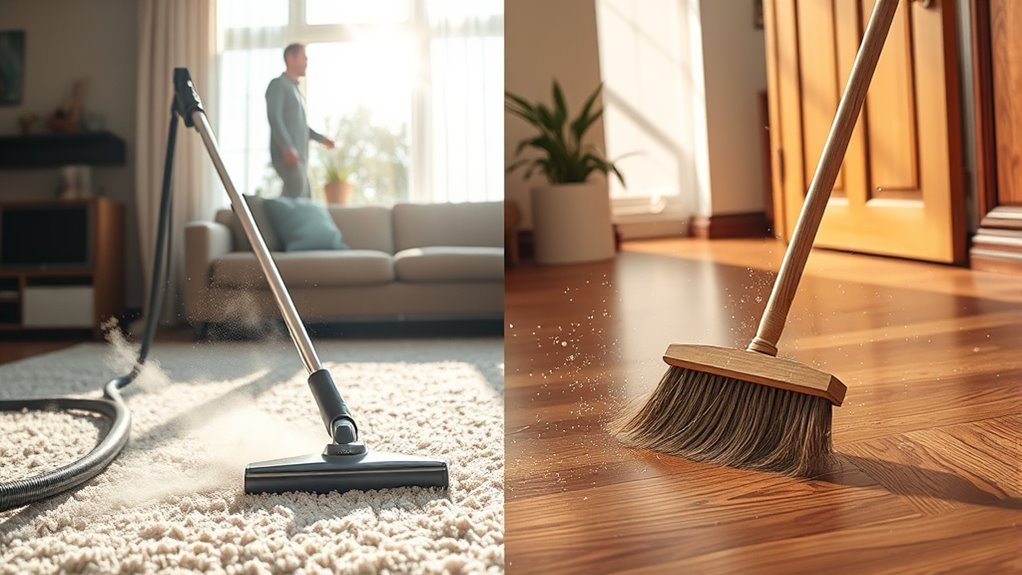
When it comes to reducing allergens, vacuuming is far superior to sweeping. Vacuums trap dirt and allergens in sealed compartments, preventing them from becoming airborne. Sweeping, on the other hand, tends to kick up dust, worsening air quality. Robot vacuums can schedule regular cleanings, consistently improving your indoor environment. For ideal results, you might find that combining both methods works best for your needs. Discover more insights on how to achieve a cleaner home.

Get cleaning gear delivered free — and shop member deals
- Fast, free delivery on millions of items
- Access to Prime Big Deal Days deals on October 6–7
- Prime Video, Amazon Music and more included
Key Takeaways
- Vacuuming with sealed compartments effectively traps allergens, preventing them from becoming airborne, unlike sweeping which releases dust into the air.
- Robot vacuums continuously improve indoor air quality by operating on schedules, reducing airborne allergens more effectively than manual sweeping.
- Manual sweeping may stir up allergens and require frequent cleaning, making it less effective for long-term allergen control compared to regular vacuuming.
- Combining both vacuuming and sweeping optimizes cleaning efficiency, addressing both allergen reduction and quick spot cleaning needs.
- Overall, vacuuming is superior for allergen control, offering better containment and maintenance for healthier indoor environments.
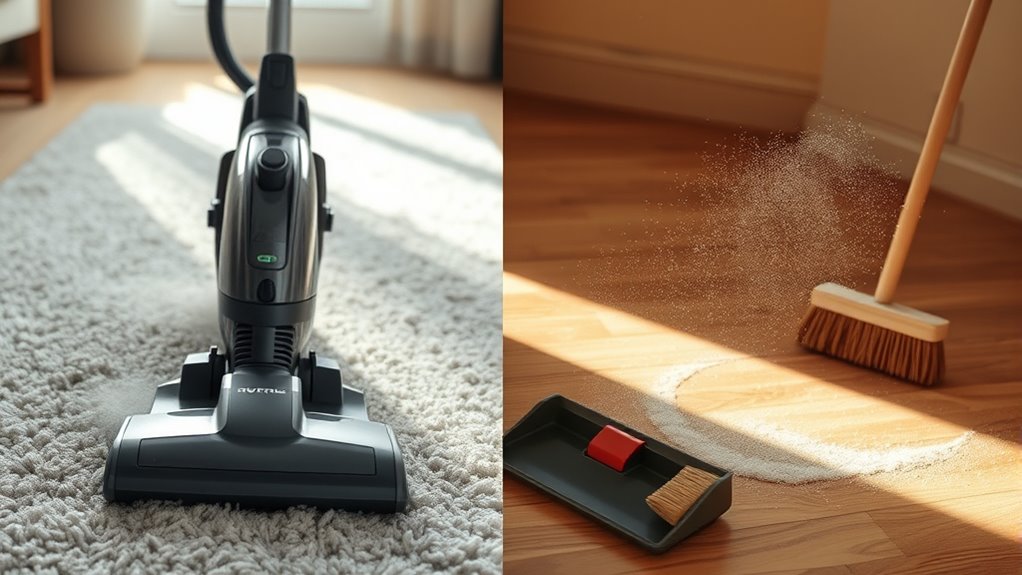
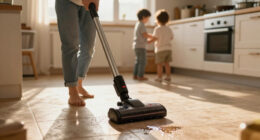
When it comes to keeping your floors clean, you might wonder whether vacuuming or sweeping is the better choice. Both methods have their merits, but if you’re particularly concerned about allergens, you’ll want to contemplate how each one affects your indoor air quality. While sweeping with manual sweepers can effectively remove visible debris, it often stirs up dust and allergens, making the air quality worse in the process. This is where vacuuming, especially with robot vacuums, shines.
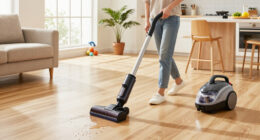
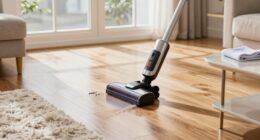
Robot vacuums are designed to suck up dirt, dust, and allergens directly into a sealed compartment. Unlike manual sweepers, which can push particles around, these devices trap allergens inside, preventing them from becoming airborne. If you or someone in your home suffers from allergies, using a robot vacuum can be a game-changer. They’re especially handy for maintaining a clean environment since they can operate on a schedule, cleaning your floors while you’re away. This means you can come home to a dust-free space without lifting a finger.
Robot vacuums efficiently trap allergens, ensuring cleaner air and a dust-free home while you enjoy your day.
On the other hand, manual sweepers can be useful for quick clean-ups, particularly on hard floors. They’re lightweight and easy to maneuver, making them ideal for picking up crumbs and small debris. However, they don’t have the same effectiveness in reducing allergens. When you sweep, you’re likely to release dust particles back into the air, which can aggravate allergies and respiratory issues. If you opt for sweeping, you might find that you have to clean more frequently to maintain a healthy environment.
If you’re torn between the two methods, you might consider a combination approach. For everyday maintenance, let a robot vacuum handle the bulk of the cleaning. It can easily navigate around furniture, getting into corners and tight spaces that you might miss when sweeping. Then, you can use a manual sweeper for spot cleaning or in areas that require a more hands-on approach. This way, you benefit from the strengths of both methods while mitigating the downsides.
Ultimately, if reducing allergens is your primary goal, vacuuming, particularly with a quality robot vacuum, is the way to go. You’ll enjoy cleaner air and a healthier home environment, leaving you with peace of mind and more time to focus on what you love. Implementing proper planning in your cleaning routine can further enhance the effectiveness of your efforts.
best HEPA sealed compartment vacuum cleaner
As an affiliate, we earn on qualifying purchases.
As an affiliate, we earn on qualifying purchases.
Frequently Asked Questions
How Often Should I Vacuum or Sweep to Reduce Allergens?
You should vacuum or sweep at least once a week to effectively reduce allergens like dust mites and pet dander. If you have pets, consider doing it more frequently—every few days if possible. This keeps your home cleaner and minimizes the buildup of allergens. Pay special attention to carpets and upholstery, as these areas trap more dust and dander. Regular cleaning will help you maintain a healthier living environment.
Are There Specific Types of Brooms for Allergy Sufferers?
Yes, there are specific brooms that can help allergy sufferers. Picture a soft-bristled broom with natural fibers, like horsehair or coconut, gently sweeping away dust and allergens. These brush types trap particles instead of scattering them. Avoid synthetic materials that can release dust back into the air. Look for brooms with rubber bristles too; they effectively pick up pet hair and allergens, making your cleaning routine easier and healthier for your home.
Can Using a Vacuum Worsen Allergies?
Yes, using a vacuum can worsen allergies if it’s not properly maintained. Clogged filters and bags can release allergens back into the air. To minimize this, you should regularly check and replace filters, and empty bags when full. While sweeping techniques can help, they often stir up dust. If you prefer vacuuming, ensure your vacuum’s equipped with a HEPA filter for better allergen control and cleaner air in your home.
What Are the Best Vacuum Filters for Allergen Reduction?
The best vacuum filters for allergen reduction are HEPA filters. They trap 99.97% of allergens, ensuring cleaner air in your home. Why settle for less when you can have an allergy-proof vacuum? These specialized vacuums are designed to minimize the release of dust and allergens back into the air, making them perfect for allergy sufferers. Investing in a vacuum with a HEPA filter can markedly improve your indoor air quality and comfort.
Is There a Difference in Allergens Between Hardwood and Carpeted Floors?
Yes, there’s a difference in allergens between hardwood and carpeted floors. Hardwood has advantages like being easier to clean and less likely to trap dust and allergens. You can quickly wipe it down, reducing exposure. On the other hand, carpets pose challenges; they tend to hold onto allergens like pet dander and dust mites. If you’re sensitive to allergens, opting for hardwood can markedly improve your indoor air quality.
Conclusion
When it comes to battling allergens, vacuuming is your superhero sidekick, while sweeping is just the sidekick’s clumsy cousin. Sure, sweeping might seem easier, but it’s like trying to catch a sneeze with a butterfly net—utterly hopeless! Vacuuming swoops in, gobbling up dust and allergens like a hungry monster, leaving your home fresher than a spring meadow. So, if you want to breathe easy and keep those pesky allergens at bay, grab that vacuum and liberate its mighty power!
Fall Picks
fall essentials
As an affiliate, we earn on qualifying purchases.