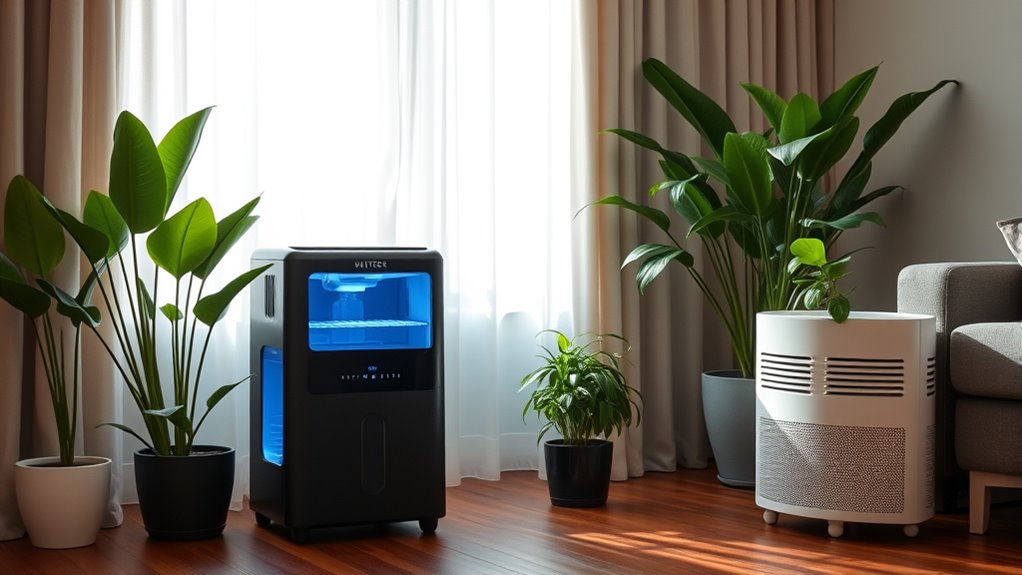

Using dehumidifiers and air purifiers helps you create a healthier home by lowering humidity and filtering out airborne pollutants like pollen, pet dander, and mold spores. This reduces mold growth, alleviates allergy symptoms, and improves overall air quality. Properly maintaining these devices guarantees they work efficiently and last longer. If you want to discover how to maximize their benefits for a cleaner, safer environment, keep exploring these tools further.

Get cleaning gear delivered free — and shop member deals
- Fast, free delivery on millions of items
- Access to Prime Big Deal Days deals on October 6–7
- Prime Video, Amazon Music and more included
Key Takeaways
- Dehumidifiers reduce indoor humidity, preventing mold growth and protecting surfaces, which enhances overall home health.
- Air purifiers filter airborne pollutants like allergens, dust, and VOCs, improving indoor air quality.
- HEPA and activated carbon filters work together to trap allergens and absorb odors, reducing respiratory issues.
- Regular maintenance of both devices ensures optimal performance and long-term health benefits.
- Combining dehumidifiers and air purifiers creates a healthier, mold-free, and allergen-reduced indoor environment.

If you want to improve your indoor air quality, dehumidifiers and air purifiers are vital tools. These devices work together to create a healthier environment by tackling common indoor air issues like excess moisture and airborne pollutants. When you use a dehumidifier, you actively reduce humidity levels in your home, which is essential for mold prevention. Mold thrives in damp, humid environments, so keeping moisture in check helps prevent its growth on walls, ceilings, and other surfaces. By controlling humidity, you also hinder the proliferation of mold spores, which can cause allergic reactions and respiratory problems.
Reducing humidity with a dehumidifier helps prevent mold growth and protects your health.
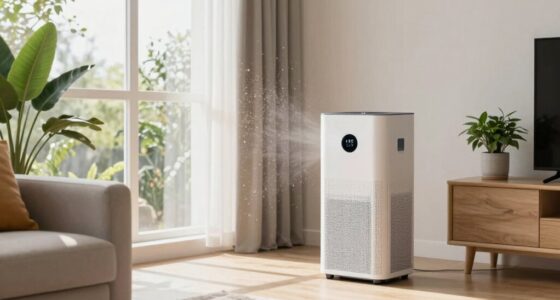
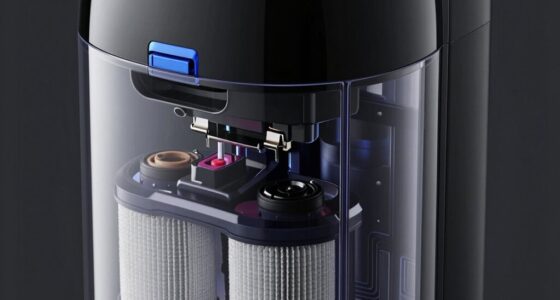
Air purifiers complement this process by filtering out airborne allergens such as pollen, pet dander, dust mites, and mold spores. These tiny particles can trigger allergy symptoms, asthma, and other respiratory issues, especially if you’re sensitive or have existing conditions. When you run an air purifier equipped with HEPA filters, you effectively trap these allergens, reducing their presence in your indoor air. This leads to fewer sneezing fits, less congestion, and a more comfortable living space overall. Additionally, some air purifiers include activated carbon filters that absorb odors and volatile organic compounds (VOCs), further improving air quality.
Using these tools together means you’re actively working to create an environment that’s less hospitable to mold growth and allergen buildup. A dehumidifier reduces the moisture that mold needs to flourish, while the air purifier ensures that airborne particles are captured before you breathe them in. It’s a proactive approach that not only alleviates allergy symptoms but also maintains a cleaner, fresher indoor atmosphere.
You might notice that in areas with high humidity, such as basements or bathrooms, the combination of dehumidifiers and air purifiers becomes especially effective. In these spaces, moisture levels tend to spike, making mold prevention more important and airborne allergens more concentrated. Regularly maintaining your devices, like cleaning filters and emptying water tanks, ensures they perform at their best. Proper device maintenance is essential for maximizing the effectiveness of your dehumidifier and air purifier, ensuring they continue to protect your health.
When you invest in these tools, you’re taking concrete steps toward safeguarding your health, especially during allergy seasons or in damp climates. In the end, dehumidifiers and air purifiers are powerful allies in your quest for a healthy home. They work on different fronts—one controlling moisture, the other filtering pollutants—to create a more comfortable, mold-free, and allergen-reduced environment that benefits you and everyone in your household.
As an affiliate, we earn on qualifying purchases.
Frequently Asked Questions
Can Dehumidifiers and Air Purifiers Be Used Together Effectively?
Yes, you can use dehumidifiers and air purifiers together effectively. Their combined use creates synergistic air quality, reducing humidity and filtering out pollutants simultaneously. To maximize benefits, follow device integration strategies like placing dehumidifiers in damp areas and positioning air purifiers in high-traffic zones. This approach guarantees a healthier, more comfortable home environment by tackling moisture and airborne contaminants efficiently.
How Often Should I Replace Filters in Air Purifiers?
You should replace your air purifier filters every 6 to 12 months, depending on filter lifespan and usage. Check the manufacturer’s recommendations for your specific model, as replacement frequency varies with air quality and how often you use the device. If you notice decreased airflow or musty odors, it’s time to change the filter sooner. Regular replacement guarantees your air purifier works efficiently and maintains a healthy home environment.
Are Dehumidifiers Suitable for Small, Enclosed Spaces?
You might be surprised, but dehumidifiers are indeed suitable for small, enclosed spaces. Their device efficiency shines in tight areas, reducing excess moisture effectively. However, you’ll want to choose a compact model with appropriate capacity to avoid over-drying or noise issues. When used correctly, these devices can maintain ideal humidity levels, creating a healthier environment without overwhelming your small space. Just ensure proper sizing for maximum benefit.
Do Air Purifiers Remove All Types of Airborne Viruses?
Air purifiers can considerably reduce airborne viruses, but they don’t remove all types. HEPA filters are most effective at capturing airborne viruses, but some filters, like activated carbon, mainly target odors and chemicals. To maximize protection, choose an air purifier with a HEPA filter and make sure it’s properly maintained. Keep in mind, no purifier guarantees complete removal, so combine it with good ventilation and hygiene practices for the best results.
What Maintenance Is Required to Keep These Devices Functioning Properly?
You should clean your air purifier or dehumidifier at least once a month, as 60% of devices accumulate dust and mold without regular maintenance. To keep them working properly, replace filters according to the manufacturer’s instructions—usually every 3 to 6 months—and regularly clean the device exterior and internal components. Doing so guarantees peak performance and keeps your home environment healthy and safe.
Conclusion
You might think dehumidifiers and air purifiers are just extra gadgets, but they’re essential for a healthier home. Imagine breathing easier, free from mold, dust, and allergens that can cause health issues. Even if you worry about the cost, think of it as an investment in your well-being. With these tools, you create a safer, more comfortable space, so you can enjoy better air quality every day—your lungs will thank you.
Fall Picks
fall essentials
As an affiliate, we earn on qualifying purchases.