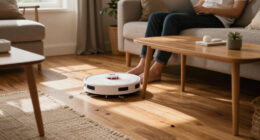
Better filtration helps during peak allergy months because it captures airborne allergens like pollen, dust mites, and pet dander that flood your indoor air. High-quality filters, such as HEPA, effectively remove tiny particles that regular filters miss, making it easier to breathe and reducing allergy symptoms. Regular maintenance and using a combination of testing and good habits strengthen your defense against allergens. Keep going to discover more ways to improve your indoor air quality during allergy season.

Get cleaning gear delivered free — and shop member deals
- Fast, free delivery on millions of items
- Access to Prime Big Deal Days deals on October 6–7
- Prime Video, Amazon Music and more included
Key Takeaways
- Better filtration captures smaller airborne allergens like pollen, dust mites, and pet dander more effectively.
- High-quality filters reduce allergen buildup, improving indoor air quality during peak allergy seasons.
- Effective filtration minimizes allergy symptoms by decreasing allergen circulation indoors.
- Upgrading filters ensures consistent removal of allergens as pollen and dust levels rise outside.
- Proper filtration, combined with maintenance, creates a healthier indoor environment during allergy peaks.

Are allergy seasons making your symptoms worse? If so, improving your home’s filtration system can make a considerable difference. During peak allergy months, airborne allergens like pollen, dust mites, and pet dander flood the air, aggravating your symptoms. One of the most effective ways to combat this is by guaranteeing your indoor environment is as clean and allergen-free as possible. This is where air quality testing and diligent filter maintenance come into play.
Air quality testing helps you identify the specific pollutants lurking in your home. It provides a clear picture of what’s circulating in your indoor air, allowing you to tailor your filtration efforts accordingly. When you know exactly what allergens are present, you can choose the right filters and filtration methods to target those particles effectively. Regular testing also helps you monitor the impact of your improvements, guaranteeing your home remains a healthy sanctuary during allergy season.
Filter maintenance is vital during these months because your filters are the frontline defense against airborne allergens. Over time, filters trap dust, pollen, and other pollutants, but they can become clogged or less effective if not replaced regularly. Neglecting filter maintenance means allergens can bypass your filtration system and settle in your home’s air, intensifying allergy symptoms. By adhering to a routine schedule for replacing filters—preferably every one to three months—you keep your HVAC system working efficiently and maintain ideal air quality.
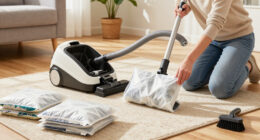
Choosing high-quality filters, such as HEPA filters, can dramatically reduce airborne allergens. These filters are designed to capture tiny particles that standard filters might miss. When combined with proper filter maintenance, they create a formidable barrier against allergens, helping you breathe easier. Additionally, maintaining good indoor habits—like vacuuming with HEPA vacuum cleaners and washing bedding frequently—further reduces allergen buildup.
Incorporating air quality testing into your allergy management strategy ensures you’re proactive rather than reactive. It guides your decisions on when to upgrade filters or adjust your filtration system. Pairing these tests with consistent filter maintenance can greatly alleviate allergy symptoms, making your home a more comfortable space during those tough months. Ultimately, better filtration isn’t just about cleaner air—it’s about reclaiming your comfort and health during allergy season.
As an affiliate, we earn on qualifying purchases.
Frequently Asked Questions
How Often Should I Replace My Air Filters During Allergy Season?
You should replace your air filters every 30 to 60 days during allergy season. The filter lifespan shortens due to increased allergen buildup, which can clog your filter faster. Regular replacements guarantee your filtration system remains effective at trapping pollen, dust, and other allergens. Keep an eye on the filter’s condition and replace it sooner if you notice visible dirt or a decrease in air quality, especially during peak allergy months.
Can Better Filtration Reduce Allergy Symptoms Indoors Significantly?
Can better filtration considerably reduce your allergy symptoms indoors? Absolutely—improving air quality and allergen removal makes a noticeable difference. High-quality filters trap pollen, pet dander, and dust mites more effectively, preventing them from circulating in your home. This means fewer sneezing fits and itchy eyes. Investing in advanced filtration systems helps create a cleaner, healthier environment during peak allergy months, making your indoor space more comfortable and allergy-friendly.
Are High-Efficiency Filters Safe for Asthma Sufferers?
High-efficiency filters are generally safe for asthma sufferers, as they use filter material designed to trap allergy triggers like dust mites, pollen, and pet dander. However, you should verify that the filter has a MERV rating of 13 or higher, and confirm your HVAC system can handle it without restricting airflow. Regularly replacing the filter also helps prevent buildup, keeping indoor air clean and safe for asthma management.
Do Air Purifiers With HEPA Filters Work Better Than Standard Filters?
Air purifiers with HEPA filters work better than standard filters because HEPA technology captures 99.97% of airborne particles, including allergens and pollutants. You’ll notice improved air quality, especially during allergy seasons. However, to maintain their effectiveness, you need regular filter maintenance, replacing or cleaning filters as recommended. This guarantees your purifier continues to perform at its best, providing cleaner air and relief from allergens and irritants.
How Does Filtration Impact Indoor Air Humidity Levels?
Think of your home’s air as a garden needing just the right balance of moisture. Good filtration influences humidity control by removing airborne particles that can trap moisture, helping to stabilize indoor air quality. When filters are efficient, they prevent excess humidity or dryness, creating a healthier environment. Proper filtration supports maintaining ideal humidity levels, ensuring your indoor air stays comfortable, fresh, and free from allergens or mold.
Conclusion
During peak allergy months, upgrading your filtration system can make a real difference. Not only does it remove more allergens from the air, but it also creates a healthier living environment. Did you know that HEPA filters can trap up to 99.97% of airborne particles? By investing in better filtration, you’re reducing allergy symptoms and improving your overall well-being. Don’t wait—take control now and breathe easier during those challenging months.
Halloween Picks
halloween
As an affiliate, we earn on qualifying purchases.