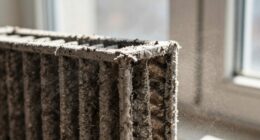
Indoor plants can boost air quality and may help reduce allergy symptoms if you choose the right types and maintain them properly. Opt for non-flowering, low-pollen plants like peace lilies or ferns, and keep soil dry to prevent mold growth. Regular cleaning and good airflow are essential to prevent mold and dust buildup. If you’re cautious about plant selection and care, you’ll discover how to enjoy greenery without worsening allergies. Want to learn which plants work best? Keep exploring.
Key Takeaways
- Certain non-flowering, low-maintenance indoor plants can improve air quality and potentially reduce allergy symptoms.
- Proper plant care, including regular cleaning and avoiding overwatering, minimizes mold and allergen buildup indoors.
- Avoiding flowering or fragrant plants helps prevent pollen and VOC emissions that can worsen allergies.
- Choosing plants with broad, smooth leaves reduces dust and debris accumulation that may trigger allergies.
- Maintaining good air circulation and soil dryness further decreases mold growth, supporting allergy-friendly indoor environments.

Are you tired of sneezing every spring? If so, you might be considering adding indoor greenery to your home to boost your mood and air quality. But before rushing out to buy a bunch of plants, it’s important to understand how plant allergies can affect you. Some indoor plants can trigger allergic reactions, especially if you’re sensitive to pollen or mold spores. While many people believe that having indoor greenery helps purify the air and reduce allergy symptoms, the reality is a bit more nuanced. Certain plants release tiny particles or mold that can worsen allergy symptoms, making your home environment more uncomfortable rather than more comfortable. That’s why choosing the right plants matters and understanding how plant allergies work is essential.
Many common houseplants, like peace lilies, ferns, and pothos, are generally considered safe and even beneficial for allergy sufferers. These plants tend not to produce a lot of pollen or mold, so they’re less likely to exacerbate allergies. In fact, some indoor greenery can help improve air quality by filtering out dust, toxins, and airborne pollutants, which may reduce allergy symptoms over time. However, it’s vital to keep plants clean and well-maintained because mold can develop in soil if it’s kept too moist. Mold spores are a common allergen, and if you notice a musty smell or mold growth, you’ll want to remove or treat the affected plant promptly. Regularly wiping leaves and avoiding overwatering can considerably reduce mold buildup, making your indoor environment healthier.
On the other hand, some plants are known to release pollen or irritants that could worsen allergy symptoms. For example, flowering plants or those with a strong fragrance may produce pollen or volatile organic compounds (VOCs) that irritate sensitive noses and lungs. If you’re prone to plant allergies, it’s best to avoid flowering or overly fragrant indoor plants altogether. Instead, opt for non-flowering, low-maintenance plants that don’t produce pollen or shed much debris. Choosing plants with smooth, broad leaves rather than fuzzy or delicate ones can also help minimize dust and mold accumulation. Remember, even with the best choices, proper plant care—like good air circulation and soil dryness—is key to preventing mold growth and keeping your indoor environment allergy-friendly.
![Bumble Plants Monstera Adansonii Real Indoor Plants Live Houseplants [Winter Thermal Packaging Included] | Air Purifier Indoor Plants | Real Plants Decor for Living Room, Office, Desk & Bathroom](https://m.media-amazon.com/images/I/41gi6bb35YL._SL500_.jpg)
Bumble Plants Monstera Adansonii Real Indoor Plants Live Houseplants [Winter Thermal Packaging Included] | Air Purifier Indoor Plants | Real Plants Decor for Living Room, Office, Desk & Bathroom
DISTINCTIVE AESTHETIC APPEAL: The Monstera Adansonii features striking, perforated leaves that add a unique and stylish touch to…
As an affiliate, we earn on qualifying purchases.
As an affiliate, we earn on qualifying purchases.
Frequently Asked Questions
Can Allergy-Reducing Plants Trigger Reactions in Sensitive Individuals?
Yes, allergy-reducing plants can still trigger reactions in sensitive individuals. Plant allergenicity varies, and some plants may release pollen or spores that act as sensitive plant triggers. Even if a plant is considered hypoallergenic, it might still cause symptoms for certain people. Always check the specific plant’s allergen profile, and monitor your reactions closely to guarantee indoor plants don’t worsen allergy symptoms.
Do Indoor Plants Increase Mold Growth in Humid Environments?
Think of your home as a greenhouse, where humidity control is key. Indoor plants in humid environments can act like sponges, trapping moisture and creating ideal conditions for mold growth. If humidity levels stay high, mold can flourish on soil and plant surfaces. To keep this in check, guarantee proper ventilation, avoid overwatering, and maintain humidity below 50%, so your indoor oasis stays fresh and mold-free.
Are There Specific Plants Recommended for Pet Allergies?
Yes, there are pet-friendly plants and allergy-sensitive species you can consider. Look for options like spider plants, Boston ferns, or areca palms, which are generally safe for pets and less likely to trigger allergies. These plants help create a healthier indoor environment without risking your pet’s health. Always check specific plant labels and consult with a vet or allergist to verify they’re suitable for your pet and allergy concerns.
How Often Should Allergy-Reducing Plants Be Cleaned or Maintained?
Think of your allergy-reducing plants as delicate friends who need care to stay helpful, not harmful. You should dust them weekly to remove plant dusting buildup and follow consistent watering schedules to prevent mold and bacteria. Regular maintenance keeps allergens at bay and guarantees your indoor plants continue to provide the benefits you seek. Stay attentive, and your plants will remain a healthy, soothing presence in your home.
Can Plants Help Reduce Airborne Allergens in Allergy-Prone Homes?
Plants can help reduce airborne allergens in allergy-prone homes by promoting air purification and allergen reduction. As you place indoor plants known for filtering toxins—like peace lilies or spider plants—you actively improve air quality. Regularly maintaining and cleaning these plants prevents mold and dust accumulation, ensuring they continue to purify the air effectively. Incorporate such plants into your space to create a healthier, allergen-reduced environment.

MK01 MK06 Replacement Filter Compatible with AROEVE MK01/MK06 DH-JH01 and ToLife TZ-K1 Air Purifier 4-in-1 Replacement Filter Standard Version, 4 Pack, Blue
【PERFECT COMPATIBILITY】These air purifier filter replacement are precision-designed for seamless integration with AROEVE MK01, MK06, MG01JH, and POMORON…
As an affiliate, we earn on qualifying purchases.
As an affiliate, we earn on qualifying purchases.
Conclusion
So, next time you bring home that lush plant, remember it might not be your allergy cure after all. Instead of clearing your sinuses, it could be sneezing fits waiting to happen. It’s ironic how something meant to bring nature indoors can turn your sanctuary into a pollen pit. Sometimes, the plants we think are helping end up hurting more. So, choose wisely—you might just be inviting more trouble than relief.

Nearly Natural 4ft Golden Cane Palm, Double Stalk Artificial Tree With Lush Realistic Foliage Maintenance Free Indoor Faux Palm Plant For Living Room, Easy Setup, Perfect Tropical Decoration
Realistic Look: Full, lush foliage with two trunks and hundres of leaves; feels real to the touch; brightens…
As an affiliate, we earn on qualifying purchases.
As an affiliate, we earn on qualifying purchases.
non-flowering indoor plants for allergy relief
As an affiliate, we earn on qualifying purchases.
As an affiliate, we earn on qualifying purchases.