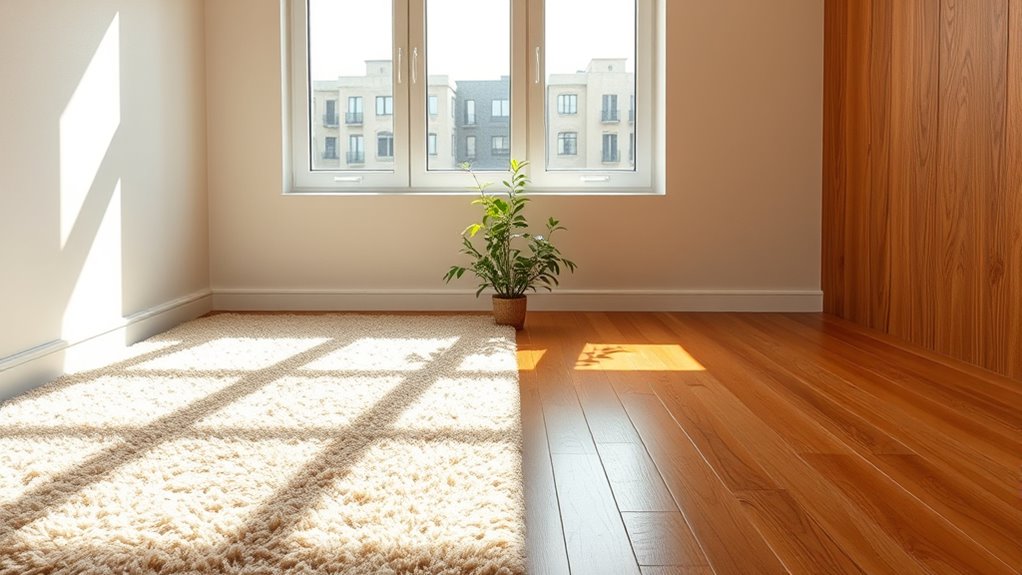

When choosing allergy-friendly flooring, hardwood is the clear winner over carpets. Carpets trap dust, dander, and allergens that can worsen your symptoms, making them hard to clean effectively. In contrast, hardwood floors are easy to maintain, offer a stylish look, and reduce airborne irritants. They’re also durable and add long-term value to your home. If you want to discover more about how to choose the best flooring for your health, keep exploring your options.

Get cleaning gear delivered free — and shop member deals
- Fast, free delivery on millions of items
- Access to Prime Big Deal Days deals on October 6–7
- Prime Video, Amazon Music and more included
Key Takeaways
- Hardwood floors are easier to maintain and clean, reducing allergen accumulation compared to carpets.
- Carpets trap allergens like dust and pet dander, worsening allergy and asthma symptoms.
- Hardwood flooring minimizes airborne allergens, contributing to better indoor air quality.
- Carpets require intensive cleaning to manage irritants, while hardwood only needs simple mopping.
- Choosing hardwood enhances durability and long-term cost savings, as carpets may need frequent replacement.

If you’re looking to create a healthier home environment, choosing allergy-friendly flooring is a smart move. When it comes to selecting the right flooring, you’ll want to weigh the pros and cons of carpets versus hardwood. Both options have their unique characteristics, but if you’re particularly sensitive to airborne allergens, hardwood flooring might be the better choice.
Carpets can trap dust, pet dander, pollen, and other allergens, making them a breeding ground for irritants. Even with the best cleaning routines, it can be tough to remove all the embedded allergens from deep within the fibers. Regular vacuuming helps, but it often doesn’t get rid of everything. If you have allergies or asthma, your health could suffer as a result of the allergens lurking in your carpets.
Carpets can harbor allergens, making it challenging to maintain a healthy indoor environment for those with allergies or asthma.
On the other hand, hardwood flooring is considerably easier to maintain and clean. You won’t have to worry about dust settling into fibers because hardwood surfaces are smooth and non-porous. Sweeping or vacuuming regularly ensures that airborne allergens don’t accumulate. When it comes time for a deeper clean, a simple mopping with a damp cloth is usually all you need. This ease of maintenance can make a huge difference in your indoor air quality.
One of the major benefits of hardwood flooring is its durability. Unlike carpets, which may need to be replaced every few years due to wear and tear or staining, hardwood can last for decades with proper care. This longevity not only saves you money in the long run but also means fewer materials going to waste.
Additionally, hardwood floors have a timeless appeal and can enhance the aesthetic of your home. They come in various styles and finishes, allowing you to choose an option that fits your design preferences while also benefiting your health.
If you’re still considering carpets for their comfort, think about using area rugs instead. They can provide warmth and softness without the long-term allergen issues that come with wall-to-wall carpeting. You can easily wash area rugs, which makes them a more manageable option for those prone to allergies.
Ultimately, when you’re deciding between carpets and hardwood, consider your health and cleaning needs. Choosing hardwood may be the best way to minimize airborne allergens and create a cleaner, healthier living space.
As an affiliate, we earn on qualifying purchases.
Frequently Asked Questions
How Often Should I Clean Allergy-Friendly Carpets?
You should clean your allergy-friendly carpets at least once a week to maintain ideal allergen removal. Vacuuming regularly helps eliminate dust, pet dander, and other allergens that can accumulate. For deeper cleaning, consider steam cleaning every 6 to 12 months, depending on your environment. If you have pets or allergies, you might need to increase your cleaning frequency. Staying proactive ensures your carpets remain a safe and comfortable space for everyone.
Are There Eco-Friendly Options for Allergy-Friendly Hardwood?
You’ve got a treasure trove of eco-friendly options for allergy-friendly hardwood. Imagine flooring that not only looks stunning but also helps save the planet! You’ll find hardwood with eco-friendly finishes that minimize harmful emissions. Plus, sustainable materials like bamboo or reclaimed wood are not just stylish; they’re kind to Mother Earth. So, you can breathe easy, knowing your choice supports both your health and the environment. What’s not to love?
Can I Install Hardwood Over Existing Carpet?
You can’t install hardwood directly over existing carpet. Doing so creates installation concerns, like uneven surfaces and inadequate support for the hardwood. Additionally, material compatibility is essential; carpet can trap moisture and debris, leading to potential damage or mold. Instead, remove the carpet first to guarantee a stable base for your hardwood flooring. This way, you’ll achieve a durable and visually appealing result while avoiding future issues.
What Are the Costs Associated With Allergy-Friendly Flooring?
When considering allergy-friendly flooring, you’ll find installation costs can vary considerably based on the material you choose. Hardwood typically has higher upfront costs, while carpets might seem cheaper initially. However, don’t forget about maintenance expenses; hardwood is usually easier to clean and maintain, potentially saving you money long-term. Carpets, on the other hand, might require more frequent cleaning, which can add to your overall expenses. It’s wise to weigh both factors carefully.
Do Carpets Attract More Dust Than Hardwood?
Think of your home as a stage, where every surface plays a role. Carpets tend to attract more dust than hardwood due to their fibrous nature, creating a cozy hideaway for dust accumulation. If you choose carpets, you’ll need to commit to regular carpet maintenance, like vacuuming and deep cleaning, to keep that stage pristine. Hardwood, in contrast, requires less upkeep and allows dust to settle lightly, making it easier to manage.
Conclusion
When it comes to choosing allergy-friendly flooring, you might find yourself torn between carpets and hardwood. Coincidentally, both options have their perks, but hardwood often wins for easy cleaning and reduced allergens. As you sip that cup of tea while contemplating your choice, remember that every home is unique, just like your allergies. So, whether you go for the cozy warmth of carpet or the sleek elegance of hardwood, you’ll be creating a space that feels just right for you.
Fall Picks
fall essentials
As an affiliate, we earn on qualifying purchases.