
To keep your system running smoothly and guarantee good indoor air quality, you should replace your HEPA filters every 12 to 18 months. Pre-filters should be checked, cleaned, or replaced every 1 to 3 months, especially during heavy use or allergy seasons. Proper maintenance prevents clogging and prolongs your main filter’s life. Staying consistent with these schedules helps maintain ideal airflow and efficiency—keep going to discover more tips for effective filter management.
Key Takeaways
- HEPA filters are typically replaced every 12 to 18 months, but more frequent changes (6-12 months) may be needed for allergy sufferers.
- Pre-filters should be checked monthly and replaced or cleaned every 1 to 3 months, depending on air quality and usage.
- Washable pre-filters can be reused after cleaning, reducing replacement frequency and environmental impact.
- Neglecting filter replacement can reduce indoor air quality, increase energy bills, and cause equipment wear.
- Regular inspections and following manufacturer guidelines ensure optimal filter replacement intervals for effective maintenance.

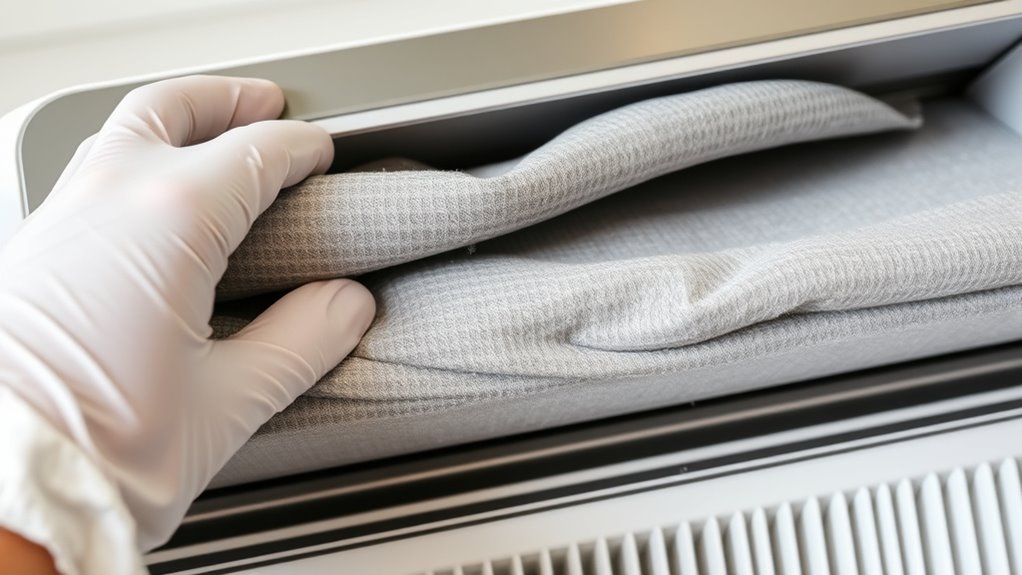
Replacing filters is a simple yet vital task to keep your appliances and systems running smoothly. Regular filter maintenance directly impacts your indoor air quality, helping to remove dust, allergens, and pollutants that can affect your health and comfort. Whether you’re dealing with a furnace, air purifier, or HVAC system, knowing when to change HEPA and pre-filters guarantees peak performance and clean air in your space. Typically, HEPA filters should be replaced every 12 to 18 months, but this can vary based on your environment and usage. If you or family members suffer from allergies, asthma, or respiratory issues, you might need to replace these filters more frequently—every 6 to 12 months. HEPA filters are designed to trap tiny particles, including bacteria and pollen, which means they work harder and may become clogged faster in environments with higher pollutant levels. Checking the manufacturer’s guidelines and inspecting the filter regularly for visible dirt or reduced airflow can help you determine the right replacement schedule. A clogged HEPA filter not only hampers air quality but also forces your system to work harder, increasing energy consumption and wear. Regularly replacing air filters helps to maintain optimal airflow and filtration efficiency. Pre-filters play a vital role in capturing larger particles like dust, pet hair, and lint before they reach the main filter. Because of their function, pre-filters tend to get dirty faster and should be checked monthly during periods of heavy use. Most pre-filters should be replaced or cleaned every 1 to 3 months, depending on air quality and usage. Some pre-filters are washable and can be reused after cleaning, which is cost-effective and environmentally friendly. Regularly maintaining and replacing pre-filters prevents them from becoming clogged, ensuring better airflow and prolonging the life of your HEPA filter. Neglecting filter maintenance can lead to decreased indoor air quality and increased energy bills. When filters become saturated with dirt and debris, airflow is restricted, forcing your system to work harder and reducing its efficiency. This not only compromises air quality but also accelerates equipment wear and tear, leading to costly repairs or replacements. To avoid these issues, set reminders to check your filters regularly, especially during seasons when indoor air quality is most critical, like winter and allergy seasons. Investing a little time in timely replacements guarantees your system functions at its best and your indoor environment remains healthy and comfortable.
Frequently Asked Questions
Can I Change Filters Myself or Should I Hire a Professional?
You can definitely do a DIY replacement of HEPA and pre-filters if you’re comfortable handling the task. Just follow the manufacturer’s instructions carefully to avoid damage. However, for complex systems or if you’re unsure, hiring a professional service guarantees the job’s done correctly and safely. Consider your experience and confidence level—small filters are easy to replace yourself, but professional help is best for larger or more complicated units.
Are There Signs That Filters Need to Be Replaced Sooner?
Like a cloudy sky signals rain, visual cues tell you when filters need replacing. If you notice discoloration or a buildup of dust and debris, it’s time to change them sooner. Filter discoloration is a clear sign that your HEPA or pre-filter is no longer functioning at its best. Regularly inspecting your filters helps maintain air quality and prevents strain on your system, ensuring it works efficiently when you need it most.
How Do Filter Replacement Costs Vary Between Models?
Filter pricing varies widely between models, depending on their size, brand, and filtration technology. When comparing models, you’ll notice some have higher initial costs but offer cheaper replacement filters, saving you money long-term. Cheaper models may have higher filter costs or more frequent replacements. Always check the model comparisons to find a balance between upfront costs and ongoing filter replacement expenses, ensuring you get the best value for your budget.
What Environmental Factors Influence Filter Lifespan?
Environmental factors like indoor pollutants, humidity, and dust levels directly impact your filter’s lifespan. High levels of airborne contaminants reduce filtration efficiency, causing filters to clog faster. Excess humidity can promote mold growth, further decreasing efficiency. Keep your environment clean and well-ventilated to extend filter life. Regularly check filters, especially in polluted or humid spaces, to guarantee ideal indoor air quality and maintain filtration efficiency.
Are There Eco-Friendly Options for Replacement Filters?
Think of your filter choices as planting seeds for a greener future. You can opt for biodegradable filters made from natural materials or recycled materials that give old products new life. These eco-friendly options break down more easily and reduce waste in landfills. By choosing biodegradable or recycled filters, you’re actively protecting the environment while maintaining clean air. It’s a simple, impactful step toward sustainability you can take today.
Conclusion
To keep your air clean and your system running smoothly, don’t put off replacing HEPA and pre-filters. Regular changes prevent buildup and maintain ideal performance. Remember, a stitch in time saves nine—address filter replacements promptly before small issues turn into big problems. Staying proactive ensures your air stays fresh and healthy, so make filter maintenance a priority in your routine. After all, prevention is better than cure when it comes to indoor air quality.