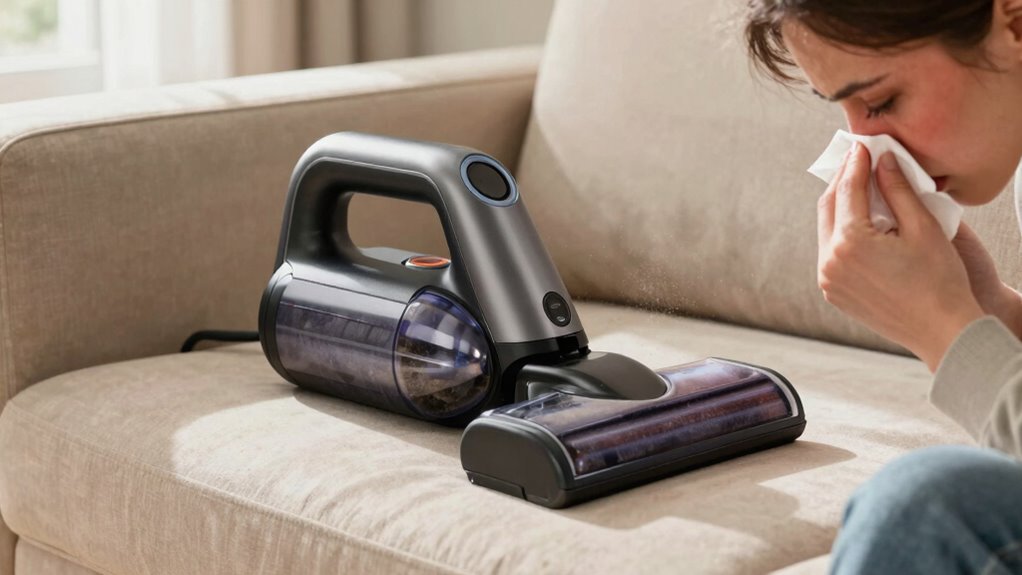
If you rely on handheld vacuums to tackle allergens, you might find they don’t do enough. Their smaller size means less power and weaker filtration, so they often miss fine dust, pet dander, and dust mite debris hiding deep in fabrics and upholstery. HEPA filters help, but many models lack this feature or require regular maintenance. To truly improve indoor air quality and allergy symptoms, you’ll want more effective cleaning tools and techniques—keep exploring to learn more.
Key Takeaways
- Handheld vacuums often lack the power and specialized filters needed to effectively trap allergens like pet dander and dust mites.
- Many handheld models have basic filters that do not capture fine allergen particles, allowing them to escape back into the air.
- They are best suited for quick cleanups and small areas, not comprehensive allergen removal from deep in fabrics or carpets.
- Regular maintenance, such as filter cleaning and emptying, is crucial to maintain allergen removal efficiency.
- Combining handheld vacuum use with air purifiers and good ventilation enhances overall indoor allergy control.

While handheld vacuums are convenient for quick cleaning, they can pose challenges for allergy sufferers due to their limited capacity to trap and remove allergens effectively. If you’re prone to allergies, especially those triggered by pet dander and dust mites, you need to be aware of these restrictions. Handheld vacuums often lack the power and filtration systems necessary to thoroughly eliminate tiny particles that cause allergic reactions. Pet dander, which clings to furniture, carpets, and bedding, often remains airborne or settles back into surfaces after a quick pass. Similarly, dust mites thrive in fabric and soft surfaces, releasing allergenic particles that can easily escape inadequate vacuuming.
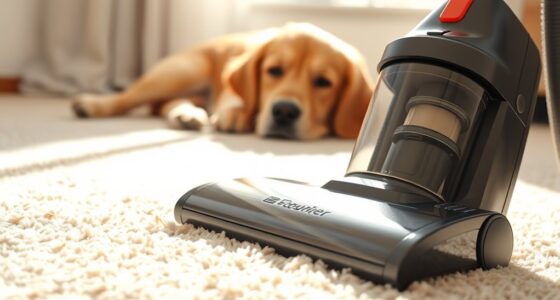
Because handheld vacuums are small and lightweight, they tend to have less suction power than upright or canister models. This means they might not effectively pick up pet dander embedded in upholstery or dust mite debris hiding deep within fibers. You might find yourself repeatedly vacuuming the same area, only to notice lingering allergens afterward. The filters in many handheld models are often basic or non-HEPA, which means they don’t trap fine allergen particles efficiently. Instead, these particles can escape back into the air, worsening allergy symptoms. This is especially problematic if you’re trying to control pet dander levels or dust mites, since you need a vacuum that can contain these irritants rather than disperse them.
To improve dust mite control and reduce pet dander, you should consider using a handheld vacuum equipped with a true HEPA filter. HEPA filters are designed to trap at least 99.97% of particles as small as 0.3 microns, which includes most pet dander and dust mite debris. Even with a HEPA filter, the small size of handheld vacuums means you’ll need to be diligent about frequent cleaning and targeted use on problem areas like furniture, curtains, and bedding. Regularly emptying the vacuum canister and maintaining the filter are also key to ensuring it performs at its best. Additionally, indoor air quality improvements such as proper ventilation can help reduce allergen buildup. Incorporating air purifiers into your living space can further assist in minimizing airborne allergens.
Using a comprehensive cleaning routine that includes allergen control methods can significantly reduce exposure and symptoms. It’s important to remember that vacuum maintenance plays a crucial role in ensuring optimal allergen removal, especially with HEPA filters. Keep in mind that handheld vacuums are best suited for quick cleanups rather than all-encompassing allergen control. For someone with allergies, supplementing with a more powerful, full-size vacuum designed for allergen removal is advisable. Proper cleaning techniques, combined with a quality vacuum equipped for dust mite control and pet dander, can greatly reduce allergy symptoms and improve your indoor air quality. Remember, the goal isn’t just convenience but creating a healthier living environment free from irritating allergens.

Gxzsk Handheld Vacuum Cordless, 15000PA Strong Suction Hand Held Car Vacuum Cleaner Rechargeable, Portable Hand Vacuum with Multi-Nozzles & Washable Filter for Home Office, Car, Pets
🌀【15000PA Strong Suction Power】The handheld vacuum cordless is equipped with an advanced high-speed motor that provides powerful suction…
As an affiliate, we earn on qualifying purchases.
As an affiliate, we earn on qualifying purchases.
Frequently Asked Questions
Can Handheld Vacuums Effectively Remove Pet Dander?
Yes, handheld vacuums can effectively remove pet dander, especially if they have strong suction and a HEPA filter. You can use them for quick clean-ups of pet hair on furniture, carpets, and other surfaces. While they may not replace full-sized vacuum cleaners for deep carpet cleaning, they’re excellent for targeting pet hair and dander in small areas, helping reduce allergy triggers and keeping your space cleaner.
Do HEPA Filters Improve Allergy Control in Handheld Vacuums?
Yes, HEPA filters greatly improve allergy control in handheld vacuums. They effectively trap tiny allergens like pet dander, dust mites, and pollen, preventing them from being released back into the air. When you use a handheld vacuum with HEPA filtration, you’re enhancing allergen removal, which can reduce allergy symptoms and improve indoor air quality. This makes it easier for you to maintain a cleaner, healthier living environment.
Are Handheld Vacuums Suitable for Cleaning Allergy-Sensitive Bedding?
You can absolutely use a handheld vacuum for allergy-sensitive bedding, but it’s not a magic wand. While it helps remove dust mites and allergens, electromagnetic interference from some models might disrupt nearby electronics. Plus, frequent use can drain the battery lifespan faster, meaning you’ll need to recharge more often. For best results, choose a vacuum with a HEPA filter, make certain it’s compatible with your electronics, and keep your batteries healthy.
How Often Should I Replace Filters in Allergy-Friendly Handheld Vacuums?
You should replace filters in your allergy-friendly handheld vacuum every 3 to 6 months, depending on usage and filter type. Pay attention to the filter lifespan recommendations from the manufacturer, as replacement frequency can vary. Regularly check your filter for dirt buildup or damage, and replace it promptly to maintain peak suction and allergen removal. This guarantees your vacuum continues to help reduce allergens effectively.
Can Handheld Vacuums Eliminate Airborne Allergens During Cleaning?
Handheld vacuums can help improve air quality by removing surface allergens, but they usually can’t eliminate airborne allergens completely during cleaning. You actively reduce allergen levels by using models with HEPA filters, which trap tiny particles. For maximum allergen removal, you should also ventilate the space afterward and consider using air purifiers. Regularly cleaning your vacuum’s filters ensures it continues effectively helping with allergen control.

Shark Cordless Vacuum Cleaner, HEPA Filter, Lightweight, Portable, Rechargeable, Pet Hair Pickup, Removable Handheld, Crevice, Upholstery & Dusting Brush Included, 40-min runtime, Red, IZ362H
HYPERVELOCITY ACCELERATED SUCTION: Provides incredible cleaning performance in an ultra-lightweight vacuum.
As an affiliate, we earn on qualifying purchases.
As an affiliate, we earn on qualifying purchases.
Conclusion
While handheld vacuums may seem limited for allergy sufferers, choosing models with HEPA filters can make a big difference. Imagine effortlessly capturing dust, pet dander, and pollen from every corner of your home, leaving the air fresher and cleaner. Don’t let concerns hold you back — with the right vacuum, you’ll breathe easier and enjoy a more comfortable environment. Take control today and transform your space into a healthier haven.

Bissell Pet Hair Eraser Cordless Hand Vacuum, Lithium Ion, Home, Auto, and Pet Vacuum, Easy-Empty Dirt Bin, Upholstery Tool, Brush Tool, and Crevice Tool Included, 2390A
EVERY PURCHASE SAVES PETS. Every purchase makes it possible for BISSELL to continue our support of BISSELL Pet…
As an affiliate, we earn on qualifying purchases.
As an affiliate, we earn on qualifying purchases.
compact HEPA vacuum for dust mites
As an affiliate, we earn on qualifying purchases.
As an affiliate, we earn on qualifying purchases.