Robot vacuums with advanced HEPA filters help you manage allergies by effectively trapping pet dander, dust mites, and airborne irritants. They regularly clean floors and soft surfaces, reducing allergen buildup and improving indoor air quality. Their programmable schedules ensure consistent maintenance, supporting a healthier environment. By using these devices, you take a proactive step toward lessening allergy symptoms. Keep exploring to discover how the right features can make your home even more allergy-friendly.
Key Takeaways
- Robot vacuums efficiently remove pet hair and dust mites, reducing airborne allergens in your home.
- Equipped with HEPA filters, they trap microscopic particles, preventing allergen recirculation.
- Regular cleaning with robot vacuums minimizes allergen buildup on carpets, furniture, and soft furnishings.
- Programmable schedules ensure consistent allergen control without manual effort.
- Using robot vacuums improves indoor air quality and supports allergy symptom relief.
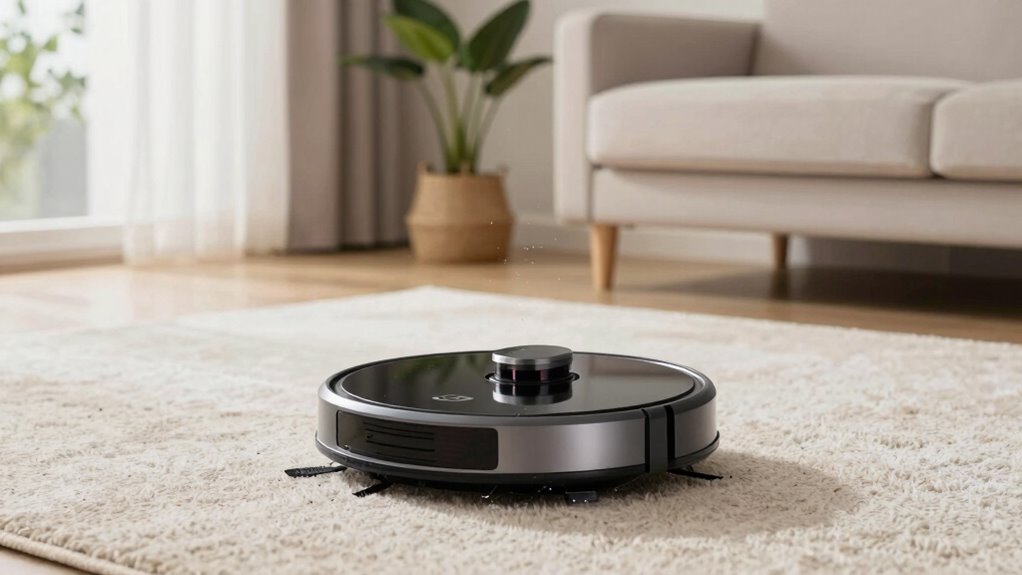
If you suffer from allergies, keeping your home free of dust and allergens is a constant challenge. Pet hair and dust mites are two of the most common culprits that aggravate allergy symptoms. Regular cleaning helps, but it’s often not enough to keep these tiny irritants at bay. This is where robot vacuums come into play, offering a practical solution to manage and reduce allergens daily. These devices are designed to consistently keep floors clean, especially in hard-to-reach spots and under furniture where pet hair and dust mites tend to accumulate.
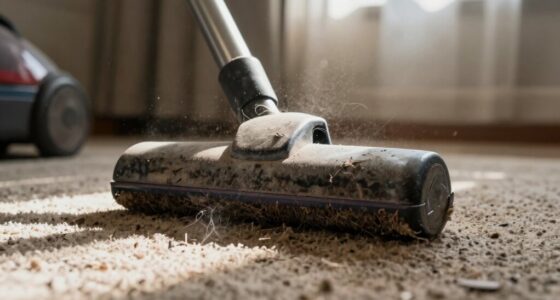
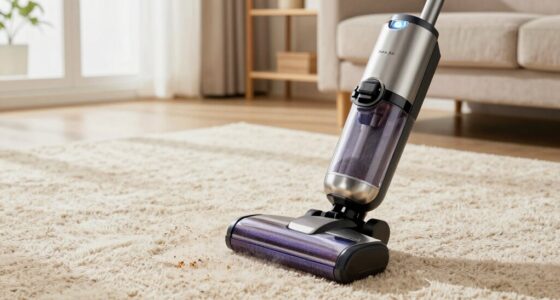
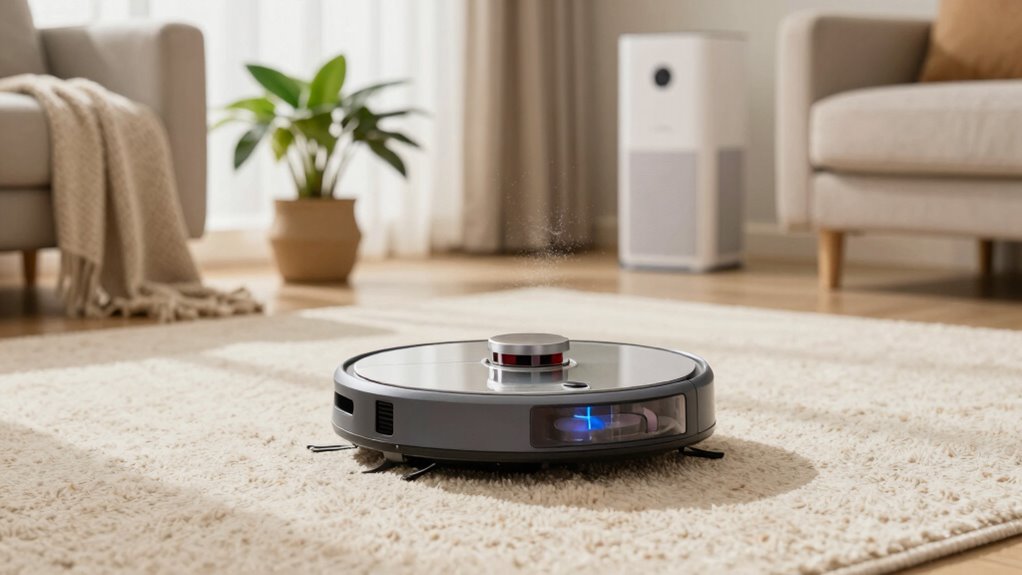
Robot vacuums excel at removing pet hair, which can quickly build up on carpets, rugs, and upholstery, becoming airborne whenever disturbed. Their powerful suction and specialized brushes help lift pet hair from various surfaces, decreasing the amount that becomes trapped in fibers or floats in the air. Frequent use means less pet hair remains lingering around, reducing the chances of it becoming airborne and irritating your allergies. Additionally, many robot vacuums come with HEPA filters, which trap tiny particles, including pet dander and dust mites, preventing them from being redistributed into your living space. This filtration is essential for allergy sufferers because it captures allergens that traditional vacuums might recirculate.
Robot vacuums efficiently remove pet hair and allergens with HEPA filters, reducing airborne irritants and improving allergy symptoms.
Dust mites, which thrive in bedding, curtains, and soft furnishings, are often difficult to eliminate completely. Robot vacuums help by regularly cleaning the surfaces where dust mites hide, particularly in carpets and rugs. While they can’t reach every nook, their consistent routine reduces the overall dust and allergen load in your home. When used in combination with other allergen-reducing practices—like washing bedding frequently and using dust-proof covers—you’ll notice a significant decrease in allergy symptoms over time.
Using a robot vacuum also encourages a more consistent cleaning schedule, which is essential for allergy control. Instead of sporadic deep cleans, these devices can be programmed to operate daily or multiple times a week, ensuring that pet hair and dust mites don’t have time to accumulate. This consistency minimizes the amount of allergens that become airborne and helps maintain a cleaner, healthier environment. Plus, by freeing you from the chore of manual vacuuming, it allows you to focus on other allergy-reducing measures without feeling overwhelmed. When you invest in a quality robot vacuum equipped with allergen filters, you’re taking a proactive step toward creating a home that’s less hospitable to pet hair, dust mites, and other airborne allergens. Incorporating allergen control strategies such as these can significantly improve your quality of life. Regular use of such devices not only supports indoor air quality but also contributes to a healthier living environment for allergy sufferers. Furthermore, choosing a robot vacuum with a HEPA filtration system can greatly enhance its effectiveness in capturing microscopic allergens, making it an invaluable tool for allergy management.

Shark AV2501S AI Ultra Robot Vacuum, with Matrix Clean, Home Mapping, 30-Day Capacity HEPA Bagless Self Empty Base, Perfect for Pet Hair, Wifi, Dark Grey
- Powerful Suction: Removes dirt from all floor types
- Matrix Clean Navigation: Ensures thorough, grid-based cleaning
- Self-Emptying Base: Holds up to 30 days of debris
As an affiliate, we earn on qualifying purchases.
As an affiliate, we earn on qualifying purchases.
Frequently Asked Questions
Do Robot Vacuums Have Filters That Specifically Target Allergens?
Yes, many robot vacuums have filters that target allergens. Look for models with HEPA filtration because they trap tiny allergen particles, reducing airborne allergens and improving air quality. These filters are especially effective at allergen removal, helping you breathe easier, especially if you’re sensitive or allergic to dust, pet dander, or pollen. Choosing a robot vacuum with HEPA filters guarantees better allergy control at home.
How Often Should I Replace the Filters in My Robot Vacuum?
Think of your robot vacuum as a trusty droid from a sci-fi saga. You should replace the filters every 2-3 months to keep it performing at its best, especially if you notice a decline in suction or dust capacity. Regular filter changes help maintain battery life and dust capacity, ensuring your device continues to target allergens effectively. Don’t forget to check the manufacturer’s guidelines for specific recommendations tailored to your model.
Can Robot Vacuums Remove Pet Dander Effectively?
Yes, robot vacuums can effectively remove pet dander, especially if they excel at pet hair removal and carpet cleaning. They pick up pet hair and dander lodged in carpets and on surfaces, reducing allergens in your home. Regular use helps keep pet allergens at bay, improving air quality. For best results, choose a robot vacuum with strong suction, a HEPA filter, and specialized pet hair tools.
Are Robot Vacuums Safe for Homes With Asthma Sufferers?
Yes, robot vacuums are generally safe for homes with asthma sufferers. With smart navigation, they efficiently clean without bumping into furniture or spreading dust, reducing allergen circulation. Plus, many models have long battery lifespans, allowing thorough cleaning sessions that remove pet dander and dust mites effectively. Just make certain you choose a model with good filtration and regular maintenance to keep indoor air quality high and minimize asthma triggers.
Do Robot Vacuums Improve Indoor Air Quality Long-Term?
Sure, robot vacuums promise long-term air quality improvement, but don’t get your hopes too high. They do help with dust containment and air filtration by removing surface debris, but they can’t replace proper ventilation or HEPA filters. Over time, they may contribute to cleaner air, especially for allergy sufferers, yet ongoing maintenance and thorough cleaning remain essential for actual long-term air quality benefits.
Conclusion
You might think robot vacuums only keep your floors clean, but they could also be your secret weapon against allergies. Some studies suggest that regular use can reduce dust and pet dander, improving your breathing. While not a cure-all, investing in a good robot vacuum might just be the allergy relief you need. So, could this tech be the key to a healthier, sneeze-free home? It’s worth giving it a try.