
When your air filter gets dirty, it can’t trap dust, pollen, and allergens effectively. Instead, these tiny particles get released back into the air, making your room feel dusty even if it looks clean. A clogged filter also causes more allergens to circulate, irritating your respiratory system. Plus, it forces your HVAC system to work harder, increasing energy costs and risking damage. Keep going to discover how proper filter care can improve your indoor air quality.
Key Takeaways
- Dirty filters release trapped allergens and particles back into indoor air, causing a dusty feeling despite a clean appearance.
- Clogged filters lose efficiency, allowing dust, pollen, and pet dander to circulate freely in the room.
- Buildup of contaminants like mold and bacteria in filters can contribute to a dusty, allergic environment.
- Neglected filters strain HVAC systems, reducing filtration effectiveness and increasing airborne dust.
- Regular filter maintenance prevents allergen circulation, ensuring a fresher, less dusty indoor atmosphere.
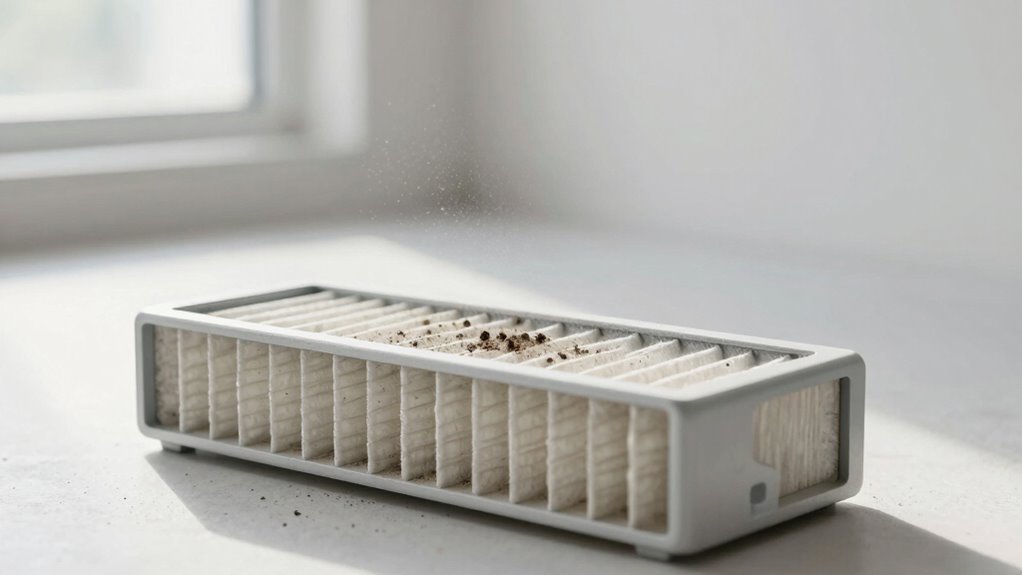
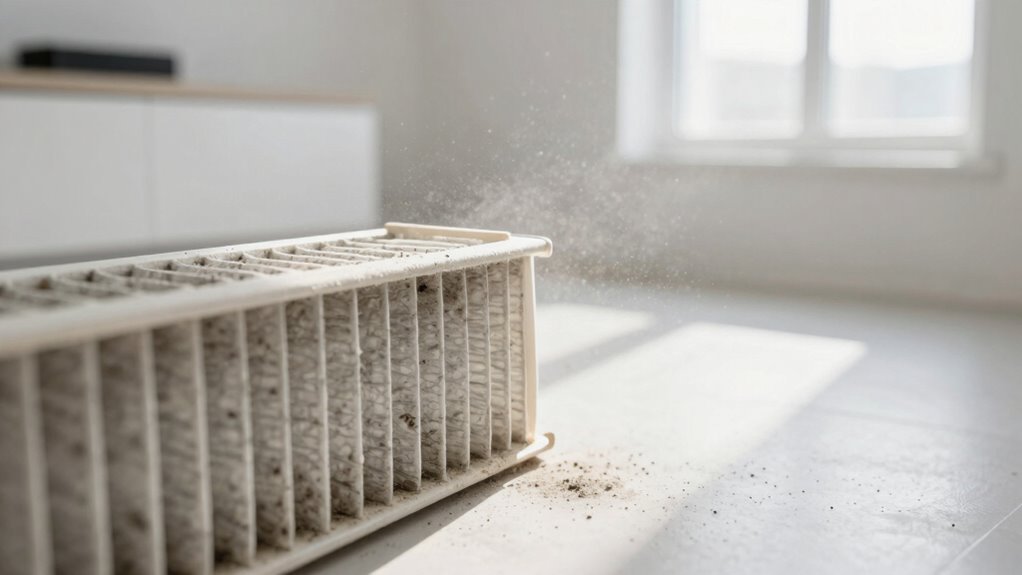
Even in a room that looks spotless, a dirty air filter can make the space feel dusty and uncomfortable. You might have cleaned every surface, vacuumed thoroughly, and kept everything tidy, but if your air filter isn’t properly maintained, dust and other airborne allergens can still linger. You might have cleaned every surface, vacuumed thoroughly, and kept everything tidy, but if your air filter isn’t properly maintained, dust and other airborne allergens can still linger. This is because a clogged or dirty filter loses its ability to trap particles effectively. Instead of catching dust, pollen, pet dander, and other airborne allergens, it starts releasing them back into the air. That means even a pristine-looking room can feel dusty because these tiny particles circulate through your space, settling on surfaces and irritating your respiratory system.
A dirty air filter can make a clean room feel dusty and uncomfortable by releasing trapped allergens back into the air.
When filters aren’t maintained regularly, their efficiency drops significantly. A dirty filter becomes a breeding ground for mold, bacteria, and dust mites. As these contaminants accumulate, they can be pushed back into the air, making it seem like the room is dustier than it truly is. This is especially problematic for allergy sufferers or anyone with respiratory issues. You might think the air quality is fine, but in reality, your filter’s compromised state is the culprit behind that dusty, stuffy feeling. Regular filter maintenance is crucial to prevent this buildup. Changing or cleaning filters as recommended ensures they continue to trap airborne allergens effectively, keeping the air fresh and clean.
You often overlook your filter’s importance because it’s hidden away in your HVAC system or air purifier, but it’s a key player in maintaining indoor air quality. When you neglect filter maintenance, you allow dust and allergens to circulate freely. This not only makes the room feel dusty but also aggravates allergy symptoms like sneezing, congestion, and itchy eyes. Plus, a dirty filter forces your HVAC system to work harder, which can lead to higher energy bills and even equipment failure over time. Staying on top of filter maintenance ensures your system runs smoothly and your indoor air remains healthy. Proper filter maintenance can also extend the lifespan of your HVAC system, saving you money in the long run. Additionally, neglecting filter care can lead to increased energy consumption, further emphasizing the importance of routine upkeep.
In essence, a clean room isn’t just about tidying up surfaces; it’s also about ensuring your air filtration system is functioning properly. You need to replace filters regularly and check them often, especially if you notice dust settling quickly or if allergy symptoms worsen. Remember, your filter acts as a barrier between you and airborne allergens, and its effectiveness depends on your diligence in maintaining it. When you prioritize filter maintenance, you’ll notice a real difference—not just in how your space looks, but in how fresh and breathable it feels. Regularly inspecting and replacing filters can also help prevent the buildup of microplastics in dust, further improving your indoor air quality. Additionally, understanding the importance of air quality can motivate you to stay consistent with maintenance routines.

HPA300 HEPA Filter Replacement for Honeywell Air Purifier HPA300 Series
- Compatible Models: Fits Honeywell HPA Series and R Filters
- High-Quality Materials: Made of non-woven fabric and activated carbon
- Energy Efficient: Advanced low-energy filtration technology
As an affiliate, we earn on qualifying purchases.
As an affiliate, we earn on qualifying purchases.
Frequently Asked Questions
How Often Should I Replace My Air Filters?
You should replace your air filters every 1 to 3 months to maintain ideal air quality. Regular changes prevent dust buildup and guarantee the filter’s lifespan isn’t compromised. If you have pets or allergies, consider replacing filters more frequently. By staying on top of filter replacements, you improve indoor air quality and keep your environment fresh. Remember, a clean filter directly contributes to healthier, cleaner indoor air.
Can Dirty Filters Cause Allergies to Worsen?
Like a bad web browser causing glitches, dirty filters can worsen allergies by trapping more allergy triggers like pollen and dust. When filters stay dirty, they push these irritants into your airflow, aggravating respiratory health issues. Regular filter changes help remove allergens, reducing allergy symptoms and ensuring cleaner air. If you want to breathe easier, don’t let your filters become a digital disaster—change them often to protect your respiratory health.
Do Different Filter Types Impact Dust Levels Differently?
Yes, different filter types impact dust levels differently. The filter material determines how effectively it traps dust particles, with HEPA filters removing more than standard filters. Airflow resistance also plays a role; higher resistance can reduce airflow, causing dust to circulate rather than be captured. Selecting a filter with suitable material and low airflow resistance guarantees better dust filtration, helping your space stay cleaner and less dusty.
How Can I Tell if My Filter Needs Changing?
Think of your filter as the heart of your air quality; if it’s clogged or discolored, it’s time for a change. You’ll notice reduced airflow, musty smells, or more dust settling around. Regularly check the filter’s lifespan, usually every 1-3 months, depending on usage. If it looks dirty or it’s been a while, replacing it will help maintain fresh air and keep your space feeling clean.
Are There Signs My HVAC System Is Struggling?
Yes, your HVAC system might be struggling if you notice poor air quality, like increased dust or odors, or if your system runs constantly without effectively heating or cooling. You may also hear unusual noises or see higher energy bills. These signs indicate your system’s efficiency is declining, often due to dirty filters or other issues. Addressing these problems promptly helps maintain good air quality and keeps your system running smoothly.
Conclusion
So, next time your clean room suddenly feels dusty again, don’t rush to blame the dust. Check your filters—they might be hiding the real problem. A dirty filter can silently sabotage your efforts, making your space feel dirtier than it truly is. Are you prepared to discover the hidden culprit behind that persistent dust? Sometimes, the simplest fix can transform your space completely—if you dare to look a little closer.