Understanding vacuum warranties is vital for your purchase. They act as a safety net, covering repairs and replacements for one to five years, depending on the model. Pay attention to what’s included—some warranties cover parts and labor, while others may exclude components like batteries. Knowing if you have a limited or full warranty can save you from unexpected costs. Good customer service also matters for smooth claims. Want to learn more about choosing the right warranty?
Key Takeaways
- Vacuum warranties provide peace of mind and protect against repair costs if the vacuum malfunctions.
- Warranty coverage typically lasts between 1 to 5 years, indicating manufacturer confidence in the product.
- It’s essential to understand what is covered, as warranties may exclude certain components, like batteries.
- Limited warranties often do not cover wear-and-tear items, while full warranties provide broader protection.
- Good customer service and support are crucial for a smooth warranty claim experience, influencing overall satisfaction.
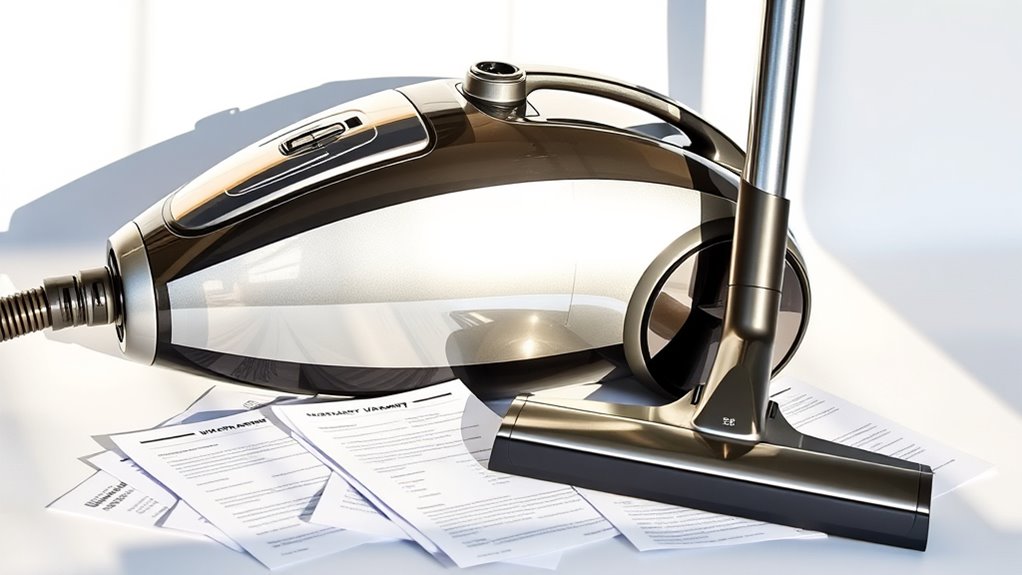
When you invest in a vacuum, you want to guarantee it lasts, and understanding vacuum warranties can help you make the best choice. When you’re shopping for a vacuum, it’s vital to consider the warranty coverage offered by different manufacturers. This warranty acts as a safety net, giving you peace of mind that if something goes wrong, you’re protected. Not all warranties are created equal, so you’ll need to explore the specifics to make an informed decision.
One of the first things you should look at is the duration of the warranty. Most vacuums come with a warranty that lasts anywhere from one to five years, but some higher-end models may offer even longer protection. Pay attention to what the warranty actually covers. Does it include parts and labor, or just parts? Some warranties might exclude certain components like the battery, which can be a significant concern if you’re looking at cordless models. If battery life is essential for your cleaning routine, make sure the warranty covers the battery’s performance for a reasonable period.
Consider the warranty duration and coverage details, especially for parts and battery, before investing in a vacuum.
You’ll also want to check if the warranty is limited or full. A limited warranty usually means that it might not cover everything you expect. For instance, common wear-and-tear items may not be included, meaning you could end up paying out-of-pocket for repairs. Understanding these nuances can save you a lot of hassle down the line.
Don’t overlook the importance of customer service when considering warranty coverage. A company that offers excellent support can make a world of difference if you ever need to claim your warranty. Check online reviews to see how responsive the manufacturer is when customers face issues. You want a brand that stands behind its products, ensuring you’re not left in the lurch if something fails. Additionally, just as eye patches can enhance appearance, a good warranty can enhance your overall satisfaction with your vacuum purchase.
Frequently Asked Questions
How Do I Register My Vacuum Warranty?
To register your vacuum warranty, start by visiting the manufacturer’s website. Look for the warranty registration section and fill out the required information, including your vacuum model and purchase date. After you submit your details, you should receive a warranty confirmation via email. Keep this confirmation handy, as it’ll be essential for any future claims or service issues. Make sure you register within the stipulated time to guarantee coverage!
Can I Transfer My Vacuum Warranty to Someone Else?
Yes, you can often transfer your vacuum warranty to someone else, but it usually requires a few steps. Think of it as passing the baton in a relay race. You’ll need to provide ownership verification, like the original receipt or warranty registration details. Check the manufacturer’s guidelines, as some may have specific rules about warranty transfers. Once you’ve done that, your friend can enjoy the same peace of mind you had!
What Does “Normal Wear and Tear” Mean in Warranty Terms?
“Normal wear and tear” refers to the expected deterioration of your vacuum over time due to regular use. Warranty exclusions often apply here, meaning damages from misuse or neglect aren’t covered. To keep your warranty valid, you need to follow maintenance requirements outlined in the manual, like cleaning filters and checking belts. If you neglect these, you might find yourself without coverage when you need it most.
Are Replacement Parts Covered Under My Vacuum Warranty?
Replacement parts might be covered under your vacuum warranty, but it really depends on the specific terms of your warranty coverage. You should check the documentation to see if it includes parts like filters, belts, or hoses. Some warranties cover defects in materials or workmanship, while others might exclude certain parts. If you’re unsure, contacting customer service can clarify what’s included and help you understand your options for replacements.
How Long Does It Take to Process a Warranty Claim?
It typically takes a few days to a couple of weeks to process a warranty claim. But hold on—this timeline can vary. Factors like the warranty processing speed and the complexity of your claim can influence how long you’ll wait. You might find yourself checking your email for updates, wondering if your claim’s been approved. Stay patient; once it’s processed, you’ll quickly know if you’re getting that replacement or repair you need.
Conclusion
When you invest in a vacuum, you’re not just buying a machine; you’re securing peace of mind for the messes that life throws your way. Picture yourself gliding effortlessly over plush carpets or sleek hardwood, knowing your warranty‘s backing you up. It’s more than just a safety net; it’s the assurance that your trusty cleaner will be there through spills and pet hair, ready to tackle any challenge. So, embrace your warranty—it’s your vacuum’s loyal guardian.