Robot vacuum docks are transforming maintenance expectations by becoming smarter and more connected. They now monitor battery life, filters, and components, giving you real-time updates and proactive alerts. With app control and voice commands, you can schedule, pause, or address issues easily, preventing breakdowns before they happen. This shift toward preventative care means you’ll spend less time troubleshooting. Keep exploring to discover how these advanced systems can keep your device in top shape with minimal effort.
Key Takeaways
- They enable proactive maintenance through real-time diagnostics and smart alerts, reducing unexpected breakdowns.
- Integration with smart home systems allows remote monitoring and control, simplifying upkeep routines.
- Advanced sensors and diagnostics identify component wear, guiding timely repairs and extending device lifespan.
- Automated scheduling and troubleshooting minimize manual maintenance efforts and enhance cleaning efficiency.
- Continuous performance optimization fosters preventative care, ensuring consistent device performance over time.
As robot vacuum docks become more advanced, they’re reshaping how homeowners approach maintenance. No longer just simple charging stations, these docks now feature smart home integration, allowing you to control and monitor your robot’s status directly from your smartphone or voice assistant. This seamless connection means you’re immediately aware of battery levels, cleaning schedules, or issues that might arise, making maintenance feel less like a chore and more like a part of your daily routine. With smart home integration, you can schedule cleanings, pause or resume tasks, and receive alerts about necessary upkeep—all from a single app or device. This interconnected approach encourages you to stay proactive, preventing problems before they escalate, and ensures your robot operates efficiently without unexpected breakdowns. Additionally, these smart systems utilize monitoring and debugging tools that help diagnose issues in real-time. One key aspect of this evolving maintenance landscape involves battery replacement. As your robot vacuum’s battery ages, its cleaning performance can decline, and the dock’s smart features can help you identify when replacement is needed. Instead of waiting for noticeable drops in performance, you get timely notifications, enabling you to swap out the battery before it impacts your cleaning routine. This proactive approach minimizes downtime and keeps your device functioning at peak efficiency. Many advanced docks now even support easy battery replacement, guiding you through the process step-by-step, often with visual cues or app instructions. This convenience reduces the hassle traditionally associated with maintenance tasks, making it easier to keep your robot in top shape. Furthermore, these smart docks often come with diagnostic tools that monitor the health of your robot’s components, including sensors and brushes. When a part needs attention, you don’t have to guess or troubleshoot blindly; the dock or associated app provides specific insights and recommended actions. This shift means you’re less likely to overlook maintenance needs, which can prolong the lifespan of your device and improve its overall cleaning performance. As a result, your expectations of maintenance shift from reactive to proactive, thanks to these intelligent systems that bring convenience and clarity to routine upkeep. Additionally, the integration of smart technology enhances the ability to optimize your robot vacuum’s performance and longevity. Understanding the importance of preventative maintenance can help you better utilize these advanced features and ensure your device remains in top condition. Regularly reviewing diagnostic reports can further help you anticipate potential issues and plan maintenance accordingly.
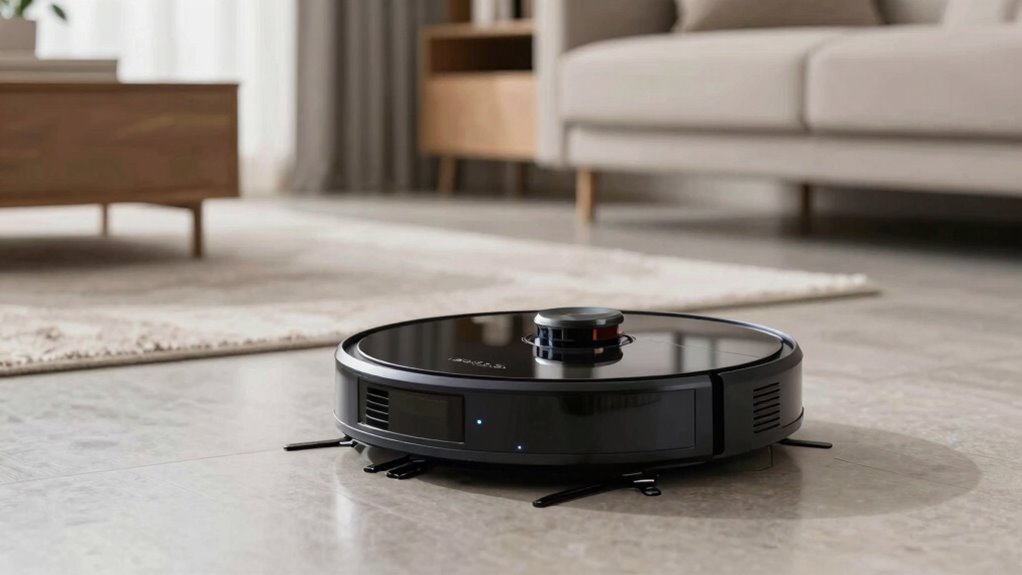
robot vacuum dock with smart home integration
As an affiliate, we earn on qualifying purchases.
As an affiliate, we earn on qualifying purchases.
Frequently Asked Questions
How Long Do Robot Vacuum Docks Typically Last?
Robot vacuum docks usually last around 2 to 3 years, depending on battery longevity and usage. You should monitor the dock’s condition regularly, as worn-out contacts or damage can affect performance. Compatibility is also key—make sure your dock fits your specific vacuum model to guarantee proper charging. Proper maintenance, like keeping contacts clean, can extend the dock’s lifespan, helping you avoid early replacements and maintain peak cleaning.
Are Replacement Parts for Robot Vacuum Docks Readily Available?
You’ll find replacement parts for robot vacuum docks quite accessible, but beware of compatibility issues that can trip you up. Picture swapping out a charger and discovering it sparks too much power consumption or simply doesn’t fit. It’s like trying to fit a puzzle piece that’s just a little off. Checking compatibility beforehand and sourcing from reputable suppliers guarantees your dock stays in top shape without unexpected hiccups.
Do Docks Require Regular Software Updates?
Docks do require regular software updates to guarantee compatibility with your smart home integration and to optimize battery longevity. Keeping the firmware current helps improve performance, fix bugs, and add new features. You should check for updates periodically through the app or control system. Staying updated ensures your robot vacuum dock operates efficiently, maintains seamless integration, and extends the lifespan of the device’s components, especially the battery.
Can Docks Be Repaired if They Malfunction?
Yes, you can repair robot vacuum docks if they malfunction. When issues arise, you’ll often examine wireless connectivity problems or power efficiency faults. Repairs might involve updating firmware, cleaning connectors, or replacing power components. Since docks are designed with accessible parts, troubleshooting becomes easier. Regular maintenance, like keeping wireless signals strong and ensuring power connections are clean, helps prolong their lifespan and reduces the need for complex repairs.
Are There Safety Concerns With Robot Vacuum Docks?
You might wonder if robot vacuum docks pose safety concerns, and the truth is, they generally don’t if designed properly. Manufacturers prioritize user safety, incorporating features like secure charging contacts and safety sensors. However, security concerns could arise if docks aren’t well-maintained or if they’re exposed to water or damage, which might cause malfunctions. Regular checks and proper use help guarantee your device remains safe and effective.
Conclusion
As robot vacuum docks evolve, your maintenance routine is about to change in ways you never expected. With new features on the horizon, you might wonder what’s next and how it’ll impact your daily chores. Will these advancements make cleaning even easier—or introduce new challenges? The future’s still unfolding, and one thing’s certain: staying ahead means being ready for surprises. Are you prepared to embrace the next wave of smart cleaning technology? The answer might just surprise you.