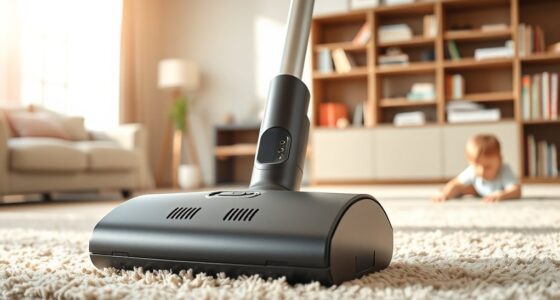
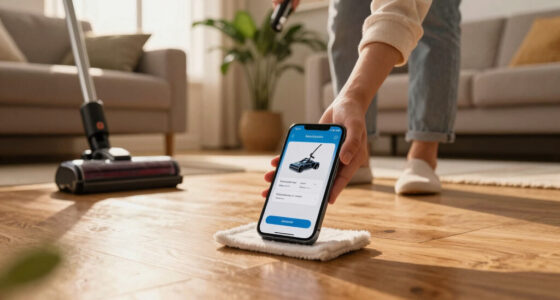
Sensor technology keeps improving robot vacuums because it helps them map your space more accurately, avoid obstacles, and adapt to different surfaces. With better sensors, they can navigate efficiently, manage battery life, and adjust cleaning modes without your help. This means your vacuum cleans more thoroughly and intelligently. As sensors become more advanced, they continue to enhance performance and autonomy. Keep exploring, and you’ll discover how these innovations make your cleaning easier and more effective.

Get cleaning gear delivered free with Prime
- Fast, free delivery on millions of items
- Prime Video, Amazon Music and more included
- Member-only deals all year
Key Takeaways
- Advancements in sensors enable real-time mapping and obstacle detection for more efficient cleaning routes.
- Improved object and surface recognition allows robot vacuums to better adapt to different environments.
- Enhanced sensors facilitate smarter battery management and safe return to charging stations.
- Surface adaptability sensors optimize cleaning modes, conserving energy and preventing motor overuse.
- Continuous sensor development increases autonomy, precision, and overall cleaning effectiveness.
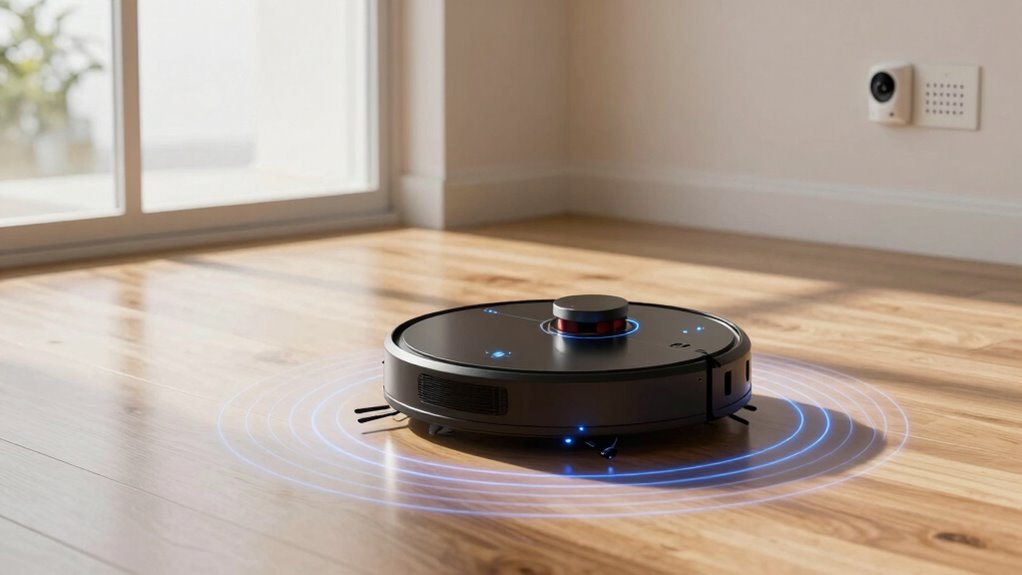
Advancements in sensor technology have revolutionized robot vacuums, making them smarter and more efficient than ever before. These improvements directly impact how well your robot navigates your home and manages its power, guaranteeing thorough cleaning without constant oversight. One of the key areas where sensor technology makes a difference is in navigation algorithms. Modern sensors feed real-time data to the robot’s processing system, allowing it to map out your space accurately. With this data, the robot can create a detailed map, identify obstacles, and develop an ideal cleaning path. This means fewer missed spots and less time spent zigzagging around furniture or getting stuck. The sensors constantly update the robot’s understanding of its environment, enabling dynamic route adjustments as needed. As a result, your robot vacuum becomes more reliable and effective, even in complex or cluttered spaces. Additionally, color accuracy in sensors can help the robot differentiate between various objects and surfaces more precisely, further enhancing its cleaning efficiency. Improving the sensors’ detection capabilities allows for even finer distinctions between objects, reducing errors and increasing autonomy. Enhanced object recognition also contributes significantly to the robot’s ability to avoid obstacles and optimize its cleaning path. Meanwhile, battery management is another essential aspect improved by sensor technology. Equipped with sophisticated sensors, your robot can monitor its battery level continuously. When the battery drops below a certain threshold, the robot intelligently navigates back to its charging station without human intervention. This process isn’t just about finding the station; sensors help the robot avoid obstacles and hazards on the way, guaranteeing a safe and efficient return. Additionally, some models use sensors to analyze how much power each cleaning cycle requires, allowing them to adjust their cleaning intensity and duration accordingly. This real-time data helps extend the overall lifespan of the battery and assure that the robot can complete its tasks without running out of power prematurely. The ongoing development of sensor technology ensures that these systems become even more precise, fostering greater autonomy and efficiency. Sensor advancements also enable the robots to better recognize different surfaces and adjust cleaning modes accordingly. For example, when sensors detect a hard floor versus a carpet, the robot can switch between different suction levels or cleaning patterns. This adaptability improves cleaning performance and preserves battery life by not overworking the motor unnecessarily. The continuous evolution of sensor technology means these systems become more precise, reducing errors and increasing autonomy. As a user, you benefit from a device that not only cleans more thoroughly but also manages its power efficiently, saving you time and effort.
robot vacuum with advanced sensors
As an affiliate, we earn on qualifying purchases.
As an affiliate, we earn on qualifying purchases.
Frequently Asked Questions
How Do Sensors Impact Robot Vacuum Battery Life?
Sensors can impact your robot vacuum’s battery life by enabling better navigation and cleaning efficiency. When sensors are well-calibrated, the vacuum avoids unnecessary repetitions and missed spots, leading to optimized battery use. Proper sensor calibration supports battery optimization, so your vacuum doesn’t waste power on redundant cleaning. As sensors improve, they help extend battery life by ensuring the robot works smarter, not harder, reducing the overall energy consumption during each cleaning cycle.
Are There Privacy Concerns With Robot Vacuum Sensors?
You might worry about privacy risks, but most robot vacuum sensors are designed with your security in mind. They collect data to improve cleaning, yet manufacturers often encrypt this information to prevent misuse. While there’s some concern about data collection, the chance of personal details being exposed is minimal. Staying informed about your device’s privacy settings helps guarantee your home remains secure, giving you peace of mind as your robot works quietly in the background.
Can Sensors Detect Pet Hair Effectively?
Yes, sensors can detect pet hair effectively, especially with advanced pet hair detection features. These sensors use specialized technology and sensor calibration to identify pet hair on various surfaces. Proper calibration improves accuracy, ensuring the vacuum targets pet hair without missing spots. Keep your sensors clean and well-calibrated, and your robot vacuum will efficiently pick up pet hair, making your cleaning routine easier and more thorough.
Do Different Brands Use Unique Sensor Technologies?
Yes, different brands use unique sensor technologies to enhance mapping accuracy and obstacle detection. You’ll find variations in how sensors interpret your home’s layout, with some brands incorporating advanced LiDAR or camera-based systems for better precision. This means your robot vacuum can more effectively navigate around furniture, pets, and clutter. By choosing a brand with innovative sensor tech, you get more reliable cleaning, fewer missed spots, and smoother navigation throughout your space.
How Often Do Sensor Technologies Need Updates?
Sensor technologies usually need updates every few months to guarantee peak performance. You should perform sensor calibration regularly, especially after cleaning or moving the vacuum. Manufacturers often release software updates that improve sensor accuracy and functionality, so keeping your robot vacuum’s software current helps it navigate better. Regular calibration and timely updates are key to maintaining the effectiveness of your vacuum’s sensors and ensuring thorough cleaning.
Conclusion
As sensor technology advances, robot vacuums become smarter and more efficient, seamlessly steering your home with precision. While they may seem simple, these devices now rival human cleaning efforts in complexity. It’s funny—what once required manual effort now relies on tiny sensors working tirelessly behind the scenes. So, as sensors improve, your chores become effortless, proving that sometimes, the smallest innovations make the biggest difference in your daily life.
Halloween Picks
halloween
As an affiliate, we earn on qualifying purchases.