
You might notice your vacuum loses suction faster than expected because debris buildup, clogged filters, or full dustbins quickly restrict airflow. Tangles in the brush roll or blockages in hoses also reduce performance unexpectedly. Many homeowners overlook routine maintenance, which accelerates decline. Keeping filters clean, emptying dustbins regularly, and inspecting hoses can prevent these issues. Stay with us to discover more simple tips that keep your vacuum performing at its best longer.
Key Takeaways
- Debris buildup and tangled hair in the brush roll can quickly restrict airflow, causing rapid suction loss.
- Clogged filters reduce airflow efficiency, leading to faster decline in vacuum suction.
- An overfilled dustbin or bag creates backpressure, diminishing suction more rapidly than expected.
- Small blockages in hoses or nozzles often go unnoticed but significantly impact suction performance.
- Lack of regular maintenance accelerates debris accumulation and airflow restrictions, causing unexpected suction drops.

Many homeowners are surprised to find that vacuum suction often diminishes more quickly than they expect. You might notice your vacuum isn’t pulling as well as it used to, and it can be frustrating. The first thing to realize is that this isn’t always caused by a malfunction. Instead, it often comes down to simple issues related to vacuum maintenance and misunderstood causes—what are commonly called common misconceptions. Understanding these can help you keep your vacuum performing at its best and avoid unnecessary replacements or repairs.
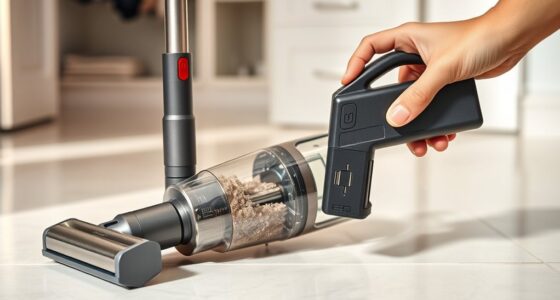
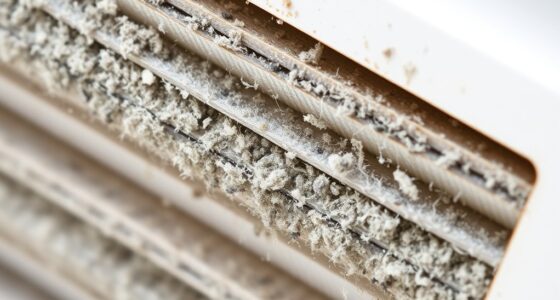
A key reason vacuum suction drops is that debris buildup inside the vacuum can block airflow, reducing its efficiency. Many people assume their vacuum is broken or that they need a new one, but regular vacuum maintenance can often prevent this problem. This includes cleaning or replacing filters, emptying the dustbin, and checking the brush roll for tangled hair or fibers. When filters are clogged or dustbins are full, suction power decreases because airflow becomes restricted. By staying on top of these small tasks, you guarantee the vacuum can do its job without losing power prematurely. Additionally, understanding the role of airflow restriction in vacuum performance can help you identify issues early.
Regular maintenance like cleaning filters and emptying the dustbin keeps vacuum suction strong and prevents airflow blockages.
Another common misconception is that the vacuum’s suction problem is solely related to the belt or motor. While these components are important, they are less likely to be the first culprit unless you notice strange noises or the brush isn’t spinning. Often, the issue stems from simple blockages or dirt buildup in the hose or nozzle. Many homeowners overlook inspecting these areas, but they’re vital in maintaining peak suction. Regularly checking and clearing blockages is a quick, effective way to restore power without expensive repairs.
You might also think that replacing the vacuum’s bag or dustbin is unnecessary until it’s completely full. However, even a partially full bag can greatly reduce suction because it creates backpressure. Don’t wait until the bag is bursting; instead, get into the habit of changing or emptying it regularly. This is another aspect of good vacuum maintenance that’s often misunderstood—people assume it’s only necessary when visibly full, but frequent small changes keep airflow smooth and suction consistent.
Lastly, many homeowners believe that vacuum suction won’t decline unless the vacuum is old or heavily used. While age can play a role, neglecting routine cleaning and maintenance accelerates the decline. Staying proactive with simple upkeep tasks prevents common issues from piling up, ensuring your vacuum continues to perform well over time. Additionally, understanding the importance of vacuum filters and their role in airflow can significantly improve your maintenance routine. In the end, understanding these common misconceptions and taking care of your vacuum regularly keeps suction strong and extends its lifespan.

Vacuum Filter Replacement for Shark Navigator Lift Away NV350 NV352 NV360
- Compatible with Multiple Shark Models: Fits various NV and UV series models
- Valuable Multi-Pack Set: Includes foam, felt, and HEPA filters
- High-Efficiency HEPA Filters: Blocks secondary air pollution effectively
As an affiliate, we earn on qualifying purchases.
As an affiliate, we earn on qualifying purchases.
Frequently Asked Questions
How Can I Tell if My Vacuum Is Losing Suction?
Imagine your vacuum struggling like a clogged pipe—that’s how you know it’s losing suction. Check for airflow blockages in the hose or brush bar, and make sure filters are clean and maintained. If suction weakens despite these, it’s a sign your vacuum isn’t performing at its best. Regularly inspecting and clearing blockages or replacing filters keeps airflow smooth, helping your vacuum maintain strong suction and clean effectively.
Does the Type of Surface Affect Vacuum Suction Speed?
Yes, the type of surface, including material and texture, affects your vacuum’s suction speed. Smooth, hard surfaces like tile or hardwood allow for quicker, more efficient suction because there’s less resistance. In contrast, textured or plush surfaces like carpets or rugs absorb more suction, slowing down the process. Understanding these differences helps you adjust your vacuuming technique or settings for ideal cleaning results.
Can Cleaning Habits Impact Vacuum Suction Efficiency?
Imagine your vacuum as a busy highway; cleaning habits directly influence traffic flow. When you neglect regular maintenance, airflow blockage and dust buildup clog the pathways, slowing suction. Frequent emptying and filter cleaning keep the airflow clear, much like removing obstacles to keep cars moving smoothly. Consistent cleaning guarantees your vacuum maintains peak efficiency, preventing drops in suction caused by hidden debris and ensuring your home stays spotless.
Are There Common Signs of a Malfunctioning Vacuum?
Yes, you can spot signs of a malfunctioning vacuum. If your vacuum loses suction, check the vacuum filter; a clogged filter reduces airflow. Also, inspect the belt tension—if it’s loose or broken, the brush may not spin properly, affecting cleaning. Unusual noises, strange odors, or difficulty in picking up debris are other indicators. Regularly maintaining the vacuum filter and belt tension helps keep your vacuum functioning efficiently.
How Often Should I Service My Vacuum for Optimal Suction?
Your vacuum’s suction power is practically legendary, so keep it that way by servicing it every three to six months. Regularly clean the vacuum filter and check the brush for tangled hair or debris. These simple steps prevent loss of suction and make sure your vacuum performs at its peak. Don’t forget, a well-maintained vacuum is a powerful tool—so give it the attention it deserves to keep your home spotless.
Conclusion
Think of your vacuum as a busy bee gathering nectar. At first, it works swiftly, but as the flowers become empty, its pace slows, just like suction drops over time. You might expect it to keep buzzing at the same speed, but reality’s a bit different. Understanding this helps you see the process clearly, like watching a bee retreat as the blossoms are picked clean. Now, you’re better equipped to manage your vacuum’s performance with confidence.