You should replace your HEPA filter every 6 to 12 months, depending on how often you use it and your environment. Signs that it’s time include a noticeable drop in air quality, persistent odors, or visible dirt and discoloration. If your purifier’s performance declines or indicator lights suggest a change, it’s probably time to swap it out. Staying attentive helps guarantee your indoor air remains clean and healthy—more details below to help you know when to act.

Get cleaning gear delivered free with Prime
- Fast, free delivery on millions of items
- Prime Video, Amazon Music and more included
- Member-only deals all year
Key Takeaways
- HEPA filters typically last 6 months to 1 year, depending on usage and environment.
- Signs include decreased airflow, persistent odors, and visible dirt or discoloration.
- Regular inspections help identify clogging or dirt buildup before performance drops.
- Follow manufacturer recommendations and replace filters when indicator lights signal or performance declines.
- Replacing filters promptly maintains air quality and system efficiency, preventing pollutant buildup.

HEPA filters play a crucial role in maintaining clean air by trapping tiny particles, but they don’t last forever. Over time, their ability to filter effectively diminishes, making regular filter maintenance essential to guarantee your air quality remains high. When your filter becomes clogged or dirty, it can’t effectively trap pollutants, which means dust, allergens, and airborne pathogens may circulate freely. That’s why understanding the lifespan of your HEPA filter and recognizing the signs it needs replacement is vital for maintaining ideal air quality.
Typically, HEPA filters are designed to last between six months and a year, but this can vary based on usage, environment, and filter quality. If you’re using your air purifier or HVAC system in a particularly dusty or polluted environment, you might need to replace the filter more frequently. Conversely, in cleaner environments, the filter could last longer. Regular filter maintenance involves not only replacing the filter when necessary but also inspecting it periodically to assess its condition. This proactive approach helps prevent a decline in air quality and keeps your system running smoothly.
HEPA filter lifespan varies by environment; regular inspection and timely replacement ensure optimal air quality.
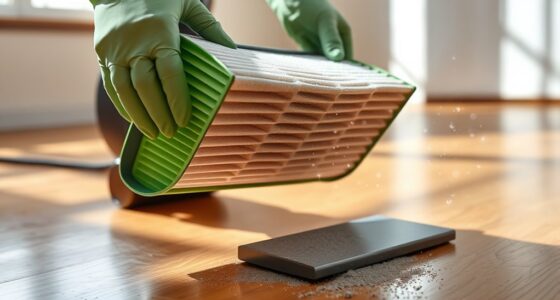
A clear indicator that it’s time to replace your HEPA filter is a noticeable drop in performance. If your air purifier seems less effective at reducing dust or allergens, or if you notice a persistent musty or stale smell, these could be signs that the filter is saturated and unable to perform its job effectively. Many devices also have indicator lights that signal when a filter needs changing, but don’t rely solely on these. Physically inspecting the filter for visible dirt, discoloration, or clogging provides better insight into its condition. Additionally, reduced airflow can indicate a clogged filter and should prompt a check or replacement. Knowing the filter lifespan and signs of saturation ensures your indoor air remains healthy and your system operates efficiently.
HEPA air purifier replacement filters
As an affiliate, we earn on qualifying purchases.
As an affiliate, we earn on qualifying purchases.
Frequently Asked Questions
Can I Clean and Reuse My HEPA Filter?
You shouldn’t clean and reuse your HEPA filter because filter cleaning isn’t effective at removing trapped particles, and reuse viability is limited. HEPA filters are designed for single use, and attempting to clean them can damage the filter medium, reducing efficiency. Instead, replace your filter as recommended by the manufacturer to guarantee ideal air quality. Regular replacement maintains filter performance and keeps your environment healthy and safe.
Do Different HEPA Filters Have Different Lifespans?
Did you know that HEPA filters can last anywhere from 6 months to 2 years? Yes, different HEPA filters have varying lifespans because of their filter material and design. Higher-quality filters with dense filter material or complex design tend to last longer, but you should check manufacturer recommendations. Always monitor for reduced airflow or increased dirt buildup, which signals it’s time to replace your filter regardless of its type.
How Does Humidity Affect HEPA Filter Longevity?
Humidity effects can shorten your HEPA filter’s lifespan because excess moisture causes moisture damage, leading to mold growth or clogged fibers. If the air is very humid, your filter may need replacing sooner, as moisture reduces its efficiency. To prolong its life, keep humidity levels balanced and guarantee proper ventilation. Regularly check for signs of moisture damage, like mold or a musty smell, and replace the filter promptly when needed.
Are There Health Risks if I Delay Replacing a Filter?
Yes, delaying filter replacement can pose health risks. As filters degrade, they become less effective at trapping particles, leading to poorer air quality. You might breathe in more allergens, dust, and pollutants, which can trigger allergies or respiratory issues. Over time, a worn filter can also harbor mold or bacteria, further compromising your health. Regularly replacing your HEPA filter guarantees ideal air quality and reduces potential health risks.
Can Pets or Allergies Impact HEPA Filter Lifespan?
Pets and allergies can dramatically shorten your HEPA filter’s lifespan, turning it into an allergy trigger battleground. Pet dander and allergy triggers clog the filter faster, making it work overtime to keep your air clean. Regularly check and replace your filter sooner if you have pets or allergies, so you don’t risk breathing in harmful particles. Your filter’s life is precious—treat it like the superhero it is!
Conclusion
Knowing when to replace your HEPA filter guarantees cleaner air, better health, and peak performance. Watch for increased airflow resistance, reduced efficiency, or visible dirt to signal it’s time for a change. Regularly inspect, monitor, and replace your filter when needed. Stay proactive, stay vigilant, and prioritize clean air. By doing so, you’ll protect your space, improve your environment, and maintain peace of mind. Keep your filter fresh, keep your air pure, and breathe easy every day.
Halloween Picks
halloween
As an affiliate, we earn on qualifying purchases.