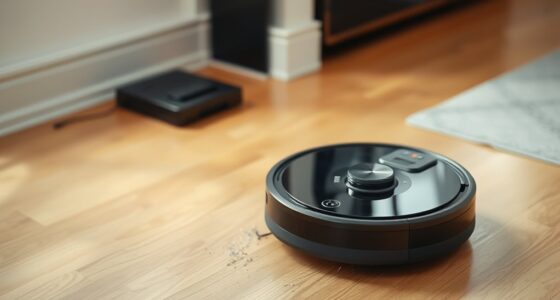
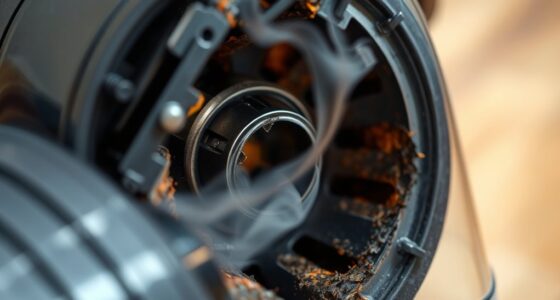
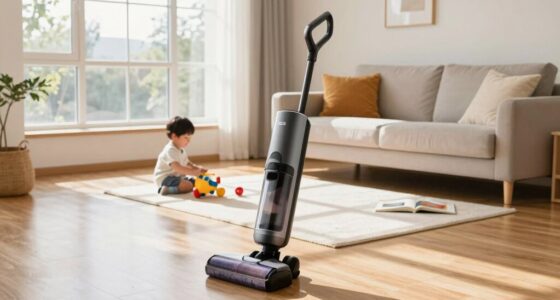
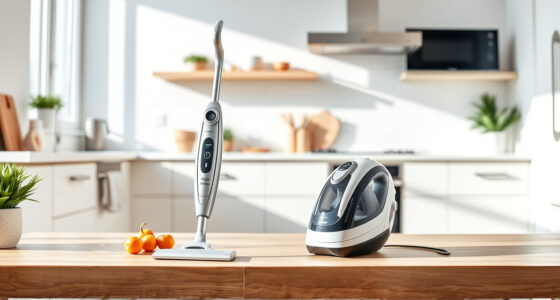
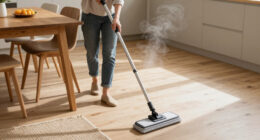
To stop debris from bouncing out of your floor head, regularly check and clean the brush roll to remove tangled hair and fibers, and replace worn parts. Make certain the vacuum height is set correctly for your flooring to guarantee proper contact and suction. Inspect seals and gaskets for damage and clear any blockages around the intake. Keep filters clean and bags or dustbins emptied before they overflow. If issues persist, exploring more detailed tips can help you achieve better debris containment.

Get cleaning gear delivered free with Prime
- Fast, free delivery on millions of items
- Prime Video, Amazon Music and more included
- Member-only deals all year
Key Takeaways
- Ensure the vacuum head seals are intact and replace worn seals to prevent debris bounce-out.
- Adjust the vacuum height for proper contact with the floor to minimize debris bouncing.
- Regularly clean and check the brush roll for tangles or wear to maintain debris containment.
- Clear blockages around intake openings and maintain unobstructed airflow for effective debris capture.
- Use advanced dust separation technologies to improve debris containment and prevent bouncing.

If debris keeps bouncing out of your floor heads during cleaning, it can be frustrating and inefficient. This issue often points to problems with vacuum maintenance or debris collection. When your vacuum isn’t properly maintained, debris can escape from the floor head instead of being sucked into the bin or bag. To fix this, start by checking the brush roll and guaranteeing it’s clean and free of tangled hair or fibers, which can hinder proper debris pickup. A clogged or worn brush roll reduces suction and causes debris to bounce out, so replacing or cleaning it regularly is essential. Also, inspect the vacuum’s filters; dirty or clogged filters restrict airflow, decreasing overall suction power and allowing debris to escape. Maintaining clear, clean filters is a simple yet effective way to improve debris collection and prevent bouncing.
Next, examine the vacuum’s height adjustment. If it’s set too high for the type of flooring you’re cleaning, the brush won’t make proper contact, and debris can bounce back instead of being pulled in. Adjust the height to ensure the brush roll brushes the floor surface effectively. Proper height adjustment enhances debris collection and minimizes bouncing. Additionally, check the floor head for any blockages or debris buildup around the intake opening. Obstructions can disrupt airflow and cause debris to escape or bounce out during cleaning. Clearing these blockages helps maintain consistent suction and keeps debris firmly collected. Ensuring your vacuum’s airflow is unobstructed is crucial for effective debris containment. Regularly inspecting your vacuum’s seals and gaskets can also prevent leaks that reduce suction efficiency and contribute to bouncing issues. Also, ensuring that the vacuum’s dust separation technology is functioning correctly can help contain debris more effectively and reduce bounce-outs.
Another common cause relates to the seals around the vacuum head. If these seals are damaged or worn, they allow air to escape, reducing suction power. A tight seal ensures that suction is directed properly toward debris, preventing bounce-outs. Consider replacing worn seals or ensuring they’re properly fitted. Proper vacuum maintenance, including inspecting and replacing worn parts, can greatly improve debris collection and reduce debris bouncing. Moreover, contrast ratio and image quality in your vacuum’s design can influence how well debris is contained and prevented from bouncing out, especially in models with advanced dust separation technologies.
Finally, pay attention to your vacuum’s overall condition. Regularly empty the dustbin or replace the bag so it doesn’t get overly full, which diminishes suction. If you notice consistent bouncing despite these adjustments, it might be time to check for leaks or consider professional servicing. A well-maintained vacuum not only performs better but also prolongs its lifespan. Proper vacuum maintenance and guaranteeing effective debris collection are key to stopping debris from bouncing out of floor heads, making your cleaning more effective and less frustrating. Additionally, understanding the importance of fuel injection cleaning can help improve your overall vacuum efficiency if your model incorporates advanced engine or motor technology.
vacuum cleaner brush roll cleaning tool
As an affiliate, we earn on qualifying purchases.
As an affiliate, we earn on qualifying purchases.
Frequently Asked Questions
What Types of Debris Are Most Common in Floor Heads?
The most common debris in floor heads includes dust accumulation and hair entanglement. Dust tends to build up quickly, especially in less accessible areas, and hair often gets tangled around the brushes or rollers, causing clogs. You should regularly check and clean these parts to prevent bouncing debris, ensuring efficient operation. Keeping the floor head free of dust and hair not only improves performance but also extends its lifespan.
Can Debris Buildup Damage the Floor Head Mechanism?
Debris buildup can silently cause damage to your floor head mechanism, risking costly repairs. As debris accumulates, it can clog or jam moving parts, leading to floor head damage over time. Ignoring this buildup might seem harmless, but it’s a ticking time bomb. Regularly cleaning your floor head prevents debris accumulation, ensuring smooth operation and protecting your investment from unexpected breakdowns. Don’t wait—stay vigilant to keep your floor head in top shape.
How Often Should I Inspect My Floor Heads for Debris?
You should inspect your floor heads for debris at least once a month to guarantee peak performance. Regular floor head maintenance helps prevent debris buildup, which can cause bouncing and damage. During inspections, look for blockages or accumulated dirt and clear them promptly. Consistent debris prevention keeps your equipment functioning smoothly and extends its lifespan. Don’t forget, routine checks are key to avoiding costly repairs and maintaining efficient cleaning.
Are There Specific Tools Recommended for Cleaning Debris From Floor Heads?
You should select tools like soft brushes, small screwdrivers, or compressed air cans for cleaning debris from floor heads. These tools help you effectively remove buildup without damaging delicate parts. When cleaning, use gentle techniques like brushing or blowing to dislodge debris carefully. Avoid harsh tools that could harm the equipment. Proper tool selection and gentle cleaning techniques guarantee your floor heads stay clear and function smoothly, preventing debris from bouncing out during operation.
Does Debris Bouncing Out Affect Floor Head Lifespan?
Debris bouncing out may seem harmless, but it impacts your floor head’s durability over time. When debris repeatedly strikes the components, it causes wear and tear, reducing the lifespan of your equipment. You might not notice immediate damage, yet the persistent impact weakens internal parts, leading to costly repairs or replacements. To protect your investment, maintaining a clean, debris-free environment is essential for ensuring maximum debris impact absorption and prolonging your floor head’s life.
Conclusion
Now that you know how to keep debris from bouncing out of your floor heads, you’re well on your way to a cleaner, more efficient cleaning routine. Think of it like taming a wild river — with the right techniques, you control the flow instead of it controlling you. Keep these tips in mind, and your floors will stay spotless, making your cleaning efforts feel like a breeze rather than a battle. Happy cleaning!
Halloween Picks
halloween
As an affiliate, we earn on qualifying purchases.