TL;DR

Get cleaning gear delivered free with Prime
- Fast, free delivery on millions of items
- Prime Video, Amazon Music and more included
- Member-only deals all year
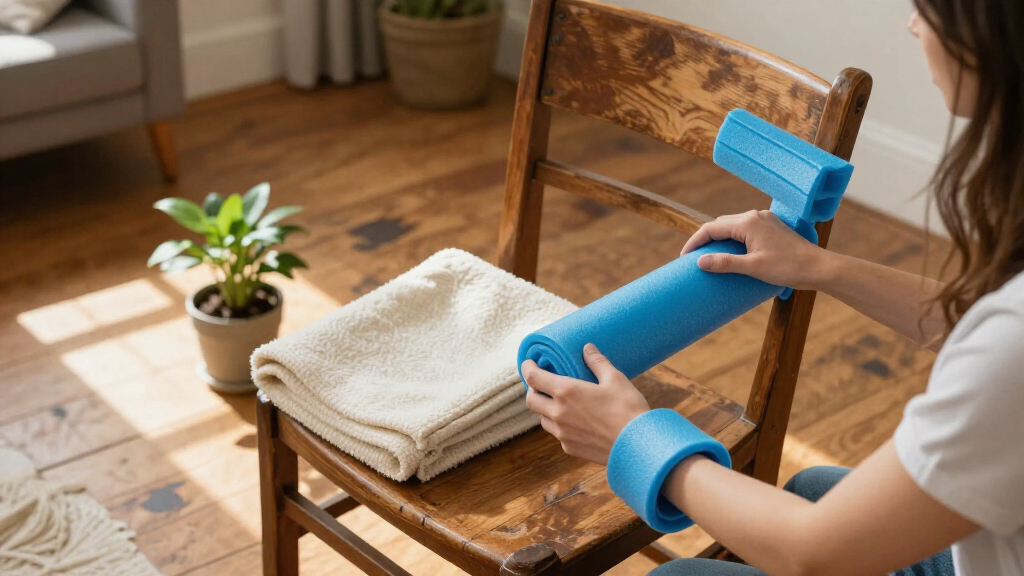
A project demonstrated by YouTube creator Yoduvh Essentials repurposes pool noodles and other upholstery supplies to give an old dining chair a rounded, cushioned look. The tutorial calls for checking the chair’s frame and choosing an adhesive compatible with the noodle’s foam before starting.
A DIY project demonstrated by YouTube creator Yoduvh Essentials uses pool noodles, upholstery foam and fabric to reshape an old dining chair into a rounded, cushioned accent seat. Hunker’s report says the method can give a mismatched or worn chair a new look, while warning that adhesive choice matters because common glues may not bond to polyethylene foam or could damage it.
The makeover starts with stripping the chair’s existing upholstery and checking the exposed frame. The tutorial uses sections of pool noodle and a hula hoop to create curved forms, which are attached to the chair’s wooden frame with screws. The seat and back are then built up with upholstery foam to create a fuller shape, followed by batting and decorative fabric.
Hunker lists additional supplies including cardboard, a staple gun, screws and washers, along with tools for measuring and cutting. The tutorial adds tufting by fastening the covered foam and uses decorative trim, crystal buttons or small gems as optional finishing details. These embellishments are design choices, rather than necessary structural parts of the project.
The report highlights foam compatibility as a practical issue. Many pool noodles are made from polyethylene (PE), which can be difficult to bond. Hunker says standard Gorilla Glue and cyanoacrylate-based super glue are not recommended for PE, and very hot glue can melt the material. It points instead to spray adhesives made for polyethylene foam or a low-temperature glue gun, while advising readers to check that any alternative adhesive suits both materials being joined.
A Low-Cost Route to Chair Reuse
The project offers an example of furniture reuse through upholstery and reshaping, rather than discarding a chair that no longer suits a room. For readers with a sound but dated frame, the approach shows how inexpensive craft materials can contribute to a substantially different silhouette. The result depends on the maker’s choices of fabric, foam thickness and trim, so the tutorial is a design idea rather than a guarantee of a particular finish.
There is also a practical limit: the chair has to be worth repairing. Hunker advises inspecting the frame after removing the old covering and fixing loose joints or other damage before adding new materials. That step matters because a padded exterior cannot correct an unstable frame. Condition comes before decoration, and the source does not provide testing or durability data for the finished chair.
pool noodles for furniture upholstery
As an affiliate, we earn on qualifying purchases.
As an affiliate, we earn on qualifying purchases.
How the Noodle Frame Is Built
The pool noodles serve as flexible shaping material, not as a replacement for the chair’s wooden frame. In the described method, pieces of a hula hoop sit inside the noodles to help form curves, and screws attach those sections to the wood. The maker can then layer upholstery foam over the seat and back, shaping the cushioning before covering it with batting and fabric.
Hunker reports that materials can be substituted. Yoduvh Essentials suggests a curved iron pipe in place of the hula hoop; the report also names PE, high-density polyethylene (HDPE) or polypropylene tubing as possible flexible alternatives. The source does not provide measurements or a tested materials list for every chair, so the fit and attachment method may vary with the furniture and supplies available.
““The type of glue used for this project is crucial.””
— Hunker, reporting on the Yoduvh Essentials tutorial
Adhesive and Frame Questions
The source does not identify the exact adhesive used throughout the creator’s project, give a tested brand or product list, or report how the finished chair holds up over time. It also does not specify dimensions, weight limits or whether the design is suitable for every chair frame. Since foam composition and chair construction can vary, readers would need to check product labels and assess their own furniture rather than assume the same materials will work in every case.
Hunker notes that very hot glue can melt the pool noodle material, but the report does not describe a formal test or quantify the risk. It remains unclear how the finished piece performs with regular use or how much time and money the makeover requires.
Inspect Before Starting the Makeover
The report describes a DIY tutorial, not a scheduled product release or formal test, and it gives no future milestone. For anyone following the approach, the next steps are to inspect the chair frame, repair loose joints, and confirm that the chosen adhesive is compatible with both the foam and the attachment surface. The maker can then plan the curves, cushioning and fabric before assembling the pieces.
Readers should follow the instructions on adhesives and tools they use, since the source does not provide a complete safety or product guide. The finished chair’s stability and durability will depend on its frame, materials and construction; the report does not provide independent performance findings.
Key Questions
What does the pool noodle do in the chair makeover?
In the method described by Hunker, noodle sections help create rounded shapes around the chair. Pieces of a hula hoop are placed inside them, and the sections are attached to the wooden frame.
What adhesive should be used?
Hunker recommends looking for a spray adhesive designed for polyethylene foam or a low-temperature glue gun. Check that the product is compatible with both the foam and the surface being joined; the report cautions against common glue types that may not bond to PE.
Can a hula hoop be replaced?
Yes. As reported by Hunker, Yoduvh Essentials suggests a curved iron pipe as an alternative. The report also mentions flexible PE, HDPE or polypropylene tubing, though it does not give specifications for each option.
What should be checked before starting?
Remove the old upholstery and inspect the chair’s frame for loose joints or other damage. Repair problems before adding foam and fabric; the makeover materials do not fix a weak or unstable frame.
Source: rss
Evergreen bestsellers Picks
bestsellers
As an affiliate, we earn on qualifying purchases.