
TL;DR

Get cleaning gear delivered free with Prime
- Fast, free delivery on millions of items
- Prime Video, Amazon Music and more included
- Member-only deals all year
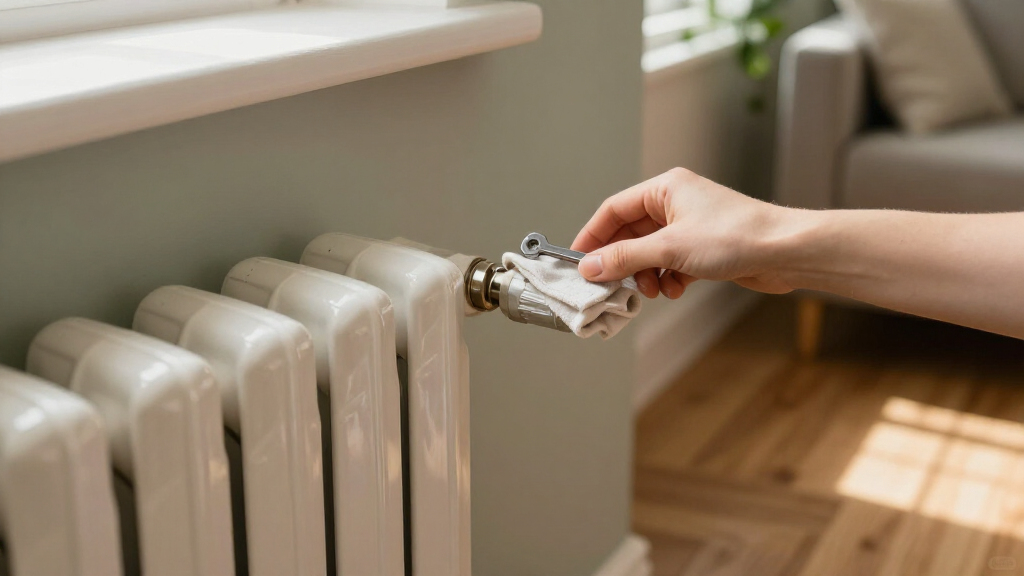
For the actual task of bleeding radiators, switch the heating off and wait until the radiators are cold. Afterward, check the boiler pressure; it may have fallen if you bled several radiators, and should be within the boiler’s recommended range before you restart the heating.
Switch the central heating off and wait for radiators to become completely cold before opening a bleed valve, according to guidance published by Ideal Home. The precaution reduces the risk of hot water escaping and makes the task less messy; after bleeding, homeowners should check the boiler pressure before turning the heating back on.
Nick Duggan, director of The Radiator Centre, told Ideal Home that the heating should be off and radiators allowed to cool before bleeding. Opening a valve while hot water is circulating can cause hot water to escape and create a burn risk. Duggan also said the air and water have a chance to settle as the radiator cools, helping the process.
Bleeding a radiator while the heating is running can also make water come out faster, increasing the chance of spills, the report says. Once the valve is closed, there is no need to leave the system off for an extended period: Duggan advises waiting a few minutes and checking the boiler pressure before restarting it. Bleeding several radiators may cause the pressure to drop slightly; the report does not give a universal target, so the boiler’s recommended range should be followed.
A radiator that is cold at the top while warmer below may have trapped air. But Darren Danks, head of training at Worcester Bosch, told Ideal Home that small pockets of air may not produce obvious cold spots. The report says bleeding all radiators can help release hidden air, though it does not establish that every home or radiator needs the same maintenance routine.
Avoid Burns and Check Boiler Pressure
The guidance matters because bleeding involves opening a valve on a water-filled heating system. With the heating on, circulating hot water can escape, posing a scalding risk; faster flow may also make the job harder to control. Waiting for the radiator to cool is a straightforward safety measure, not merely a way to improve comfort.
Checking pressure afterward can help homeowners spot whether bleeding has affected the system. A reading outside the boiler’s recommended range should not be ignored or guessed at: consult the boiler instructions or a qualified heating professional if the correct next step is unclear. The report offers general household guidance, not a diagnosis of boiler faults.
As an affiliate, we earn on qualifying purchases.
Spotting Air Before the Heating Season
Ideal Home framed the advice as a seasonal home-maintenance question, with temperatures falling and households preparing to use central heating. The report distinguishes between identifying a possible problem and carrying out the fix: running the heating may make uneven warmth easier to notice, but the heating should be off for the actual bleeding process.
Air trapped in a radiator can leave its upper section cooler, but that symptom is not conclusive on its own. Danks said small air pockets may go unnoticed, while the report also notes that a radiator can have cold spots for reasons beyond those described in the article. Its recommendation to consider bleeding all radiators is presented as practical advice, not a requirement backed by a stated inspection or testing standard.
The article estimates that bleeding one radiator takes about 30 seconds and that a home’s radiators could take around 15 minutes in total, with extra time needed for covers or awkward access. A radiator key and a container to catch drips are among the suggested supplies.
“Make sure the heating is switched off and, ideally, wait until your radiators have gone completely cold.”
— Nick Duggan, director of The Radiator Centre, quoted by Ideal Home
Pressure Targets Depend on the Boiler
The report does not specify one boiler-pressure figure that applies to every home. The appropriate range depends on the individual boiler and its instructions, so readers should check the manufacturer’s guidance rather than rely on a general number. It also does not set a fixed wait time before restarting the heating, beyond Duggan’s advice to allow a few minutes and check pressure.
Cold spots can point to trapped air, but the report does not say they are proof of it or rule out other causes of uneven heating. It does not provide a diagnostic procedure for persistent cold areas, recurring pressure loss or other system faults. Those issues may need advice from a qualified heating professional.
Check the System Before Restarting
After bleeding, close the valve, wait a few minutes and inspect the boiler pressure against the manufacturer’s recommended range. If it is within range, Duggan’s advice is that the heating can be turned back on. If the pressure is not within range, or the system continues to heat unevenly, consult the boiler instructions or contact a qualified professional before proceeding.
When checking radiators again, allow the system time to warm and note whether the earlier cold areas remain. The Ideal Home report does not specify a required follow-up interval or say that every uneven-heating problem can be fixed by bleeding; further checks may be needed if symptoms persist.
Key Questions
Should the heating be on or off when bleeding radiators?
Keep the heating off and wait until the radiators are cold before opening a bleed valve. This reduces the risk of hot water escaping.
How long should I wait before turning the heating back on?
The report gives no fixed waiting period. Nick Duggan advises waiting a few minutes, checking the boiler pressure and then restarting the heating if the pressure is within the boiler’s recommended range.
How can I tell if a radiator might need bleeding?
A radiator that is cold at the top and warmer below may have trapped air. The report cautions that small pockets of air may not cause an obvious cold spot, and uneven heating alone does not confirm the cause.
Do I need to bleed every radiator?
Ideal Home says bleeding all radiators may release air that is not easy to detect, but the report does not establish that every home must do this. Follow your system’s guidance, and seek professional advice if problems persist.
What should I do if boiler pressure is outside the recommended range?
Check the boiler’s instructions for the correct pressure range and next steps. If you are unsure, or pressure problems recur, contact a qualified heating professional rather than guessing.
Source: rss
Fall Picks
fall essentials
As an affiliate, we earn on qualifying purchases.