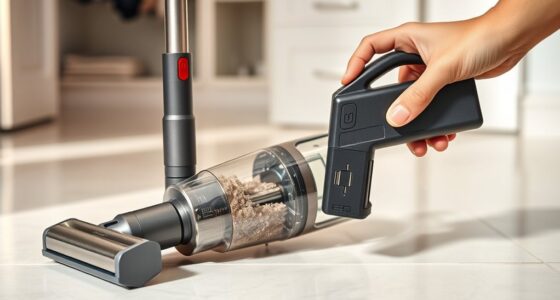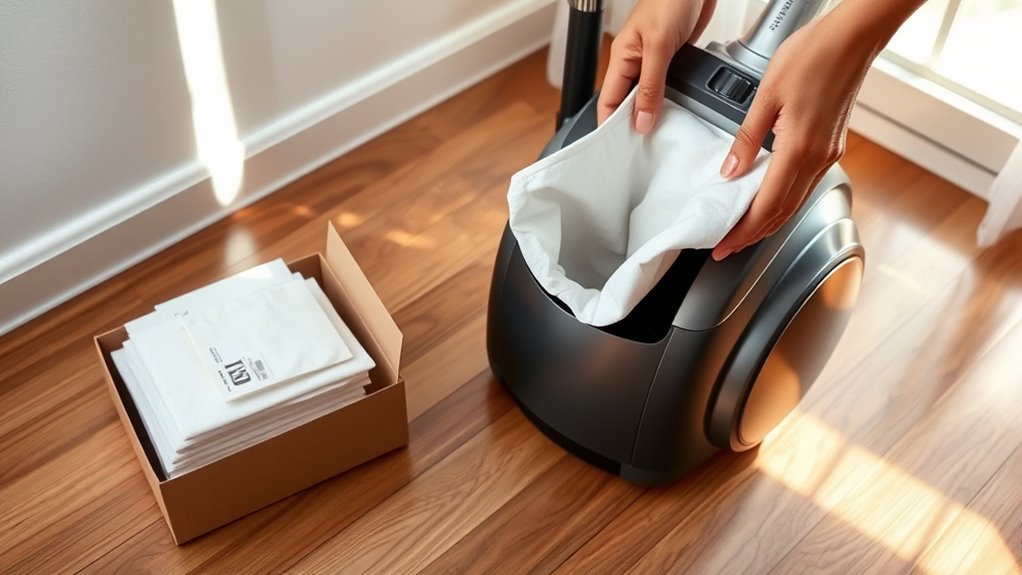
You should replace your vacuum bags when you notice a drop in suction power, unusual noises, or a burning smell. If the bag looks full or it seems like the vacuum is struggling, it’s time for a change. To replace them, unplug your vacuum, open the bag compartment, and remove the old bag. Insert a new one tightly to prevent leaks. Regular checks will keep your vacuum working well, and there are more tips to guarantee peak performance ahead.

Get cleaning gear delivered free — and shop member deals
- Fast, free delivery on millions of items
- Access to Prime Big Deal Days deals on October 6–7
- Prime Video, Amazon Music and more included
Key Takeaways
- Replace vacuum bags when you notice a drop in suction power or unusual noises during operation.
- Regularly check for visible fullness in the bag to determine if it needs replacing.
- Follow safety measures by unplugging the vacuum before replacing the bag.
- Ensure the new bag is compatible and seals tightly to prevent leaks during use.
- Test the vacuum after replacement to confirm improved performance and suction.

When you notice your vacuum’s suction power waning, it’s often a sign that it’s time to replace the vacuum bag. A well-functioning vacuum cleaner is vital for maintaining a clean home, and ignoring this essential maintenance task can lead to poor performance. Different vacuum bag materials can affect how often you need to replace them, but generally, when you see a drop in suction, it’s a clear indicator that the bag is full or possibly clogged.
A decline in your vacuum’s suction power often signals it’s time to replace the bag for optimal performance.
You might start to notice other signs of bag clogging as well. For instance, if you hear unusual noises coming from your vacuum or smell an odd burning odor, these could be red flags. A clogged bag not only reduces suction but can also strain the motor, leading to more extensive damage if you don’t act quickly. If you’ve been using your vacuum regularly, it’s smart to check the bag once a month or so, even if you don’t notice these warning signs.
When you decide to replace the bag, make sure you’re using the right type. Different vacuums require specific bags, so check your user manual for recommendations. Some bags are made from paper, while others are crafted from more durable materials like cloth or synthetic fibers. The latter often offers better filtration and can hold more debris, which means they may not need replacing as frequently. However, keep in mind that even the best vacuum bag materials can become clogged if they’re not changed regularly. Additionally, using a vacuum with a HEPA filter can enhance overall air quality by reducing allergens while you clean.
To replace the vacuum bag, first, unplug your vacuum to guarantee safety. Open the compartment where the bag is housed, and remove the old bag carefully to avoid spilling any dust or debris. Make sure to dispose of it properly. Then, take your new bag and insert it according to the manufacturer’s instructions, ensuring a snug fit. It’s vital that the bag seals properly to prevent dirt from escaping back into your home.
Once you’ve replaced the bag, turn your vacuum back on and test it out. You should immediately notice an improvement in suction power. Regularly checking and replacing your vacuum bag is a simple yet effective way to keep your vacuum running efficiently, guaranteeing that your home stays clean and dust-free.
As an affiliate, we earn on qualifying purchases.
Frequently Asked Questions
How Do I Know What Type of Vacuum Bag to Buy?
To know what type of vacuum bag to buy, check your vacuum’s model number and consult bag compatibility guides. Different vacuum brands require specific bag materials, like paper or HEPA, to effectively trap dust and allergens. You can usually find this information on the manufacturer’s website or in the user manual. Once you have that, you’ll be ready to choose the right bags for your vacuum!
Can I Wash and Reuse Vacuum Bags?
You can’t wash and reuse most vacuum bags; they’re like a one-hit wonder! Made from paper or plastic, these materials aren’t designed for cleaning. Washing them can lead to tears or blockages, reducing suction power. Instead, focus on proper bag disposal tips: seal them tightly before throwing them away to keep dust and allergens contained. Always check your vacuum’s manual for specific recommendations on bag types and disposal methods to guarantee peak performance.
What Happens if I Don’T Replace the Bag?
If you don’t replace the vacuum bag, you’ll notice a drop in suction power and efficiency. A full bag can lead to overheating and damage your vacuum. Most vacuum bags have a set lifespan, and ignoring bag replacement tips can shorten your vacuum’s life. To keep it running smoothly, check the bag regularly and replace it when it’s about two-thirds full. This keeps your vacuum working at its best!
Are There Vacuum Bags That Reduce Allergens?
Yes, there are vacuum bags designed to reduce allergens, often featuring HEPA filtration that captures up to 99.97% of particles. Did you know that vacuuming with these bags can improve indoor air quality by considerably lowering allergens? If you’re environmentally conscious, look for eco-friendly alternatives that still offer air purifier compatibility. By choosing the right vacuum bags, you can make a positive impact on both your health and the planet.
How Often Should I Check Vacuum Bags?
You should check your vacuum bags regularly, ideally every month or so, depending on usage. The vacuum bag lifespan varies, but if you notice signs of a full bag, like reduced suction or unusual odors, it’s time to substitute it. Keeping an eye on the bag helps maintain your vacuum‘s efficiency and ensures you’re not spreading dust and allergens around your home. Regular checks can save you from bigger cleaning headaches later!
Conclusion
In summary, replacing your vacuum bag regularly can improve your vacuum’s efficiency by up to 30%. By keeping an eye on the bag’s fullness and changing it when needed, you not only maintain suction power but also ensure cleaner air in your home. So, don’t wait until it’s overflowing; make it a habit to check and replace the bag. A little upkeep goes a long way in extending your vacuum’s lifespan and enhancing your cleaning experience!
Fall Picks
fall essentials
As an affiliate, we earn on qualifying purchases.