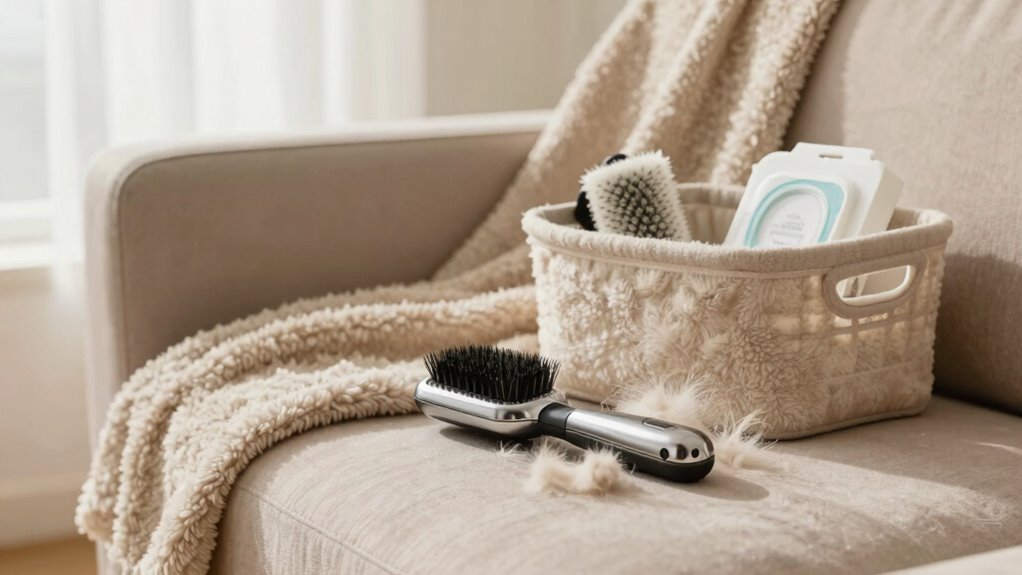

To build a routine around pet shedding seasons, track your pet’s natural shedding cycles and mark peak times on your calendar. Increase grooming frequency during spring and fall using the right tools, like slicker brushes or rubber gloves, to remove loose hair before it sheds everywhere. vacuum and wipe surfaces regularly, and protect furniture with slipcovers. Incorporate these steps into your weekly schedule, and you’ll reduce hair mess effortlessly. Stay with us to learn more effective tips for managing pet hair!

Get cleaning gear delivered free — and shop member deals
- Fast, free delivery on millions of items
- Access to Prime Big Deal Days deals on October 6–7
- Prime Video, Amazon Music and more included
Key Takeaways
- Track your pet’s shedding patterns and mark peak seasons on your calendar for proactive grooming.
- Adjust grooming frequency and tools seasonally, increasing brushing during heavy shedding periods.
- Incorporate regular cleaning routines, like vacuuming and surface wiping, aligned with shedding cycles.
- Prepare your home with protective covers and lint rollers to minimize hair spread during peak seasons.
- Use positive reinforcement and bonding activities to make grooming less stressful and more effective.
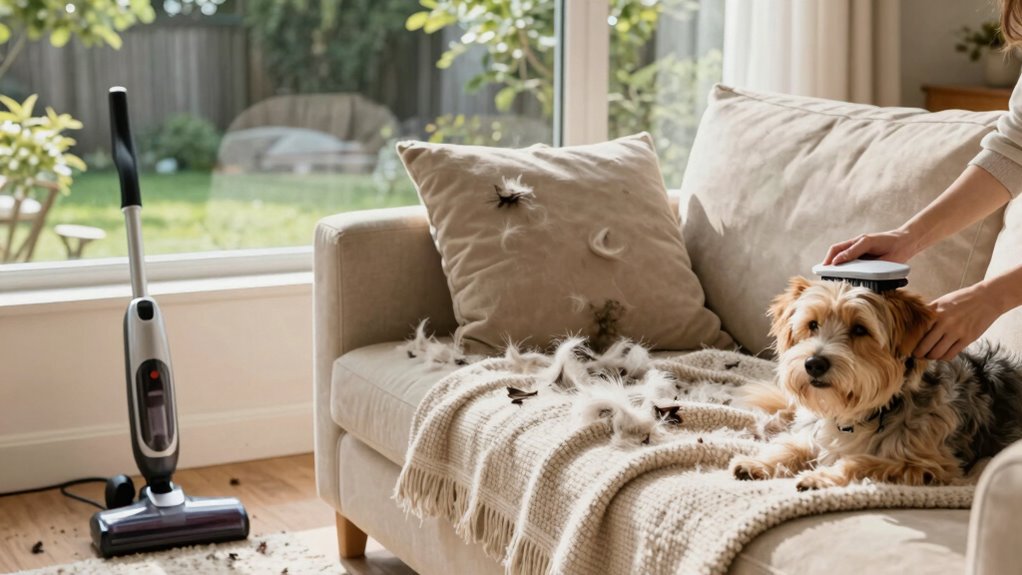
Are you tired of endless pet hair covering your furniture and clothes during shedding seasons? If so, it’s time to build a maintenance routine that keeps hair under control and makes cleaning less of a chore. The key to managing pet shedding lies in understanding your pet’s shedding patterns and establishing a consistent plan. Start by setting a seasonal schedule that aligns with your pet’s natural shedding cycles. For most animals, shedding intensifies during spring and fall, so plan to increase grooming activities during these times. Mark these periods on your calendar, and prepare to adjust your routine accordingly.
Manage pet shedding with seasonal routines and increased grooming during peak times for a cleaner home.
Grooming tools are your best allies in this effort. Invest in quality brushes and combs suited to your pet’s coat type. For example, slicker brushes work well for long-haired breeds, while rubber grooming gloves are effective for short-haired animals. Regular grooming sessions using these tools help remove loose hair before it has a chance to spread all over your home. During peak shedding seasons, aim to groom your pet at least every few days to prevent excessive hair accumulation. Not only does this reduce hair everywhere, but it also keeps your pet comfortable and healthy, as it stimulates skin circulation and distributes natural oils. Incorporating proper grooming techniques can further enhance your efforts.
Creating a routine around grooming also means establishing a dedicated space for these sessions. Choose a comfortable, well-ventilated area where you can groom your pet thoroughly without disruption. This helps your pet associate grooming with a positive experience, making future sessions easier. Incorporate routine brushing into your weekly schedule, and don’t forget to clean your grooming tools regularly to maintain their effectiveness. In addition to brushing, consider bathing your pet during high-shedding periods with appropriate pet shampoos that help loosen and remove hair. This combined approach of brushing and bathing can significantly decrease the amount of loose hair that ends up on your furniture, clothes, and floors. Understanding shedding patterns can help you time these activities more effectively. Additionally, furniture protection solutions like slipcovers or removable covers can make cleaning easier and protect your home surfaces from pet hair. Recognizing the seasonal nature of shedding can help you plan and adapt your routine for optimal results.
Furthermore, incorporating local attractions or engaging activities during grooming sessions can turn these routines into enjoyable bonding experiences for both you and your pet. Beyond grooming, maintain a regular cleaning schedule that coincides with your pet’s shedding cycle. Vacuum frequently using a vacuum equipped with a pet hair attachment, and wipe down surfaces with a damp cloth to pick up stray hairs. Using lint rollers on clothing and furniture can be a quick fix to remove hair between deep cleanings. By sticking to a seasonal schedule for grooming and cleaning, you’ll not only reduce pet hair around your home but also build a routine that makes shedding less overwhelming. Over time, these habits will become second nature, transforming pet shedding from a frustrating problem into a manageable part of pet ownership.
As an affiliate, we earn on qualifying purchases.
Frequently Asked Questions
How Can I Reduce My Pet’s Shedding Naturally?
You can reduce your pet’s shedding naturally by regular pet grooming, which removes loose fur before it falls around your home. Use a good deshedding brush suited for your pet’s coat type. Be aware of shedding myths, like over-bathing reducing shed, which can actually cause more. Consistent grooming and a healthy diet help manage shedding effectively, keeping your pet comfortable and your space cleaner.
What Are the Best Tools for Managing Shedding?
The best tools for managing shedding include a slicker brush and de-shedding tool, which help remove loose fur effectively. Use grooming techniques that match your pet’s shedding cycles, like more frequent brushing during peak seasons. Regular grooming not only reduces shedding but also keeps your pet comfortable. Invest in a vacuum designed for pet hair and lint rollers to keep your home cleaner, especially during heavy shedding periods.
How Often Should I Bathe My Shedding Pet?
You should bathe your shedding pet every 4 to 6 weeks to support grooming schedules and coat maintenance. Regular baths help loosen loose fur and reduce shedding around your home. During heavy shedding seasons, consider bathing more frequently, but avoid overdoing it to prevent skin dryness. Pair baths with brushing and trimming to keep your pet’s coat healthy and manageable, especially when shedding is at its peak.
Are There Specific Diets That Minimize Shedding?
Yes, certain diets can help minimize shedding. Look for high-quality, omega-3 and omega-6 fatty acid-rich foods, which promote a healthy coat. Incorporate a consistent grooming schedule to remove loose hair and prevent matting. As you work on leash training, make grooming a positive experience, making your pet more comfortable during brushing. These steps support a healthier coat and reduce the amount of shedding around your home.
How Do I Handle Allergies Caused by Shedding?
You handle allergies caused by shedding by identifying allergy triggers and implementing environmental controls. You can reduce exposure by regularly cleaning your home, vacuuming with a HEPA filter, and washing pet bedding often. You also limit pet access to bedrooms and use air purifiers to improve air quality. By actively managing triggers and controlling the environment, you create a healthier space, easing allergy symptoms and making life more comfortable for you and your pet.
Conclusion
As you settle into your routine, you might notice that your home feels fresher just as your pet’s shedding slows down, almost like a natural rhythm syncing with the seasons. With consistent grooming, cleaning, and patience, you’ll find yourself more prepared each year. Coincidentally, those moments when your pet snuggles close feel even more special, knowing you’ve created a comfortable, clean environment for both of you. Embrace the process—soon, shedding season will be just another part of your shared journey.
Fall Picks
fall essentials
As an affiliate, we earn on qualifying purchases.