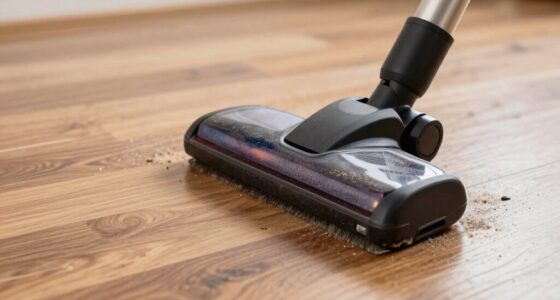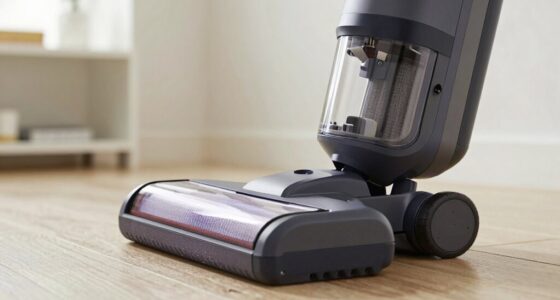
To prevent damage when storing your vacuum, choose a dry, cool spot away from sunlight and moisture. Clean or replace filters, empty the dustbin, and inspect attachments before placing the vacuum in a dedicated, well-ventilated space. Loosely coil the cord without tight bends and keep it upright. Cover or store in a breathable container to avoid dust buildup. Keep these tips in mind to protect your vacuum and make sure it’s ready for use whenever needed, if you want to learn more.

Get cleaning gear delivered free with Prime
- Fast, free delivery on millions of items
- Prime Video, Amazon Music and more included
- Member-only deals all year
Key Takeaways
- Store in a dry, cool, and stable environment away from sunlight, moisture, and pests.
- Clean filters, empty dustbin, and remove debris from brushes before storing.
- Loosely coil the power cord without tight bends to prevent damage.
- Keep attachments in designated containers and cover the vacuum with a breathable cloth.
- Regularly inspect and maintain the vacuum to ensure optimal performance and longevity.
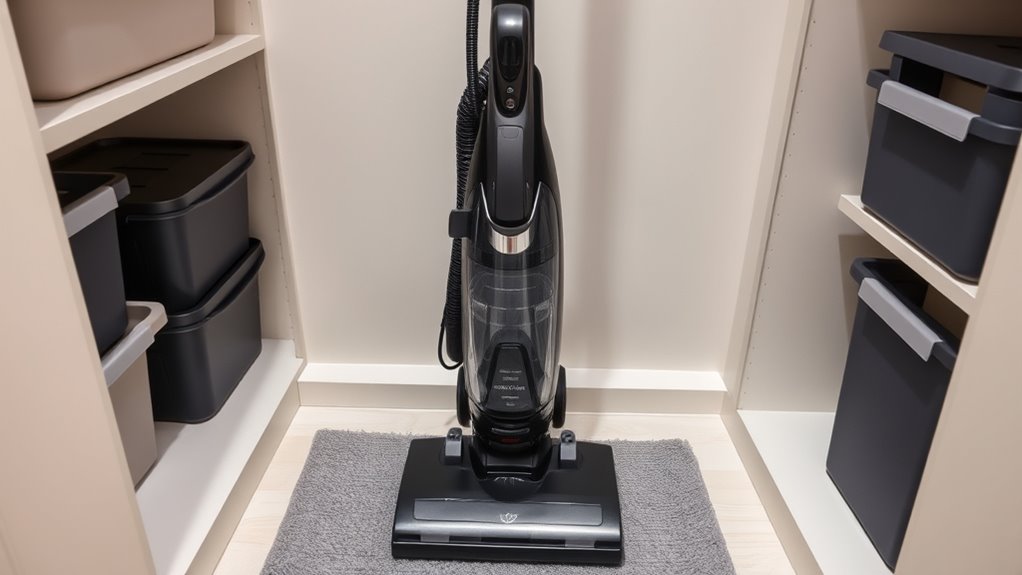
Have you ever wondered if storing your vacuum properly can extend its lifespan and guarantee ideal performance? Proper storage isn’t just about tucking it away after cleaning; it’s about making sure each component stays in top shape for years to come. The first step is choosing the right storage location. You want a spot that’s dry, cool, and free from extreme temperature fluctuations. Avoid places like basements or attics where humidity and temperature swings can cause damage to the motor, cords, or internal parts. A closet or utility room with a stable environment works best. Keeping your vacuum upright in a dedicated space prevents unnecessary strain on the cord and hose, reducing wear and tear over time. Using proper storage techniques can also prevent internal damage caused by environmental factors. Vacuum maintenance techniques play a vital role in preserving your appliance during storage. Before you put it away, make sure to clean or replace filters, empty the dustbin or bag, and remove any debris from brushes or attachments. This prevents dirt buildup that could lead to mold or odors while in storage. Also, inspect the cord for any damage and gently wind it without tight bends to avoid internal wire breakage. If your vacuum has any removable filters or HEPA filters, consider replacing or cleaning them as recommended by the manufacturer. Doing so guarantees your vacuum is ready for maximum performance when you take it out of storage. When storing, avoid wrapping the cord tightly around the vacuum or cramming accessories into cramped spaces. Instead, loosely coil the cord and store attachments in a designated compartment or container. This prevents strain on the cord and keeps everything organized for quick access. Additionally, confirm the vacuum is completely dry before storing to prevent rust or mold. If your vacuum has a bag or dustbin, remove it and store it separately if possible, to prevent residual dust from settling or causing odors. Finally, consider the environment where you store your vacuum. Keep it away from direct sunlight, moisture, and areas prone to pests. Covering it with a breathable cloth or placing it in a storage bin with ventilation can help protect it from dust and accidental bumps. Regularly check on your stored vacuum to guarantee it remains in good condition. By choosing the right storage location and practicing proper vacuum maintenance techniques, you’ll prolong the life of your appliance and keep it ready for dependable cleaning whenever you need it.
As an affiliate, we earn on qualifying purchases.
Frequently Asked Questions
Can I Store My Vacuum Outside?
You shouldn’t store your vacuum outside. Outdoor storage exposes it to weather considerations like rain, snow, and humidity, which can damage the motor and other components. Even if you have a covered area, moisture and temperature fluctuations can cause issues. Instead, keep your vacuum in a dry, indoor space where it’s protected from the elements. Proper indoor storage guarantees your vacuum stays in good shape and works effectively when you need it.
How Often Should I Clean Vacuum Filters Before Storage?
You should clean your vacuum filters at least once a month, especially before storage. Regular vacuum filter maintenance helps prevent dust buildup and keeps your vacuum running efficiently. Use storage cleaning tips like washing or replacing filters, ensuring they’re completely dry before storing. This prevents mold and damage. Proper cleaning before storage prolongs your vacuum’s lifespan and maintains peak performance, making sure it’s ready to use when you need it again.
Is It Okay to Store My Vacuum on Its Side?
Storing your vacuum on its side is generally okay if you choose the right storage position, much like balancing a tightrope walker. Think of it as aligning your tools for a quick escape. Make certain the vacuum’s cord and attachments are secure, and avoid placing heavy objects on top. Proper vacuum orientation prevents damage, keeping your device in top shape and ready for your next cleaning adventure.
What Temperature Range Is Safe for Vacuum Storage?
You should keep your vacuum within a temperature range of 50°F to 86°F (10°C to 30°C) for safe storage. Extreme temperatures can harm the vacuum’s motor and internal components, leading to damage or reduced lifespan. Make sure your storage conditions are cool, dry, and stable. Avoid areas with high humidity or direct sunlight, as these conditions can cause corrosion or other issues that compromise your vacuum’s performance over time.
Should I Remove the Vacuum’s Battery Before Storing?
Did you know that batteries are responsible for over 30% of vacuum malfunctions? You should definitely remove the vacuum’s battery before storing to guarantee storage safety. Removing the battery prevents potential leaks, corrosion, and damage caused by temperature fluctuations. It also reduces the risk of electrical issues during long-term storage. So, always take out the battery and store it separately in a cool, dry place for ideal vacuum longevity.
Conclusion
Storing your vacuum properly is like tending to a delicate garden—if you neglect it, weeds of damage can take over. I once left my vacuum tangled in a closet corner, and months later, it struggled to pick up even light debris. Regularly caring for and storing your vacuum guarantees it stays in top shape, just like a well-tended garden blooms beautifully. A little effort today keeps your cleaning tool running smoothly for years to come.
Halloween Picks
halloween
As an affiliate, we earn on qualifying purchases.