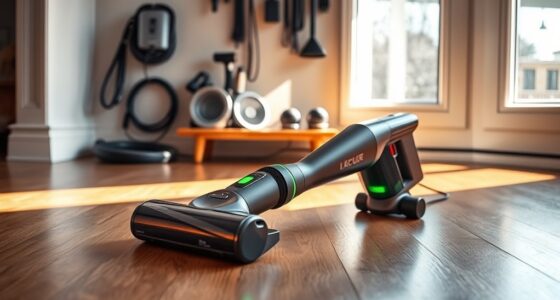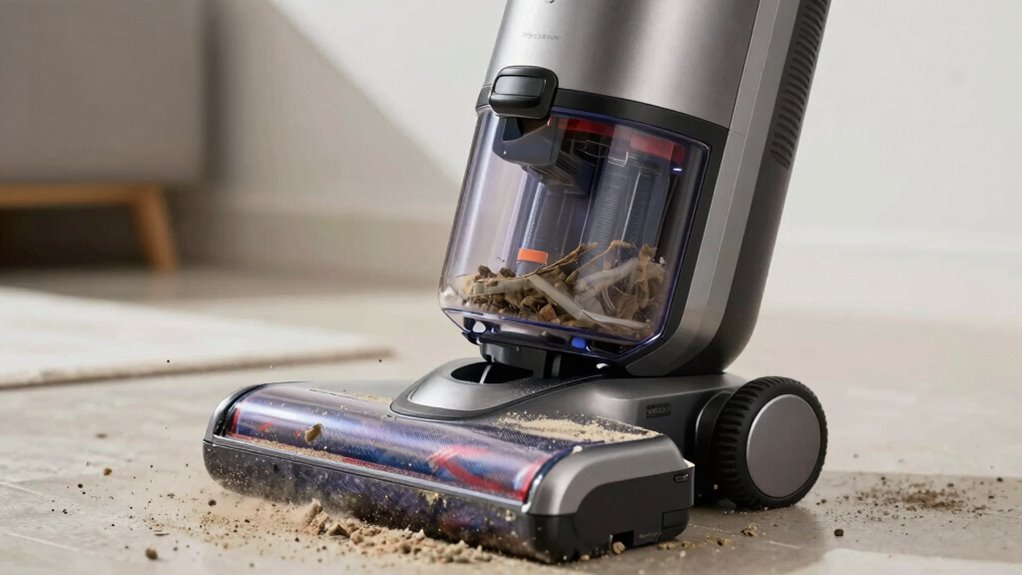

Emptying the dust bin isn’t enough to keep your vacuum in top shape. You also need to check and replace filters, clean brushes and rollers, and inspect moving parts like wheels and belts. Ignoring these areas can reduce suction, strain the motor, or cause breakdowns. Regular maintenance helps your vacuum run efficiently and last longer. Keep going to discover more simple tips that can help maintain your vacuum’s performance and extend its lifespan.

Get cleaning gear delivered free — and shop member deals
- Fast, free delivery on millions of items
- Access to Prime Big Deal Days deals on October 6–7
- Prime Video, Amazon Music and more included
Key Takeaways
- Regularly cleaning filters and brushes maintains suction power and prevents motor strain.
- Dust bin emptying alone doesn’t remove debris from filters or internal components.
- Over time, filters and rollers accumulate dirt, reducing cleaning efficiency.
- Obstructions and worn parts can hinder movement and overall vacuum performance.
- Routine maintenance ensures longevity and prevents costly repairs beyond dust bin emptying.

Regular vacuum maintenance is essential to keep your appliance working efficiently and extend its lifespan. While emptying the dust bin might seem like enough, there’s much more to proper care. For example, if you own a robot vacuum, you need to pay attention to specific components to ensure it keeps performing at its best. Robot vacuums are convenient, but they require regular upkeep to prevent malfunctions and maintain cleaning power. One crucial aspect is checking and replacing the air filter regularly. Over time, the air filter traps dust, allergens, and debris, but it can become clogged or dirty, reducing airflow and suction. If you neglect air filter replacement, your robot vacuum’s motor has to work harder, which can lead to overheating or premature failure. So, to keep your robot vacuum running smoothly, make it a habit to inspect the air filter periodically and swap it out when it’s dirty or according to the manufacturer’s schedule. Additionally, incorporating routine maintenance practices can help boost your vacuum’s overall performance and longevity. Regularly scheduling professional check-ups can also help identify potential issues early on, ensuring your device remains in optimal condition.
Regularly check and replace your robot vacuum’s air filter to maintain optimal performance and prevent motor issues.
Beyond air filters, other maintenance tasks are just as vital. For instance, cleaning the brushes and rollers prevents hair, lint, and debris from tangling, which can impede the vacuum’s ability to pick up dirt effectively. You should also check the wheels for obstructions and ensure they spin freely. Neglecting these parts can cause the vacuum to struggle on carpets or uneven surfaces. Additionally, keeping the charging contacts clean ensures your robot vacuum charges properly and is ready for the next cleaning session. Regularly inspecting vacuum components like belts and filters can help catch issues early before they cause bigger problems. These simple steps help avoid unnecessary breakdowns and extend your device’s lifespan.
Even if you’re diligent with your robot vacuum’s upkeep, don’t forget about traditional vacuums. Regularly inspecting and replacing the air filter is just as important for traditional models. A clean filter improves suction, reduces strain on the motor, and helps trap allergens, making your home cleaner and healthier. Moreover, following the manufacturer’s maintenance guidelines ensures that you perform all necessary tasks correctly to maximize your vacuum’s lifespan. In all cases, following the manufacturer’s maintenance guidelines is key. Neglecting routine tasks like air filter replacement or brush cleaning might seem minor, but over time, it can lead to decreased performance, higher energy costs, and costly repairs. Ensuring that you understand device maintenance best practices can prevent costly damage and improve efficiency.
In essence, your vacuum’s health depends on more than just emptying the dust bin. Taking proactive steps—like replacing the air filter, cleaning brushes, and inspecting moving parts—ensures your vacuum works efficiently for years to come. Whether it’s a robot vacuum or a traditional model, consistent maintenance is the best way to maximize its lifespan and keep your living space cleaner and healthier.
As an affiliate, we earn on qualifying purchases.
Frequently Asked Questions
How Often Should I Replace My Vacuum’s Filters?
You should replace your vacuum’s filters every 3 to 6 months, depending on their filter lifespan and usage. Regular replacement guarantees maximum performance and cleaner air. If you notice reduced suction or increased dust in your home, it’s time for a replacement. Check your manufacturer’s recommendations for specific guidance. By sticking to the recommended replacement frequency, you’ll keep your vacuum functioning efficiently and extend its lifespan.
Can a Clogged Hose Affect Vacuum Performance?
A clogged hose can dramatically ruin your vacuum’s performance, making it feel like you’re trying to suck up a mountain instead of dirt. It restricts vacuum airflow, reducing suction power and efficiency. Regular hose maintenance is essential; check for blockages, kinks, or debris. Clearing clogs guarantees your vacuum runs smoothly, keeps your home cleaner, and prolongs its lifespan. Don’t let a simple clog sabotage your cleaning efforts!
What Tools Are Best for Cleaning Vacuum Brushes?
To clean vacuum brushes effectively, use a sturdy brush or a pair of scissors to remove hair and debris from the brush roller. Regular vacuum attachment maintenance helps keep the brushes functioning smoothly. Make certain to detach the brush roller and clean it thoroughly, paying attention to tangled fibers. This maintenance prevents clogs and guarantees peak suction, keeping your vacuum performing at its best and extending its lifespan.
How Do I Know if My Vacuum Needs Professional Repair?
When your vacuum starts losing its mojo, it’s like a garden without water—things just aren’t right. You’ll notice persistent pet hair clinging to surfaces, a strange vacuum scent, or your machine struggles to pick up debris. If you hear strange noises or see decreased suction, it’s time for professional repair. Don’t ignore these signs, or your vacuum might give up, leaving your home less fresh and clean.
Is It Necessary to Lubricate Vacuum Motor Parts?
Yes, it’s necessary to lubricate vacuum motor parts occasionally to keep it running smoothly. Motor lubrication reduces friction and prevents overheating, extending your vacuum’s lifespan. Additionally, belt maintenance is vital; check and replace belts when they become worn or loose. Regularly lubricating the motor and maintaining belts guarantees peak suction and performance, saving you from costly repairs and keeping your vacuum working efficiently for years to come.
Conclusion
Think of your vacuum as a trusted companion on a never-ending adventure through your home. Just like any hero, it needs more than just a quick rest—regular maintenance keeps it fighting fit. Neglecting its needs is like leaving a brave knight unarmed before battle. Show your vacuum some love with proper care, and it’ll continue to protect your space, sweeping away dust and debris like a guardian. After all, a well-cared-for hero is a hero for life.
Evergreen bestsellers Picks
bestsellers
As an affiliate, we earn on qualifying purchases.