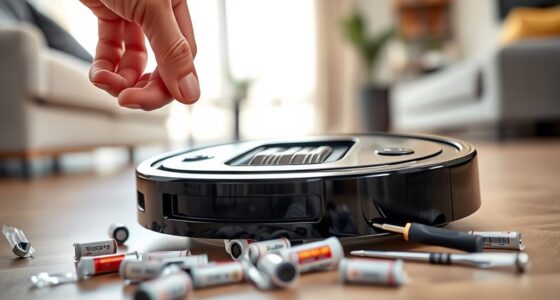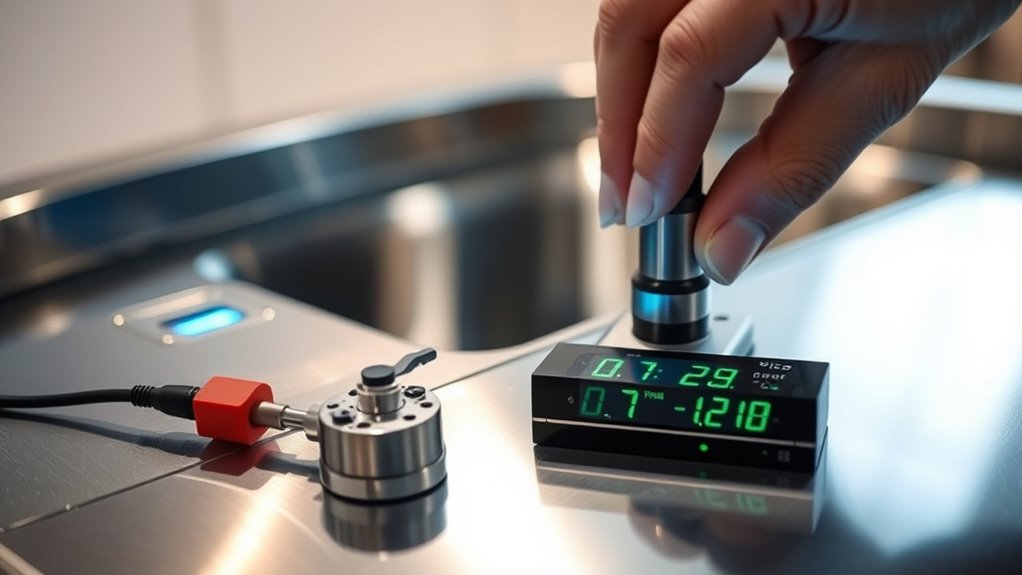

To keep your dustbin sensors accurate, regularly clean them to remove dirt, dust, and debris that can cause false readings. When calibrating, start with an empty bin, then gradually fill it while adjusting the sensor’s response points through your control interface. Make sure the sensor is positioned correctly, away from edges and moisture, to prevent interference. Proper maintenance guarantees reliable waste detection—stay tuned to learn more about maintaining and optimizing your sensors.
Key Takeaways
- Regularly clean sensor surfaces to remove dirt, dust, and debris that may hinder accurate readings.
- Calibrate sensors periodically using control signals or software to set proper empty and full thresholds.
- Ensure sensors are mounted correctly near the top of the bin, avoiding edges and uneven surfaces.
- Protect sensors from moisture and environmental elements to prevent false readings and damage.
- Perform routine maintenance checks to verify placement, recalibrate as needed, and keep sensors clean for optimal performance.
Dustbin sensors are smart devices designed to automatically detect when a trash bin is full or needs attention. When you’re managing waste collection, these sensors help streamline the process by providing real-time updates, reducing the need for manual checks. Proper sensor placement is vital to guarantee reliable performance. You want to position the sensor in a spot where it can accurately detect the fill level without interference. Typically, this means mounting the sensor near the top of the bin, pointing downward, so it can monitor the waste level as it rises. Avoid placing sensors too close to the edges or on uneven surfaces, as this can cause false readings or missed signals. Keep in mind that environmental factors like dirt, moisture, and debris can affect sensor accuracy, so choosing a location that minimizes exposure is essential.
Once you’ve installed the sensor, calibration techniques come into play to fine-tune its responsiveness. Calibration is about adjusting the sensor’s settings to match the specific dimensions and fill levels of your bin. You might start by emptying the bin completely and then gradually filling it, noting the sensor’s readings at different levels. Many sensors come with a calibration mode that allows you to set thresholds for when a bin is considered full or empty. During this process, make sure the sensor is clean and free from obstructions because dirt or dust can skew the readings. Some calibration methods involve using control signals or software interfaces, where you manually set the sensor’s response points based on the observed fill levels. Regular calibration ensures the sensor remains accurate over time, especially as the bin’s contents and environmental conditions change. Additionally, understanding how color accuracy impacts sensor performance can help in selecting the best type of sensor for your needs.
Maintaining proper sensor placement and performing routine calibration are ongoing tasks. Over time, sensors may drift from their initial settings, especially if exposed to dust or moisture. Checking the placement periodically guarantees that the sensor stays in the ideal position, while recalibrating helps it adapt to any wear or environmental shifts. This combination of careful placement and consistent calibration techniques guarantees your dustbin sensors perform reliably, minimizing false alerts and ensuring waste collection happens only when necessary. By paying attention to these details, you’ll maximize your waste management system, saving time and resources while keeping your environment clean and efficient.
Frequently Asked Questions
How Long Do Dustbin Sensors Typically Last Before Replacement?
Dustbin sensors usually last about 2 to 3 years before needing replacement. Your sensor’s lifespan depends on usage, environment, and maintenance. Keep an eye out for signs like inaccurate readings or missed signals, which indicate it’s time for a replacement. To avoid disruptions, regularly clean and calibrate your sensor, and plan for replacement frequency accordingly, typically every couple of years, to ensure peak performance.
Can Dustbin Sensors Detect Different Types of Waste?
Dustbin sensors mainly detect waste presence, but they can’t effectively distinguish waste types. Their sensor accuracy focuses on general detection rather than waste differentiation. If you want to separate recyclables from organic waste, you’ll need specialized sensors designed for waste differentiation. Keep in mind, standard dustbin sensors are limited to basic detection, so for precise waste sorting, investing in advanced sensor technology is essential to ensure accurate waste management.
Are Dustbin Sensors Compatible With Existing Waste Management Systems?
Yes, dustbin sensors are compatible with existing waste management systems through seamless sensor integration and system compatibility features. You can easily upgrade your setup without extensive modifications, as these sensors are designed to work with various control units and software. Ensuring proper calibration and communication protocols allows the sensors to efficiently monitor waste levels, helping you optimize collection schedules and maintain smooth operations without disrupting your current system infrastructure.
What Privacy Concerns Are Associated With Sensor Data Collection?
You might not realize it, but sensor data collection can expose your privacy. As dustbin sensors gather information, malicious actors could access unencrypted data, risking your personal details. To protect you, manufacturers implement data encryption, ensuring your information stays confidential. Still, it’s essential to stay vigilant, knowing that without proper safeguards, your user privacy could be compromised behind the scenes. Keep informed and demand secure, encrypted data handling.
Do Dustbin Sensors Require Special Maintenance or Software Updates?
Yes, dustbin sensors do require regular maintenance, including sensor calibration to guarantee accurate detection of waste levels. You should also perform software updates when available, as they improve sensor performance, fix bugs, and add new features. Keep an eye on the manufacturer’s instructions for proper calibration procedures and update schedules, so your sensors stay reliable and functioning at their best. Proper maintenance helps prevent malfunctions and extends the lifespan of your sensors.
Conclusion
Think of dustbin sensors as the vigilant guardians of cleanliness, quietly watching over your space like dedicated sentinels. When you clean and calibrate them, you’re sharpening their senses, much like tuning a finely crafted instrument. Neglect their care, and they become blind to the mess. By keeping these sensors in top shape, you’re ensuring your environment stays pristine, as if a gentle rain washes away the clutter, leaving everything fresh and clear—your own personal clean-up miracle.