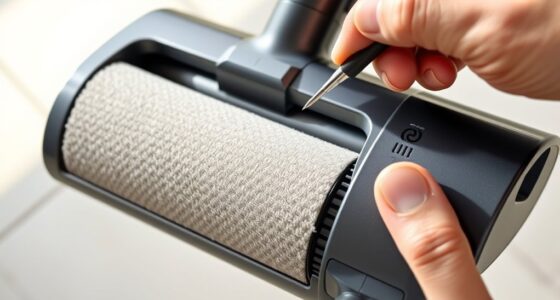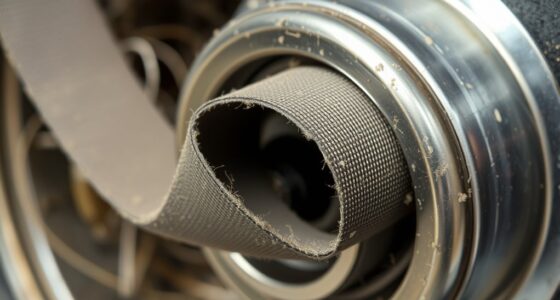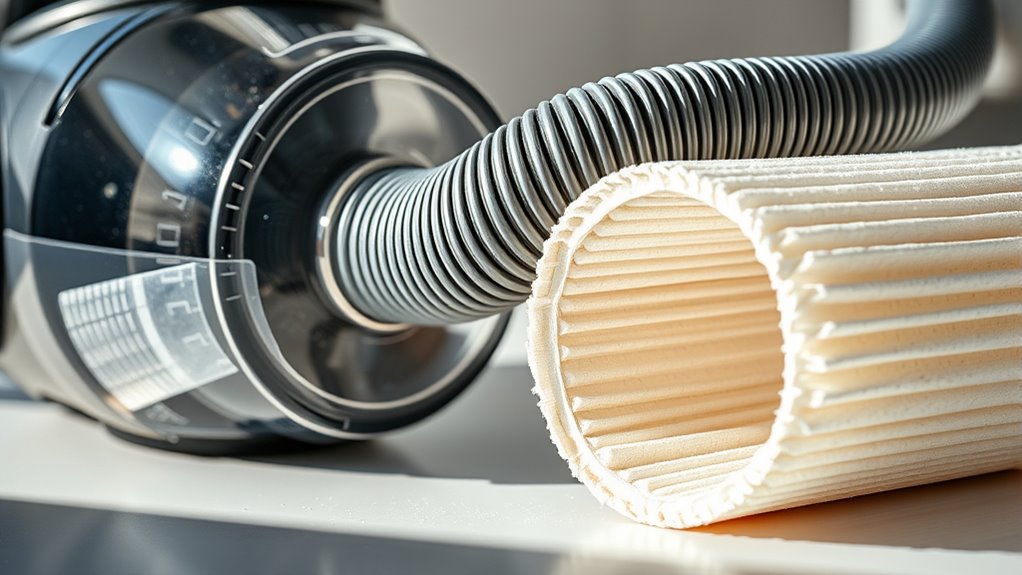

To maintain your canister vacuum’s hose and filters, regularly check for cracks, tears, or blockages, and clear any debris to guarantee smooth airflow. Replace filters according to the manufacturer’s schedule, typically every 6-12 months, and make sure they fit securely. Keep the hose and filter housing clean to prevent dust buildup. Caring for these parts helps your vacuum work better and last longer, so discover more tips to keep it in top shape.
Key Takeaways
- Regularly inspect and clean the vacuum hose for cracks, blockages, or debris to maintain optimal airflow and suction.
- Disconnect and flush the hose with water if needed, ensuring it is completely dry before reattaching.
- Replace damaged or worn hoses promptly to prevent airflow issues and preserve vacuum performance.
- Check and replace filters according to the manufacturer’s schedule, typically every 6–12 months, for maximum efficiency.
- Keep the filter housing clean, ensure filters are securely fitted, and routinely clean exterior parts to extend vacuum lifespan.

Regular maintenance is vital to keep your canister vacuum performing at its best. One of the most significant aspects of upkeep involves paying close attention to your vacuum’s hose and filters. Neglecting these parts can lead to decreased suction power, inefficient cleaning, and even damage to your machine over time. By making a habit of inspecting and replacing components as needed, you guarantee your vacuum continues to operate smoothly and effectively.
Start by examining the hose regularly. Over time, the hose can develop cracks, tears, or blockages that hinder airflow. To inspect it, disconnect the hose from both the canister and the cleaning attachment, then look for any visible signs of damage. Run your hand along the length to feel for cracks or holes, and check the interior for debris or obstructions. If you notice a crack or tear, replacing the hose is your best bet to restore peak suction. Even minor blockages should be cleared out, as they can reduce airflow and strain your motor, leading to potential overheating or failure. Clear clogs by gently detaching the hose and flushing it with water if necessary, letting it dry completely before reconnecting.
Regularly check your hose for cracks, blockages, and damage to ensure optimal suction and airflow.
Alongside hose inspection, filter replacement plays a vital role in maintaining your vacuum’s performance. Most canister vacuums have filters that trap dust, allergens, and debris, preventing them from recirculating into the air you breathe. Over time, these filters become clogged with dirt and lose their effectiveness. Regular filter replacement ensures your vacuum maintains strong suction and helps improve indoor air quality. Check your user manual for the recommended replacement schedule, which is often every six to twelve months, depending on usage. When replacing filters, make sure you use the exact type specified by the manufacturer to guarantee proper fit and filtration.
Additionally, keeping the filter housing clean prevents dust buildup that can compromise airflow and reduce filtration efficiency. Don’t forget that a clean filter also means your vacuum motor doesn’t have to work as hard, increasing its lifespan. When replacing filters, gently remove the old one and dispose of it properly. Insert the new filter securely, ensuring it fits snugly into place. Besides replacing filters, you should also clean the exterior of the filter housing and any accessible parts to prevent dust buildup.
In essence, a little routine care—inspecting the hose for damage and blockages, and replacing filters on schedule—goes a long way toward extending your vacuum’s life and maintaining its cleaning power. Taking these steps not only keeps your vacuum working efficiently but also creates a healthier environment by trapping more dust and allergens. Regular attention to these details ensures your canister vacuum remains a reliable tool for your cleaning needs.

Dyson V15 Detect™ Origin Cordless Vacuum
- Deep cleaning with intelligent detection: Reveals invisible dust for thorough cleaning
- Enhanced power and runtime: 100% more power, 60-minute battery life
- Energy-efficient power trigger: Uses power only when needed
As an affiliate, we earn on qualifying purchases.
Frequently Asked Questions
How Often Should I Replace My Vacuum’s Filter?
You should replace your vacuum’s filter every 3 to 6 months to ensure ideal filter maintenance. Regularly changing the filter helps maintain airflow, prevents clogs, and extends your vacuum’s lifespan. If you notice a decrease in suction or increased dust around the filter, it’s time for a replacement. Keeping up with filter maintenance not only improves cleaning performance but also prolongs your vacuum’s overall durability.
Can I Wash and Reuse the Vacuum Hose?
Yes, you can wash and reuse your vacuum hose, but careful cleaning is key. Regular hose maintenance prevents buildup, blockages, and boosts filter longevity. To wash, detach the hose and rinse it with warm water, ensuring all debris is cleared. Allow it to dry thoroughly before reconnecting. This simple step helps keep your vacuum working efficiently, extending its lifespan while maintaining ideal cleaning performance.
Are There Different Filters for Specific Vacuum Models?
Yes, there are model-specific filters for your vacuum. You need to check filter compatibility to guarantee you get the right fit, as some filters are designed specifically for certain models. Using the wrong filter can reduce performance or damage your vacuum. Always consult your vacuum’s manual or manufacturer’s recommendations to find the correct model-specific filters, ensuring ideal cleaning and longevity of your appliance.
What Signs Indicate My Filter Needs Cleaning or Replacing?
You’ll know your filter needs cleaning or replacing when your vacuum’s suction weakens, or you notice a bad odor. If your filter’s lifespan has reached its limit or it’s been a long time since your last cleaning, it’s time to address it. Generally, cleaning frequency depends on usage, but inspecting your filter every few months helps guarantee peak performance. Replace it if it’s torn or overly clogged to keep your vacuum working efficiently.
How Do I Prevent Hose Clogs During Use?
Think of your vacuum hose as a delicate garden hose—treat it gently to prevent damage. To avoid clogs, regularly check for blockages, clear debris promptly, and avoid vacuuming large, hard objects. Use clog prevention techniques like shaking out or rinsing the hose if needed, and guarantee it remains flexible for durability. Proper care keeps your hose flowing smoothly and prolongs its lifespan, making cleaning less of a chore.
Conclusion
By regularly caring for your canister vacuum’s hose and filter, you’ll find that cleaning becomes smoother and more efficient. It’s funny how a simple routine can unexpectedly extend your vacuum’s lifespan, saving you money and hassle. When you keep everything in tip-top shape, you might even notice surprises — like how much easier it is to get every corner spotless. After all, a little effort now often leads to a cleaner home and fewer surprises later.