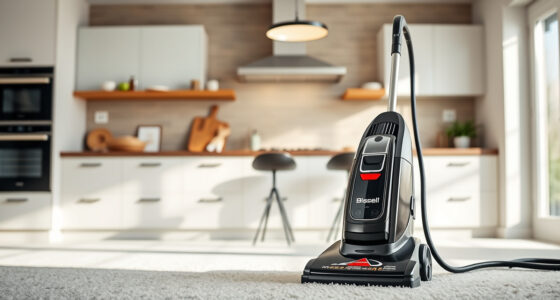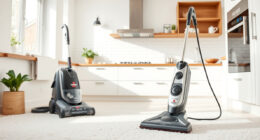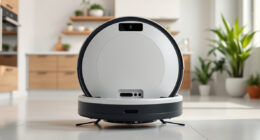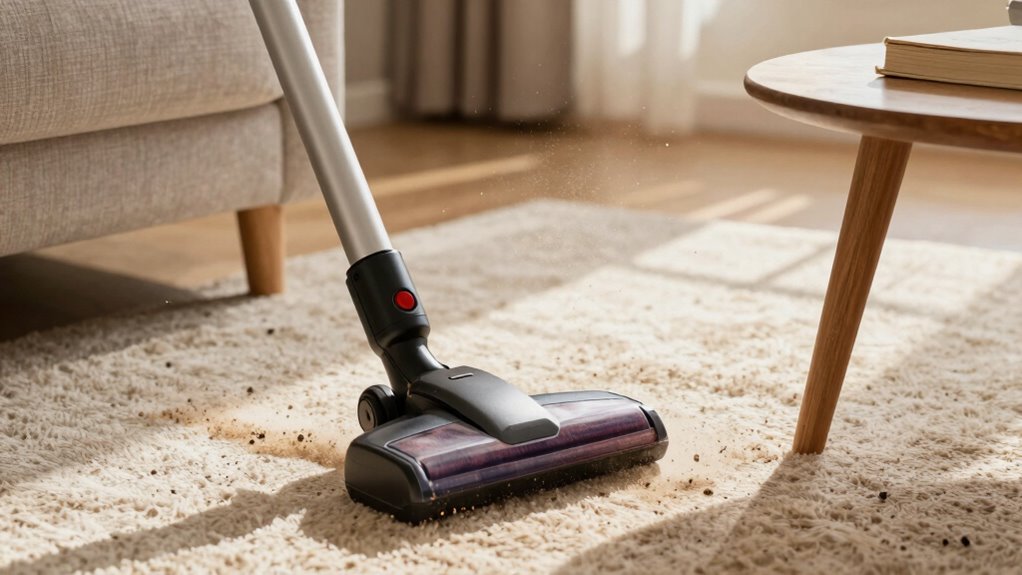
Start by vacuuming high-traffic areas like your living room and hallways, where dust and debris tend to accumulate quickly and get stirred up by foot traffic. Focus on these spaces first because they tend to spread dust to other rooms if not cleaned early. Use a vacuum with a good filter, like HEPA, for better dust removal. If you keep going, you’ll discover more effective tips to keep your entire home cleaner and dust-free.
Key Takeaways
- Prioritize high-traffic areas like living rooms and hallways to prevent dust spread.
- Start with carpets and rugs to remove trapped dust and allergens.
- Vacuum upholstered furniture and curtains early to prevent dust settling into fabrics.
- Clean less-used rooms after main areas to prevent dust migration.
- Maintain vacuum filters regularly for optimal dust and allergen removal.
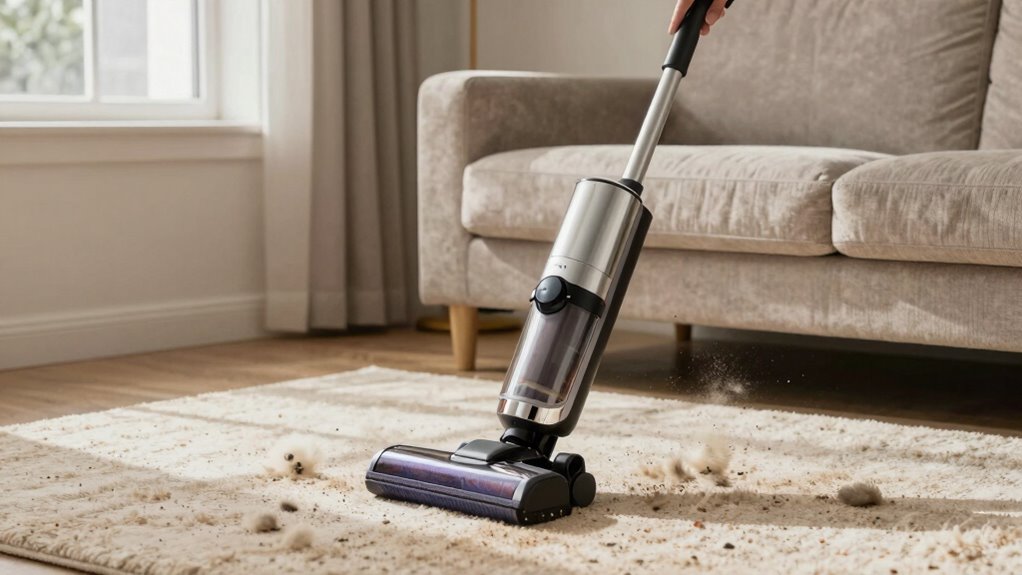
When tackling a dusty home, knowing where to start can make the task more efficient and effective. Dust accumulation can seem overwhelming, especially if you haven’t maintained a regular cleaning schedule. The key is to prioritize your vacuuming based on where dust tends to settle the most and the areas that will make the biggest difference in improving air quality and overall cleanliness. Starting with the most affected surfaces helps prevent dust from spreading to cleaner areas, saving you time and effort in the long run.
Begin your vacuuming process by focusing on high-traffic areas, such as living rooms and hallways, where dust tends to accumulate quickly. These zones often have more foot traffic, which stirs up dust and debris, making it essential to clear them early on. As part of your cleaning schedule, you should aim to vacuum these areas regularly, ideally daily or every other day if dust levels are high. This routine prevents dust from settling into carpets and upholstery, reducing overall dust accumulation in your home. When you vacuum these spaces first, you also create a cleaner environment for tackling less-used rooms later, preventing dust from migrating from one area to another.
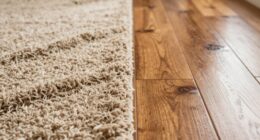
Next, direct your attention to carpets and rugs, which trap a significant amount of dust, allergens, and debris. These surfaces are notorious for holding dust particles that can become airborne when disturbed. Vacuuming carpets thoroughly at the start of your cleaning session ensures you remove as much dust as possible before tackling other surfaces. If you notice heavy dust build-up, consider using a vacuum with a HEPA filter to trap tiny particles effectively. Regularly scheduled deep cleanings of carpets—at least once every few weeks—help keep dust levels in check and improve indoor air quality. Additionally, opting for vacuums with air purifiers can further enhance dust removal, especially in particularly dusty environments.
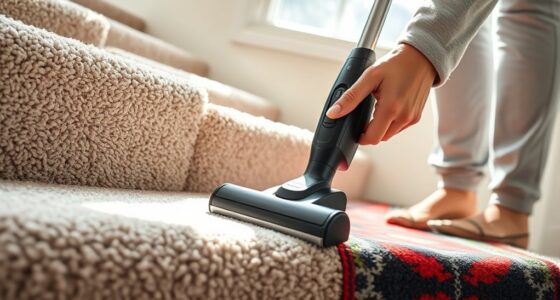
After covering the main living spaces and carpets, move on to upholstered furniture and curtains. These fabrics are magnets for dust and allergens, so vacuuming them early prevents dust from settling deeper into their fibers. Use attachments designed for upholstery to reach into crevices and seams. Once furniture is addressed, you can proceed to vacuum less-used rooms or areas with minimal dust accumulation, knowing your initial efforts have set a solid foundation for a cleaner, dust-free home. Additionally, using regular maintenance of your vacuum cleaner ensures it continues to operate efficiently and effectively removes dust. Remember, maintaining your vacuum with filter checks and timely replacements is crucial for optimal performance.

Bissell Pet Hair Eraser Allergen Lift-Off with Powerful Suction, HEPA, Tangle-Free Brush Roll, 39883
POWERFUL SUCTION. Dirt, fur & dust don’t stand a chance against the Pet Hair Eraser Allergen Lift-Off vacuum’s…
As an affiliate, we earn on qualifying purchases.
As an affiliate, we earn on qualifying purchases.
Frequently Asked Questions
Should I Vacuum Before or After Dusting?
You should vacuum before dusting to prevent spreading dust around. Use a proper vacuuming technique to pick up loose dirt and dust from surfaces and floors. This way, when you dust afterward, you won’t be redistributing dust into the air. Incorporate vacuuming into your dusting schedule for a cleaner home. This order helps you achieve better results, keeps dust from settling again quickly, and makes your cleaning routine more effective.
How Often Should I Vacuum My Dusty Home?
You should vacuum your dusty home at least twice a week to combat dust accumulation and keep your space fresh. While it might seem excessive, regular cleaning aligns with effective cleaning schedules and prevents dust from settling deeply. On busier weeks, increase to three times. This routine guarantees you stay ahead of dust buildup, improving air quality and reducing allergens, making your home healthier and more comfortable.
Can Vacuuming Help Reduce Allergy Symptoms?
Vacuuming can substantially help reduce allergy symptoms by removing airborne allergens and pet dander from your home. When you vacuum regularly with a HEPA filter, you trap these tiny particles, preventing them from circulating in the air. This makes your living space healthier and less irritating for allergy sufferers. Be sure to vacuum carpets, rugs, and upholstery thoroughly, focusing on areas where pet dander and dust tend to accumulate.
What Type of Vacuum Is Best for Dusty Homes?
You should choose a HEPA-filter vacuum for dusty homes, as it traps fine dust and allergens effectively. Select a cordless vacuum for added convenience and maneuverability, especially in tight spaces. Regular vacuum filter maintenance guarantees peak performance and air quality. The cordless vacuum benefits include easy storage and quick use, making it simpler to keep your home dust-free and reduce allergy symptoms.
Are There Specific Vacuum Attachments for Dust Removal?
Yes, there are specific vacuum attachments designed for dust removal. Vacuum attachment varieties include crevice tools, dusting brushes, and upholstery tools, which help target dust in tight spaces, delicate surfaces, or fabric areas. Dust removal tools are essential for thorough cleaning, as they efficiently lift dust without dispersing it into the air. Using these attachments guarantees you remove dust effectively from various surfaces, improving indoor air quality and creating a cleaner home environment.

Upholstery Attachment for Shark Navigator Rotator, Vacuum Accessories & Attachments Compatible with Shark NV360 NV350 NV500 NV501 Rocket HV HV300 HV301 HV322 HV371 HV372
✅ For Shark Upholstery Attachment – Designed for Pet Hair & Fabric Cleaning: Specially designed shark upholstery attachment…
As an affiliate, we earn on qualifying purchases.
As an affiliate, we earn on qualifying purchases.
Conclusion
As you tackle your dusty home, remember that vacuuming is your first line of defense—a mighty broom sweeping away chaos. Start where dust gathers the most, like a brave explorer charting unknown territories, clearing the path for freshness. Each pass is a breath of new life, transforming your space from a dusty wasteland to a sanctuary of clean. With each vacuum stroke, you’re not just cleaning—you’re reclaiming a haven where dust dares not linger.
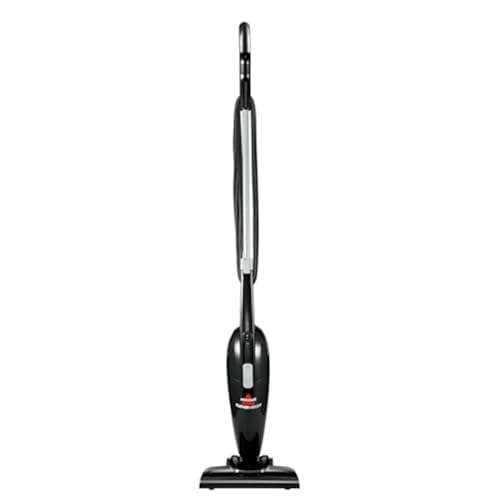
Bissell 2033M Featherweight Stick Lightweight Bagless Vacuum and Electric Broom with Crevice Tool for Hard Floors and Carpets, Black
VERSATILE THREE IN ONE DESIGN. Easily converts from a corded stick vacuum to a hand vacuum or a…
As an affiliate, we earn on qualifying purchases.
As an affiliate, we earn on qualifying purchases.
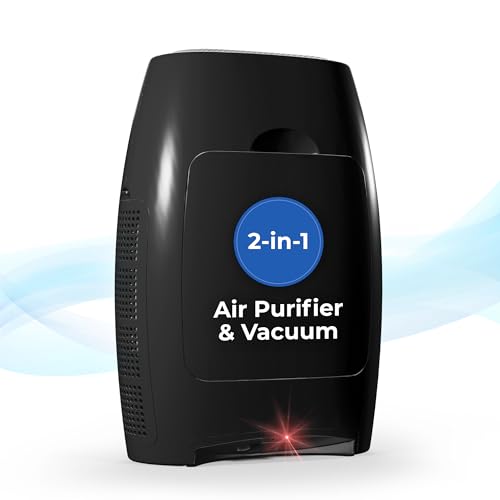
EyeVac Air 2-in-1 HEPA Air Purifier & Touchless Vacuum Automatic Dustpan – Ultra Fast & Powerful – Covers 600 Sq ft – Corded Canister Vacuum, Bagless, Automatic Sensors, 1000 Watt (Black/Black)
DUAL FILTRATION: true HEPA H-13 filters 99.7% of air pollutants as small as 0.3 micrometers (μm) in diameter….
As an affiliate, we earn on qualifying purchases.
As an affiliate, we earn on qualifying purchases.