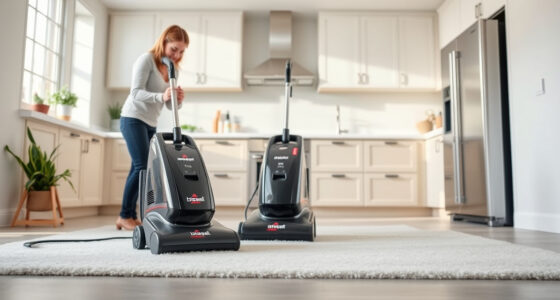
To clean floor edges before they turn into dust traps, start by vacuuming along baseboards and corners with a crevice tool to loosen debris. Use a microfiber cloth dampened with water or a gentle cleaner to wipe along the edges with smooth, sweeping motions. Focus on tight spots and behind furniture for thorough dirt removal. Regular maintenance prevents stubborn buildup and keeps your floors looking fresh. Keep going, and you’ll discover even more tips for maintaining a spotless space.

Get cleaning gear delivered free — and shop member deals
- Fast, free delivery on millions of items
- Access to Prime Big Deal Days deals on October 6–7
- Prime Video, Amazon Music and more included
Key Takeaways
- Use a vacuum with a crevice attachment to remove loose dust from edges and corners regularly.
- Dampen a microfiber cloth and gently wipe along baseboards and wall-floor junctions.
- Reach behind furniture and into tight corners for thorough dust removal.
- Employ a soft brush or toothbrush to loosen stubborn dirt before wiping.
- Perform weekly inspections and cleanings to prevent dust buildup and trap formation.

Keeping your floor edges clean might seem like a small task, but it makes a big difference in overall cleanliness and appearance. Over time, dust accumulation tends to gather along these edges, especially in corners and tight spots. If you ignore edge maintenance, dust and debris can turn into stubborn dirt traps, making your space look messy and feeling less hygienic. Regularly cleaning these areas prevents dirt buildup and keeps your floors looking fresh and well-kept. In addition, understanding dust accumulation principles can help you identify other areas where dust might settle, enabling a more thorough cleaning routine.
Keeping floor edges clean boosts overall cleanliness and appearance, preventing stubborn dirt traps and maintaining a fresh, hygienic space.
To start, gather your cleaning tools: a vacuum with a crevice attachment, a microfiber cloth, and a gentle brush or toothbrush. Use the vacuum’s crevice tool to remove loose dust and debris from along the baseboards and corners. This step is vital because it loosens dirt before you wipe, making your efforts more effective. Pay special attention to areas where walls meet floors, as dust tends to settle there most often. For stubborn dust or pet hair, a soft brush or an old toothbrush can loosen debris in tight spots without scratching surfaces. This initial step is fundamental in edge maintenance because it prevents dust from compacting into stubborn dirt that’s harder to remove later. Additionally, understanding home soundproofing principles can help you identify areas where dust might also be contributing to noise issues, so maintaining clean edges can improve both cleanliness and acoustic comfort.
Once loose dust is gone, dampen your microfiber cloth with a mild cleaning solution or just water for less greasy spots. Wipe along the edges, focusing on corners and baseboards. Use gentle, sweeping motions to pick up remaining dust and dirt. When cleaning, don’t forget to reach behind furniture or in tight corners—these hidden spots are notorious for dust buildup. For stubborn grime, you might need a slightly stronger cleaner, but always test a small area first to avoid damage. Regular cleaning prevents dust accumulation from becoming a larger problem, making your routine easier over time. Furthermore, understanding dust and debris movement can help you develop better cleaning habits to keep your space consistently tidy. Maintaining your space through these simple steps also involves periodic checks and touch-ups. Once a week, inspect corners and baseboards for dust buildup, and clean as needed. This consistent approach not only keeps your floors looking pristine but also prolongs the life of your baseboards and minimizes allergen buildup. By incorporating these simple steps into your cleaning routine, you guarantee that edge maintenance becomes a quick, effective process. Ultimately, staying on top of dust accumulation at the edges prevents dirt traps from forming and helps your entire space stay cleaner, healthier, and more inviting.
As an affiliate, we earn on qualifying purchases.
Frequently Asked Questions
How Often Should I Clean Floor Edges?
You should clean your floor edges at least once a week to maintain proper floor maintenance and prevent dust buildup. Regular cleaning helps keep dust prevention in check, especially in corners and along baseboards where dirt tends to accumulate. Use a vacuum with a brush attachment or a damp cloth to remove dust effectively. Consistent cleaning not only keeps your floors looking good but also extends their lifespan by avoiding dust traps.
What Tools Are Best for Cleaning Tight Corners?
To clean tight corners effectively, you should use edge cleaning tools designed for precision and access. Look for tools with narrow, angled tips or extendable handles, and consider tight corner accessories that fit snugly into corners. These tools help reach into every nook, removing dust and debris efficiently. Combining a handheld vacuum with specialized attachments ensures thorough cleaning, preventing dust traps and keeping your floors spotless.
Can I Use a Vacuum on Textured Edges?
Think of textured edges as the forest floor, full of nooks and crannies waiting to hide dust. Yes, you can use a vacuum for textured edge cleaning, but check its vacuum compatibility first—some attachments are better suited for uneven surfaces. Use a crevice tool or a brush nozzle, and move carefully to avoid damaging the texture. With patience, you’ll clear away debris and keep those edges pristine.
Are There Eco-Friendly Cleaning Solutions for Edges?
Yes, there are eco-friendly solutions for cleaning edges. You can use natural cleaning agents like vinegar or baking soda, which are safe and effective. Mix equal parts water and vinegar for a gentle, eco-friendly cleaner that cuts through dirt and dust. Baking soda works as a mild abrasive for stubborn spots. These natural options are safe for your family, pets, and the environment, making your cleaning routine more sustainable.
How Do I Prevent Dust Buildup at Floor Edges?
Did you know that dust particles can accumulate up to 60% faster along floor edges? To prevent dust buildup, focus on consistent edge maintenance by regularly sweeping or vacuuming these areas. Use a damp cloth or eco-friendly cleaner to wipe down edges, preventing dust from settling. Incorporate dust prevention strategies into your cleaning routine, ensuring edges stay clean and dust-free, which helps maintain a healthier environment and reduces allergen buildup.
Conclusion
Regularly cleaning your floor edges can prevent dust buildup and maintain a fresh, healthy home. Did you know that the average person accumulates about 1.5 pounds of dust annually? By paying attention to those tricky corners, you not only improve air quality but also extend the life of your flooring. So, make it a habit to sweep or vacuum those edges frequently—you’ll enjoy cleaner, dust-free spaces that feel just as welcoming as they look.
Fall Picks
fall essentials
As an affiliate, we earn on qualifying purchases.