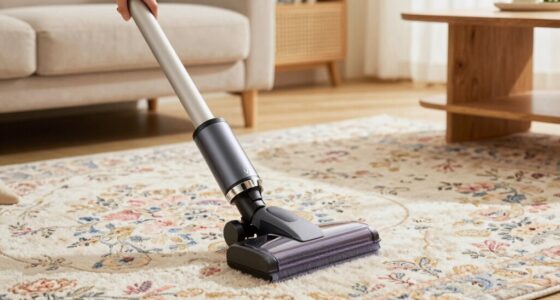
To keep your floors clean and well-maintained, vacuum regularly for quick, daily upkeep, especially on hard surfaces and carpets, as it effectively removes dirt, dust, and pet hair with minimal effort. Use sweeping to target stubborn debris, spills, or dirt in corners and along baseboards, where vacuums might miss. Combining both methods guarantees thorough cleanliness. Stay tuned to learn more tips on when each method works best for your floors.

Get cleaning gear delivered free — and shop member deals
- Fast, free delivery on millions of items
- Access to Prime Big Deal Days deals on October 6–7
- Prime Video, Amazon Music and more included
Key Takeaways
- Use a robot vacuum for regular, daily maintenance to keep floors consistently clean with minimal effort.
- Sweep heavily soiled areas or stubborn dirt to thoroughly remove large debris and spills.
- Target corners, baseboards, and hard-to-reach spots with manual sweeping for a more thorough clean.
- Combine vacuuming and sweeping to balance efficiency and deep cleaning, especially in high-traffic areas.
- Perform manual sweeping after vacuuming to tackle spots the robot might miss and for immediate spill cleanup.

When it comes to cleaning your floors, choosing between vacuuming and sweeping can make a big difference in how effective and efficient your efforts are. If your goal is to save time and reduce physical effort, robot vacuums can be a game-changer. These devices are designed to automatically navigate your space, picking up dirt, dust, and pet hair without you having to lift a finger. They’re especially useful for daily maintenance, reaching under furniture, and keeping high-traffic areas clean with minimal effort. Robot vacuums are equipped with sensors and mapping technology, allowing them to cover large areas quickly and avoid obstacles. Their consistent use can considerably reduce the amount of dirt that accumulates, making deep cleaning less of a chore.
However, there are times when manual sweeping remains the best choice. Sweeping allows you to target specific spots, such as corners or along baseboards, where robot vacuums might miss debris. Manual sweeping gives you more control over the cleaning process, enabling you to focus on areas with stubborn dirt or larger debris that a robot might struggle with. It’s also useful when your floors are heavily soiled or have spilled liquids that require immediate attention. Sweeping with a broom and dustpan is cost-effective, and it can be quicker for small messes or quick cleanups. Plus, sweeping doesn’t depend on batteries or technology that could malfunction, giving you a reliable option whenever needed.
Deciding when to vacuum versus when to sweep depends on your lifestyle and the type of messes you encounter. For everyday maintenance, a robot vacuum can keep your floors consistently clean with little effort. It’s ideal for busy households or anyone who prefers to automate routine chores. On the other hand, sweeping is better suited for deeper cleanings or tackling specific messes that require more manual intervention. If you’re dealing with large debris or want to clean areas that a robot might not access, manual sweeping is the way to go. Combining both methods ensures your floors stay cleaner longer; use the robot vacuum regularly to maintain a baseline, and switch to sweeping when necessary for a more thorough clean or to address particular spots.
As an affiliate, we earn on qualifying purchases.
Frequently Asked Questions
Can I Vacuum Wet Spills Safely?
You should avoid vacuuming wet spills because it’s unsafe and can damage your vacuum cleaner. Vacuuming safety is compromised when spills are wet, as liquids can cause electrical hazards or ruin the device. Instead, use a mop or towel for spill cleanup, ensuring your floors stay clean without risking equipment damage. Always wait until spills are thoroughly dried before vacuuming, keeping your cleaning routine safe and effective.
Is Sweeping Better for Delicate Flooring?
Yes, sweeping is better for delicate flooring because it minimizes the risk of scratches and damage. Sweeping benefits include gentle removal of dust and debris without the forceful suction of a vacuum, which could harm delicate surfaces like hardwood or laminate. Use a soft-bristled broom to make sure you’re cleaning effectively without risking scratches. Regular sweeping keeps your floors clean while maintaining their integrity and appearance over time.
How Often Should I Switch Between Vacuuming and Sweeping?
Think of your floors as a symphony; switching between vacuuming and sweeping keeps everything in harmony. You should switch based on the debris type and frequency of use. For routine dust and light dirt, sweep daily with proper sweeping techniques. For pet hair, crumbs, or heavier dirt, vacuum 2-3 times a week, ensuring proper vacuum maintenance. This balance keeps your floors pristine and extends your equipment’s lifespan.
Are There Specific Floors That Require Only One Method?
Certain floor types, like hardwood and tile, often require only sweeping to prevent scratches and maintain shine, especially if they’re not heavily soiled. Carpeted floors, on the other hand, need vacuuming to remove embedded dirt and debris effectively. For vinyl or laminate floors, a gentle sweep combined with occasional vacuuming works best. Always choose the cleaning method suited to your specific floor type to preserve its appearance and longevity.
Can Vacuuming Damage Hardwood Floors?
Think of your hardwood floors as delicate art; vacuuming, if done properly, won’t damage them. To keep it safe, you should maintain your vacuum cleaner regularly, ensuring the brush rolls and filters are clean. Use gentle sweeping techniques with a soft broom for light debris, and switch to vacuuming for deeper dirt. Proper maintenance and careful methods protect your floors from scratches and wear, keeping them beautiful for years.
Conclusion
Think of vacuuming and sweeping as your floor’s guardians—each with a special role. Sweeping clears away the surface dust like a swift breeze, while vacuuming dives deeper, like a diligent explorer uncovering hidden dirt. By choosing the right tool at the right time, you become the hero your floors need. Mastering this balance keeps your home shining bright, turning everyday chores into a simple dance. Embrace these practices, and your floors will thank you.
Fall Picks
fall essentials
As an affiliate, we earn on qualifying purchases.