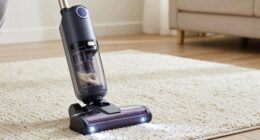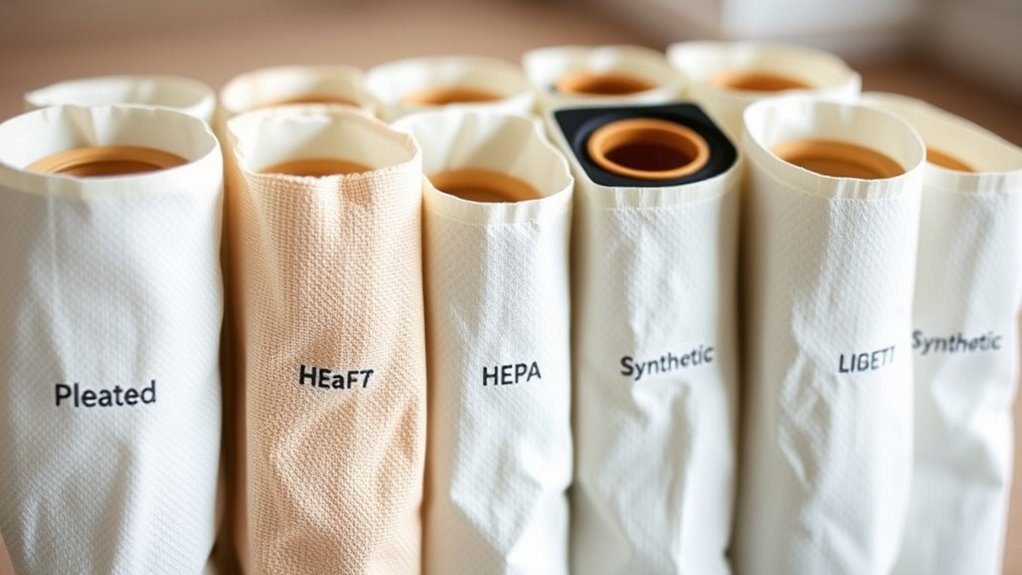

To protect yourself from allergens, choose vacuum bags with high-quality filtration like HEPA, which captures at least 99.97% of tiny particles. Make sure the bags seal tightly and are easy to replace to prevent allergen escape and maintain suction. Regularly check and change bags before they overfill to keep your air clean and your vacuum working efficiently. Keep exploring for even more tips to improve your indoor air quality.
Key Takeaways
- Choose HEPA-rated vacuum bags that capture 99.97% of particles as small as 0.3 microns to effectively reduce allergens.
- Regularly replace bags before they are fully filled to maintain optimal filtration and prevent allergen escape.
- Opt for allergy-specific bags with odor- and bacteria-resistant materials to improve indoor air quality.
- Ensure proper sealing and check for damage to prevent allergens from leaking during use.
- Select bags compatible with your vacuum model for easy installation and consistent filtration performance.
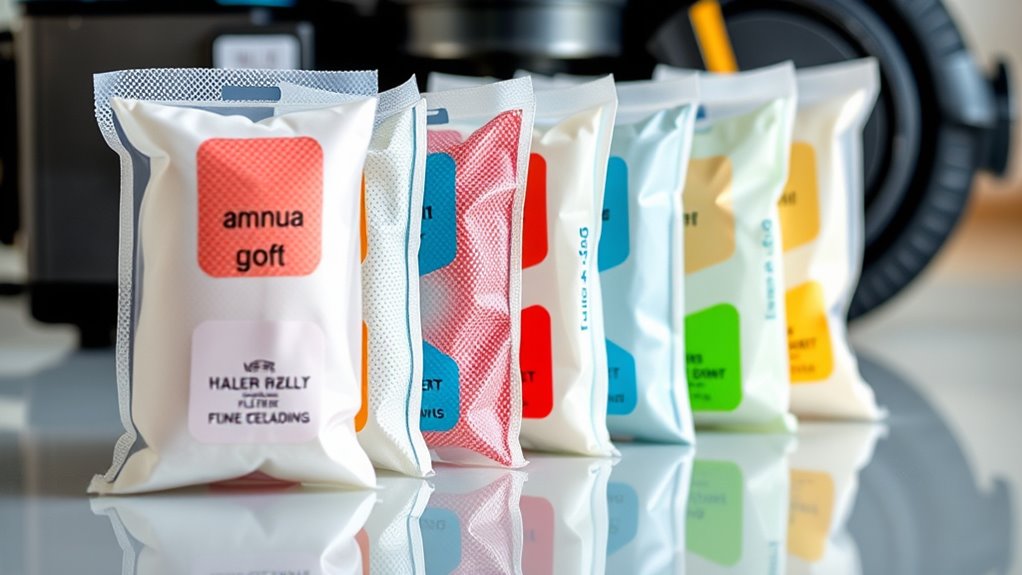
Are you unsure how to choose the right vacuum bag for your needs? If you suffer from allergies, making the right choice becomes even more significant. The key factors to consider are air filtration and bag maintenance. A high-quality vacuum bag can drastically improve your home’s air quality by trapping dust, pollen, pet dander, and other allergens, preventing them from being recirculated into the air you breathe. When selecting a bag, look for options designed specifically for allergy sufferers—those with advanced filtration capabilities that seal in tiny particles.
Air filtration is vital because not all vacuum bags are created equal. HEPA bags, for instance, are highly recommended for allergy sufferers because they capture at least 99.97% of particles as small as 0.3 microns. This means allergens are less likely to escape back into your living space. It’s worth investing in bags that are compatible with your vacuum model but also prioritize superior filtration. Remember, the more effective the air filtration, the cleaner your indoor environment will be, making it safer and more comfortable for allergy relief.
HEPA vacuum bags capture 99.97% of particles, reducing allergens and improving indoor air quality.
Bag maintenance is another essential aspect. A vacuum bag that’s easy to replace and maintain ensures consistent performance. Regularly changing bags prevents overfilling, which can reduce suction power and compromise filtration. Overfilled bags tend to let allergens escape or clog the system, making your vacuum less efficient and potentially aggravating allergy symptoms. Choose bags that are straightforward to install and remove, and develop a routine to check and replace them before they become too full. This not only maintains ideal air filtration but also prolongs the life of your vacuum. Additionally, selecting a bag material** that resists odors and bacteria** can further enhance your home’s air quality, especially if you’re sensitive to smells or mold.
Proper bag maintenance also involves keeping your vacuum’s filters clean and checking for any damage to the bag or its seals. When you stay on top of these tasks, you guarantee your vacuum continues to operate efficiently, providing better air quality and reducing allergens in your home.

Clean Obsessed CO711 Commercial Canister HEPA Bags (9 pack),White
*Fits Perfect Vacuum Commercial Canister Vacuum C105 *Fits Clean Obsessed CO711 Commercial Canister Vacuum*Great for Allergy Sufferers. 99.9%…
As an affiliate, we earn on qualifying purchases.
As an affiliate, we earn on qualifying purchases.
Frequently Asked Questions
Are Reusable Vacuum Bags More Allergy-Friendly Than Disposable Ones?
Reusability benefits can make reusable vacuum bags more allergy-friendly because you can wash and maintain them regularly, removing allergens effectively. They often trap dust and pet dander better than disposables, reducing airborne allergens. Plus, they have a lower environmental impact since you reuse them instead of discarding. If you prioritize allergen control and eco-conscious choices, reusable bags might be a better option for your needs.
How Often Should Allergy Sufferers Replace Vacuum Bags?
You might think waiting until your vacuum bag is bursting is fine, but that’s the worst time for vacuum bag disposal. As an allergy sufferer, you should replace your vacuum bag every 1-3 months, or sooner if you notice increased allergy symptom timing. Regular replacement keeps allergens contained, preventing sneezes from sneaking up on you. Don’t wait for a full bag—your allergies will thank you for proactive vacuum maintenance.
Do HEPA Vacuum Bags Significantly Reduce Airborne Allergens?
HEPA vacuum bags substantially reduce airborne allergens by trapping tiny particles like pollen, dust mites, and pet dander. With HEPA filtration, you actively remove allergy triggers from your environment, making it easier to breathe. You’ll notice less sneezing and congestion because these bags prevent allergens from escaping back into the air. Choosing HEPA vacuum bags is a smart move if you want to minimize allergy symptoms and improve indoor air quality.
Can Vacuum Bag Size Affect Allergy Relief?
Like a knight facing a dragon, your quest for allergy relief hinges on vacuum bag size. Larger bags hold more debris, reducing the need for frequent changes, but smaller bags might improve sealing effectiveness. The vacuum bag material also matters—high-quality, hypoallergenic materials trap allergens better. Ultimately, choosing a size that balances capacity with effective bag sealing helps minimize airborne allergens, giving you cleaner air and relief from allergy symptoms.
Are Certain Vacuum Brands Better for Allergy Sufferers?
When comparing vacuum brands, you want to focus on allergy-friendly features and overall performance. Some brands excel in filtration systems, HEPA filters, and sealed systems that trap allergens effectively. Conduct a vacuum brand comparison to identify models with superior allergy relief features. Look for reviews highlighting allergen containment and ease of maintenance. Choosing a vacuum with these qualities guarantees you minimize airborne irritants and breathe easier every day.

EnviroCare Replacement Allergen Vacuum bags Designed to Fit Electrolux Harmony/Oxygen Style S and Eureka Canisters Style S Canisters 3 pack
EnviroCare Replacement Allergen Vacuum bags Designed to Fit Electrolux Harmony/Oxygen Style S and Eureka Canisters Style S Canisters…
As an affiliate, we earn on qualifying purchases.
As an affiliate, we earn on qualifying purchases.
Conclusion
Choosing the right vacuum bag is like finding a trusted ally in your fight against allergens. It’s about selecting a filter that captures the tiniest particles, ensuring your air stays clean and your allergies stay at bay. When you opt for high-quality, allergen-proof bags, you’re taking control of your environment—like a captain steering a ship through stormy seas. With the right bag, you’ll breathe easier, knowing you’ve made a smart choice for your health.

8 Pack Type A HEPA Vacuum Bags for Riccar Most Vibrance, R-Series, 2000/4000 & Simplicity Symmetry, S20EZM, 5000/6000 Upright Vacuum Cleaners, Part RAH-6/SAH-6
𝗖𝗼𝗺𝗽𝗮𝘁𝗶𝗯𝗹𝗲 𝗠𝗼𝗱𝗲𝗹𝘀: Designed to fit Riccar most Vibrance, R-Series, 2000/4000 Series vacuum cleaners and Simplicity Symmetry, S20EZM, 5000/6000…
As an affiliate, we earn on qualifying purchases.
As an affiliate, we earn on qualifying purchases.

8-Pack Style MM Vacuum Bags for Eureka Mighty Mite 3670 & 3680 Canister Vacuums – Replaces Parts 60295, 60295A, 60295B, 60295C, 60296 & 60297A – Effective Filtration
Compatible with Eureka Style MM vacuum models 3670, 3680, and SC3680 for a precise fit and consistent performance
As an affiliate, we earn on qualifying purchases.
As an affiliate, we earn on qualifying purchases.