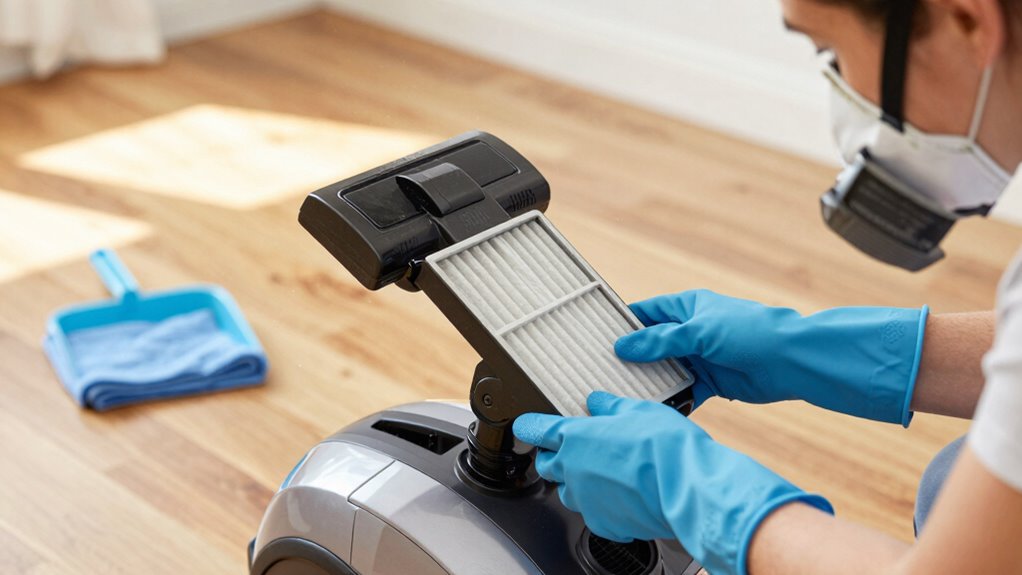

To reduce re-circulated dust during floor cleaning, use HEPA filters in your vacuum and air purifiers, and replace or clean filters regularly. Opt for damp mopping with microfiber mops, using smooth, overlapping strokes to trap dust effectively. Manage airflow by opening windows and turning on fans after cleaning, and guarantee your HVAC system works well for good filtration. Combining these steps helps keep dust out of the air—continue to explore more ways to improve your cleaning routine.

Get cleaning gear delivered free with Prime
- Fast, free delivery on millions of items
- Prime Video, Amazon Music and more included
- Member-only deals all year
Key Takeaways
- Use HEPA-filtered vacuum cleaners and air purifiers to trap airborne dust particles effectively.
- Employ damp mopping with microfiber mops to prevent dust from becoming airborne during cleaning.
- Direct ventilation toward open windows and use fans to clear airborne dust after cleaning.
- Regularly replace or clean filters in vacuum cleaners and ventilation systems to maintain filtration efficiency.
- Clean floors methodically with overlapping strokes to minimize dust dispersal and re-circulation.
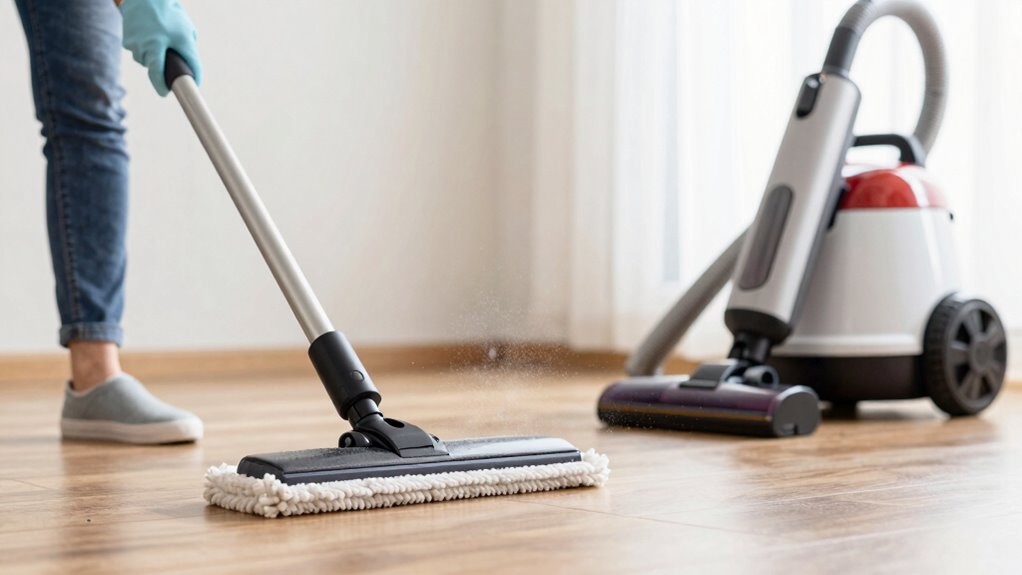
Dust can quickly become a recurring problem during floor cleaning if you’re not careful, but the good news is that you can considerably reduce re-circulated dust by adopting simple techniques. One of the most effective ways to do this is by improving your air filtration system. Using HEPA filters in your vacuum cleaner and air purifiers helps trap tiny dust particles that would otherwise settle back onto your floors or get blown into the air. Regularly replacing or cleaning these filters guarantees they work efficiently, preventing dust buildup in your indoor environment. Good air filtration acts as a frontline defense, reducing the amount of dust that gets stirred up during cleaning and limiting its spread in the air.
Improving air filtration with HEPA filters reduces dust re-circulation and keeps your home cleaner and healthier.
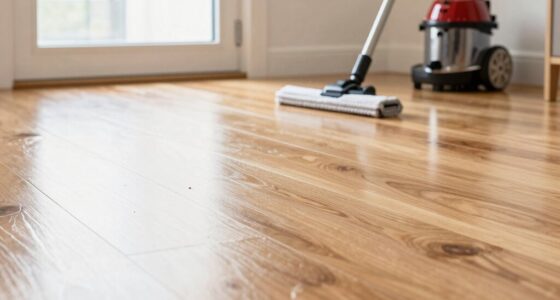
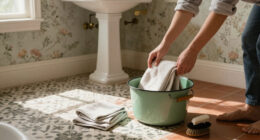
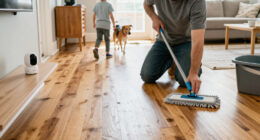
When it comes to mop techniques, your approach makes a big difference in how much dust you reintroduce into the environment. Instead of sweeping or dry-mopping first, which can kick up dust into the air, opt for damp mopping right away. Dipping your mop into a bucket of clean water mixed with a small amount of floor cleaner, then wringing it out thoroughly, helps trap dust and dirt rather than scattering it. As you mop, use smooth, overlapping strokes, ensuring you cover every section without excessive agitation. This technique minimizes dust dispersal and keeps particles attached to the mop rather than airborne. Incorporating proper cleaning techniques can further enhance your efforts by ensuring dust is less likely to escape during cleaning. Additionally, using a microfiber mop, which is designed to attract and hold fine dust particles, can significantly improve dust containment during your mopping routine. Employing effective airflow management by directing ventilation toward open windows can also help prevent dust from settling again after cleaning. Furthermore, ensuring your HVAC or air purifier is functioning properly can help maintain optimal air quality, reducing the overall dust levels in your space. Regular maintenance of your ventilation systems can prevent dust buildup and improve overall air filtration efficiency.
Finally, after mopping, open windows or turn on ventilation fans to help clear out any residual airborne dust. This step, combined with ongoing air filtration, ensures that dust isn’t just redistributed but removed from your indoor space altogether. Regularly cleaning your floors with these mindful techniques, along with maintaining your air filtration system, creates a cleaner, healthier environment. You’ll notice less dust settling on surfaces and fewer sneezing fits, making your cleaning routine more efficient and less frustrating. By being deliberate with your mop techniques and prioritizing good air filtration, you keep dust from re-circulating, guaranteeing a fresher, dust-free home with every cleaning session.
As an affiliate, we earn on qualifying purchases.
Frequently Asked Questions
Does Using a HEPA Filter Vacuum Reduce Dust Recirculation?
Yes, using a HEPA filter vacuum reduces dust recirculation. It improves airflow control and captures fine dust particles effectively, preventing them from escaping back into the air. The filter’s dust trapping capabilities guarantee cleaner air during and after cleaning. This minimizes dust re-circulation, making your floor cleaning more efficient and healthier. Investing in a HEPA filter vacuum is a smart choice for maintaining better indoor air quality.
How Often Should I Replace My Vacuum Filters?
To keep your vacuum performing at its best, you should replace filters based on the manufacturer’s recommended filter lifespan, typically every 3 to 6 months. Regular vacuum maintenance ensures peak filtration and minimizes dust recirculation. Neglecting filter replacement can cause dust buildup and reduce cleaning efficiency. So, stay attentive to your vacuum’s needs, and change filters promptly to maintain a cleaner, healthier environment.
Can Humidifying the Air Help Reduce Dust During Cleaning?
Yes, humidifying the air can help reduce dust particles during cleaning. When the air is more humid, dust tends to settle more quickly, improving your overall air quality. This makes it easier to keep dust from re-circulating into the air, especially during vacuuming or sweeping. Just make sure you maintain proper humidity levels—around 40-50%—to prevent mold growth while effectively reducing airborne dust.
Are Microfiber Mops More Effective at Trapping Dust?
Microfiber mops are like dust-trapping superheroes! They’re highly effective at capturing dust thanks to their fine fibers. Their microfiber efficiency surpasses traditional mops, pulling up tiny particles that other cleaning tools often miss. By using a microfiber mop, you reduce dust re-circulation and keep your floors cleaner longer. Plus, their ability to trap dust minimizes airborne particles, making your space healthier and fresher with every sweep.
What Cleaning Techniques Minimize Dust Dispersal?
To minimize dust dispersal, focus on dust suppression techniques like using a damp mop or microfiber cloth, which trap dust rather than dispersing it. Maintain a consistent cleaning frequency to prevent dust buildup, reducing the amount that becomes airborne during cleaning. Additionally, avoid dry sweeping and opt for vacuuming with a HEPA filter. These practices help keep dust contained, creating a cleaner, healthier environment.
Conclusion
By adopting these simple strategies, you can notably reduce re-circulated dust during your floor cleaning routine. Keep your space clean and clear by using effective methods like damp mopping and proper vacuuming techniques. This not only minimizes dust disturbance but also maintains a healthier home environment. Remember, consistent care creates a cleaner, calmer, and more comfortable living space—making your cleaning routine a breeze and your home a refreshing change.
Halloween Picks
halloween
As an affiliate, we earn on qualifying purchases.