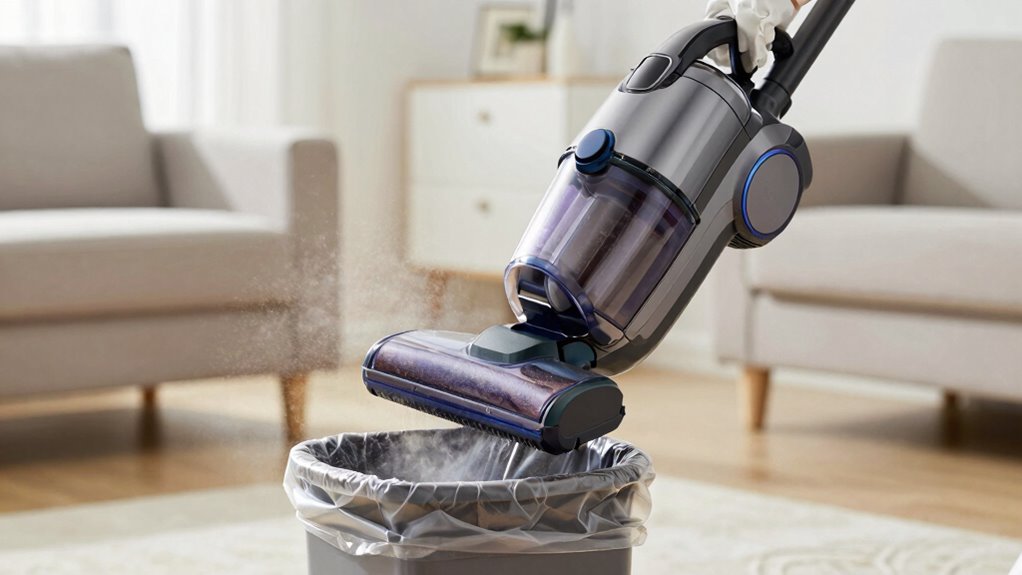

To reduce dust spread during vacuum emptying, you should seal the dust container before removing it, using built-in latches or makeshift seals like plastic wrap. Maintain high-quality filters and replace them as needed to trap dust effectively. Perform the emptying process in a well-ventilated area or near an open window, and use an air purifier nearby for extra protection. Proper sealing, filtration, and airflow control are key—keep going to discover more simple, effective tips.
Listen free for 30 days with Audible
Thousands of audiobooks and originals — cancel anytime.
As an affiliate, we earn on qualifying purchases.
Key Takeaways
- Seal the dust container before removal to prevent dust escape during emptying.
- Use high-quality HEPA filters and maintain them regularly for effective dust filtration.
- Perform emptying in a well-ventilated area or near an open window to reduce airborne dust.
- Inspect and replace seals or gaskets to ensure airtight containment during disposal.
- Use disposable bags or liners to securely contain dust and minimize dispersal during removal.
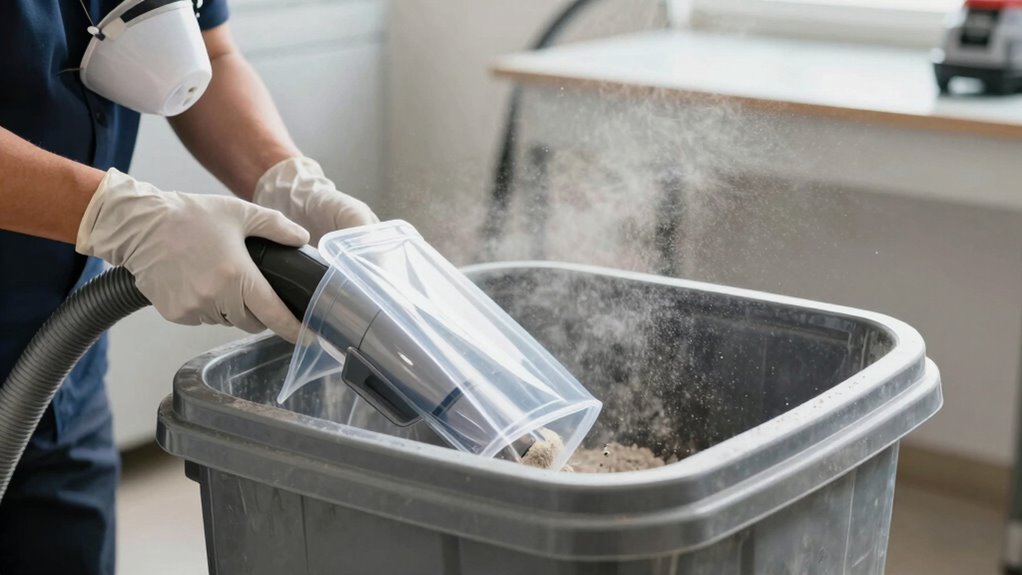
Have you ever noticed how vacuuming can stir up a cloud of dust, especially when emptying the container? That cloud not only spreads allergens but also diminishes indoor air quality. To combat this, focus on improving air filtration and applying effective sealant techniques. Proper air filtration systems, like HEPA filters, can trap tiny dust particles before they escape into the air during vacuum disposal. If your vacuum lacks a high-quality filter, consider upgrading or adding a HEPA filter to catch more airborne particles, guaranteeing cleaner indoor air as you empty the container.
Upgrade to HEPA filters to trap dust and improve indoor air quality during vacuum disposal.
When you’re ready to empty the vacuum, take deliberate steps to minimize dust escape. Start by sealing the container before removing it from the vacuum. Many vacuum designs include a latch or seal that prevents dust from spilling when detached. If yours doesn’t, you can use makeshift sealants like plastic wrap or a damp cloth around the opening to trap dust inside. This creates a temporary barrier, reducing dust dispersal as you carry the container to your disposal area. Once sealed, remove the container carefully, avoiding shaking or jostling, which can force dust through any gaps.
Applying sealant techniques isn’t just about sealing the container; you can also enhance the vacuum’s overall dust containment. For example, some vacuums offer gasket or gasket-like seals around the dust chamber. Regularly inspecting and maintaining these seals ensures they stay effective. If you notice cracks or deterioration, replace or repair them promptly. This proactive approach keeps dust contained during both operation and disposal. For added protection, consider using disposable bags or liners within the dust chamber, which can be sealed shut after use, preventing dust from escaping during removal. Additionally, airflow control practices can further minimize dust dispersal. Implementing regular maintenance of filters and seals, as recommended by manufacturer guidelines, can greatly improve dust containment during emptying. Using proper sealing techniques can significantly reduce dust escape during disposal.
Another tip involves controlling airflow during emptying. Perform the task in a well-ventilated area or near an open window. If possible, use a portable air purifier with a HEPA filter nearby to capture residual dust particles floating in the air. By combining proper air filtration with effective sealant techniques, you markedly reduce dust spread. Your indoor environment becomes healthier, and you protect yourself and others from unnecessary dust exposure. Additionally, ensuring seals and gaskets are in good condition can prevent leaks and improve dust containment during the entire process.
In essence, the key to reducing dust spread during vacuum emptying lies in sealing the dust container securely, maintaining your vacuum’s air filtration system, and controlling airflow during disposal. These simple but effective strategies ensure that dust stays contained, improving air quality and making your cleaning routine safer and more efficient. Incorporating dust containment measures can significantly enhance your overall cleaning effectiveness and indoor air quality.
As an affiliate, we earn on qualifying purchases.
Frequently Asked Questions
What Types of Vacuums Produce the Least Dust During Emptying?
You should choose vacuums with sealed dust containment systems, like HEPA-filtered models, to produce the least dust during emptying. These vacuums prevent dust from escaping into the air, keeping your environment cleaner. Additionally, consider models with good vacuum ergonomics, which make emptying easier and less messy. By prioritizing dust containment and ergonomic design, you minimize dust spread and make the emptying process safer and more efficient.
Are There Specific Filters That Help Contain Dust Better?
Ironically, your best bet for dust containment during vacuum emptying is a HEPA filter. These filters trap tiny particles, preventing dust from escaping into the air. By choosing a vacuum with HEPA filtration, you actively improve indoor air quality and reduce dust spread. So, rather than risking the environment inside your home, invest in a vacuum that prioritizes dust containment and keeps those microscopic irritants where they belong—inside the filter.
How Often Should Vacuum Filters Be Replaced for Optimal Dust Control?
You should replace your vacuum filters every 3 to 6 months to guarantee dust containment and air filtration. Regularly changing filters ensures the vacuum maintains strong suction and prevents dust from escaping. If you notice reduced performance or increased dust in the air, replace filters sooner. Using high-quality filters designed for dust control, combined with timely replacements, keeps your environment cleaner and safer, reducing airborne particles effectively.
Can Vacuum Design Influence Dust Dispersion During Emptying?
Did you know that poorly designed vacuums can release up to 30% more dust during emptying? Your vacuum’s design definitely influences dust dispersion. By focusing on airflow optimization, you guarantee dust stays contained, and maintaining seal integrity prevents leaks. A well-designed vacuum minimizes dust spread, protecting your environment. You should regularly check seals and airflow pathways to keep dust contained during emptying, making your cleaning safer and more efficient.
Are There Safety Precautions for Handling Dust During Vacuum Maintenance?
Yes, you should wear protective gear like masks and gloves when handling dust during vacuum maintenance. Always implement containment measures, such as sealing vacuum compartments and working in well-ventilated areas, to prevent dust from spreading. These precautions protect your health and keep the environment safe. Remember, proper safety gear and containment are essential for minimizing dust exposure during maintenance tasks.
Conclusion
By following these simple tips, you’ll make vacuum emptying much cleaner and safer. Think of it like sealing a bottle—you want to minimize spills and leaks. Keep the area well-ventilated, empty the canister outdoors when possible, and wear a mask to protect yourself from dust. These small steps can considerably reduce dust spread, helping you breathe easier and keep your home healthier. With a little care, vacuuming becomes a cleaner, less dusty task.
NFL season / tailgating Picks
team gear
As an affiliate, we earn on qualifying purchases.