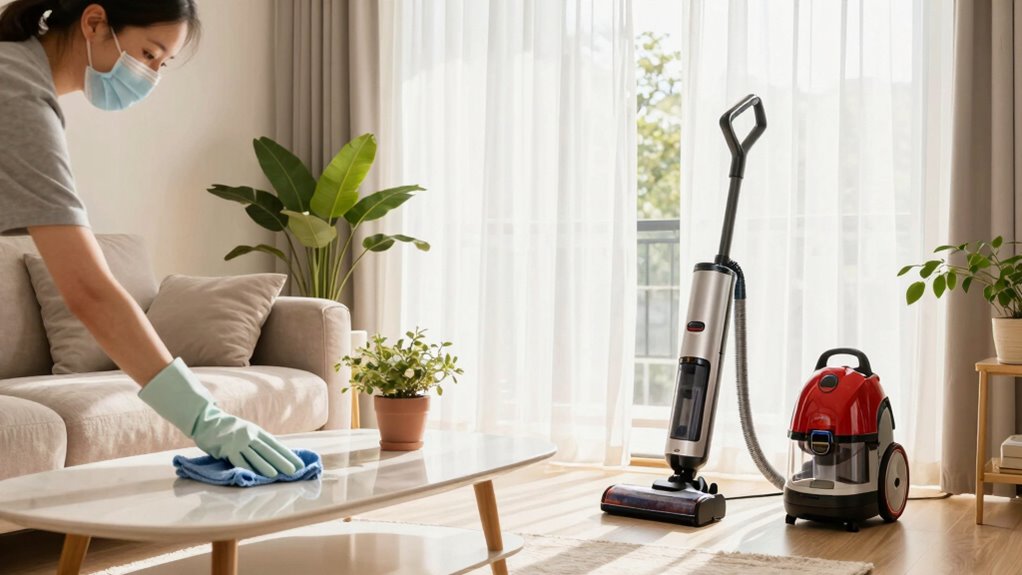

To keep household dust low in warmer months, open windows safely and use proper ventilation to disperse indoor pollutants. Upgrade your HVAC filters to a MERV rating of at least 13 and change them regularly. Use HEPA air purifiers to capture airborne dust and allergens. Control humidity with humidifiers or dehumidifiers to prevent dust mites and mold growth. Regular cleaning and dust-proof covers on furniture and bedding also help reduce dust buildup. Keep going to discover more effective tips.
Key Takeaways
- Upgrade HVAC filters to a MERV rating of at least 13 and change them regularly.
- Use portable HEPA air purifiers to capture airborne dust and allergens.
- Maintain proper ventilation and control indoor humidity to reduce dust and dust mite growth.
- Regularly clean, dust, and vacuum surfaces to prevent dust buildup.
- Use dust-proof covers on bedding and furniture to minimize dust mite accumulation.
Have you ever noticed more dust accumulating in your home during the warmer months? It’s a common experience, and several factors contribute to this increase. As temperatures rise, windows stay open more often, allowing dust, pollen, and other airborne particles to enter your space. Plus, the warmer weather encourages outdoor activities, which can stir up dust and bring it inside. To keep household dust levels low, especially during these months, you need to focus on effective air filtration and controlling dust mites, two main culprits behind indoor dust buildup.
Air filtration plays an essential role in reducing dust in your home. Upgrading your HVAC system with high-quality filters can make a significant difference. Look for filters with a MERV rating of at least 13, which can trap smaller particles, including dust mites and pollen. Regularly changing these filters ensures they work efficiently and prevent dust from recirculating throughout your space. Additionally, using portable air purifiers equipped with HEPA filters can help capture airborne dust and allergens, especially in bedrooms and living areas where you spend the most time. These devices continuously clean the air, reducing dust levels and improving overall indoor air quality. Incorporating luxury air filtration systems can also add an element of elegance and advanced technology to your home. Being mindful of air quality management strategies can further enhance your home’s cleanliness and reduce dust buildup. Proper ventilation practices are also key to dispersing indoor pollutants and preventing dust accumulation, especially when combined with humidification techniques to control humidity levels. Additionally, maintaining a consistent cleaning routine and using dust-proof covers on bedding and furniture can significantly reduce dust mites and allergens indoors.

LEVOIT Air Purifier for Home Allergies and Pets Hair Smokers in Bedroom, H13 True HEPA Filter, 24db Filtration System Cleaner Odor Eliminators, Remove 99.97% Dust Smoke Mold Pollen, Core 300, White
- Certified for Performance and Efficiency: AHAM Verifide certified for reliability
- Powerful Air Cleaning: 56W motor with 143 CFM CADR
- Effective for Large Rooms: Covers up to 1073 ft²
As an affiliate, we earn on qualifying purchases.
As an affiliate, we earn on qualifying purchases.
Frequently Asked Questions
Does Opening Windows Increase Dust Indoors During Warmer Months?
Yes, opening windows can increase indoor dust because it allows more dust entry points and outdoor particles to enter, especially if outdoor air is dusty or polluted. To manage indoor airflow without letting in too much dust, open windows during times when outdoor dust levels are low, like early mornings or after rain. Use screens to block larger dust particles and maintain regular cleaning to minimize dust buildup indoors.
Are Air Purifiers Effective Against Dust in Hot Weather?
Think of an air purifier as a vigilant gatekeeper, tirelessly battling dust in hot weather. Yes, they’re effective if you keep up with regular air purifier maintenance, ensuring filters are clean and functioning well. To maximize dust trap efficiency, place it in high-traffic areas and change filters as recommended. This way, your home stays clearer, fresher, and cooler, even as the summer heat intensifies the dust battles.
How Often Should I Change Air Filters in Summer?
You should change your air filters every 1 to 3 months during summer, depending on the air filter lifespan and your home’s needs. Seasonal filter changes help maintain ideal air quality and system efficiency. If you have pets, allergies, or live in a polluted area, consider replacing filters more frequently. Regularly checking your filters ensures they’re functioning well and prevents dust buildup, keeping your home cleaner and healthier.
Can Outdoor Plants Help Reduce Indoor Dust Levels?
You might notice your outdoor plants seem to flourish right as you’re battling indoor dust, and that’s no coincidence. Outdoor plants help reduce dust levels by trapping and filtering airborne particles before they enter your home. Incorporating more greenery outside creates a natural barrier, making dust reduction easier. Plus, your plants add beauty and freshness, so it’s a win-win for your indoor air quality and your garden’s health.
Is It Better to Vacuum or Dust First in Summer Cleaning?
It’s better to vacuum first to improve vacuuming efficiency and then dust afterward. Vacuuming removes loose dust and debris from floors and surfaces, making dusting more effective. Use proper dusting techniques, like microfiber cloths, to trap dust rather than spreading it around. This sequence reduces airborne dust and keeps your home cleaner during warmer months. Prioritizing vacuuming first guarantees you tackle dust at its source before cleaning surfaces.
Conclusion
Remember, a clean home is a happy home, especially during warmer months. By regularly dusting, maintaining good ventilation, and controlling humidity, you can keep household dust at bay. Think of it as sweeping away the small worries before they become big problems. Staying proactive and consistent makes all the difference. After all, an ounce of prevention is worth a pound of cure—so take these simple steps now to enjoy a fresher, healthier living space all season long.