
To keep pollen out during pollen season, you should always keep your windows closed, especially during peak hours and windy days. Use high-quality filters like HEPA in your air purifiers and seal any gaps around your windows with weatherstripping or caulk. Timing ventilation for lower pollen times, such as late afternoons after rain, can also help. If you want to discover more tips to improve indoor air quality, keep exploring ways to stay protected.

Get cleaning gear delivered free — and shop member deals
- Fast, free delivery on millions of items
- Access to Prime Big Deal Days deals on October 6–7
- Prime Video, Amazon Music and more included
Key Takeaways
- Keep windows closed during peak pollen times, especially early mornings and windy days, to prevent allergen entry.
- Use high-efficiency filters like HEPA filters in air purifiers to trap pollen indoors.
- Seal window gaps with weatherstripping or caulk to block pollen infiltration when windows are shut.
- Open windows during low pollen periods, such as after rain or late afternoons, to ventilate safely.
- Combine window sealing with air filtration and pollen monitoring for optimal indoor air quality during pollen season.
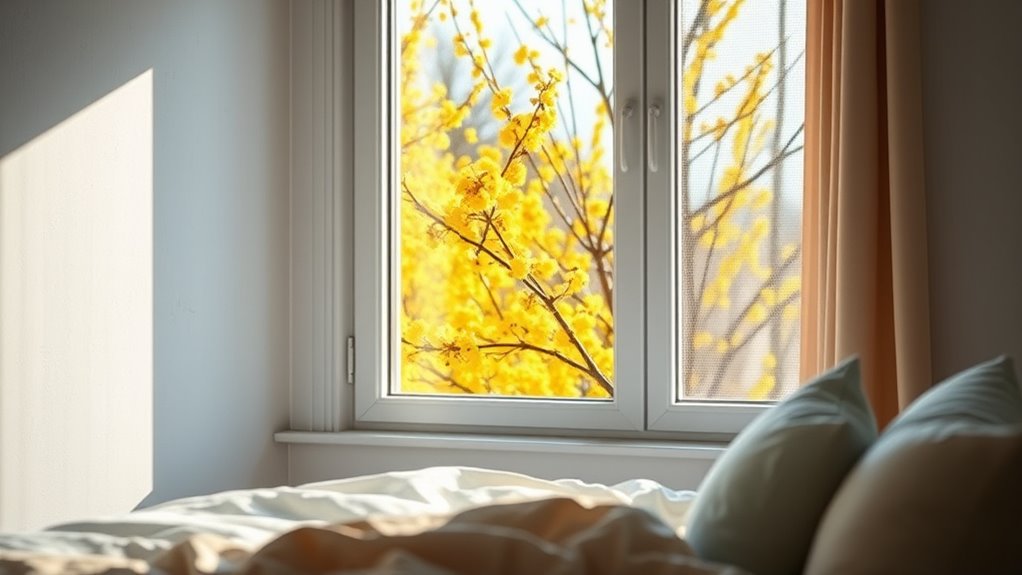
As pollen levels peak during certain seasons, keeping your windows closed becomes one of the simplest and most effective ways to reduce your allergy symptoms. When pollen is in the air, open windows let those tiny particles drift inside, triggering sneezing, itchy eyes, and congestion. To minimize exposure, it’s essential to keep them shut, especially during early mornings and windy days when pollen counts are highest. But simply closing your windows isn’t enough—you need to improve indoor air quality through effective air filtration systems. High-efficiency filters, such as HEPA filters, can trap pollen and other airborne allergens, considerably reducing what circulates inside your home. Using portable air purifiers equipped with these filters can make a noticeable difference, especially in bedrooms and common living areas where you spend most of your time.
Another key factor is window insulation. Properly sealing your windows prevents pollen from sneaking in through gaps and cracks, ensuring that your indoor environment stays cleaner and more allergen-free. You can enhance insulation by applying weatherstripping or caulk around window frames, which blocks pollen from entering even when windows are closed. This not only keeps allergens out but also improves energy efficiency, reducing heating and cooling costs. When combined with air filtration, good window insulation creates a barrier that helps maintain a healthier indoor environment during peak pollen seasons.
It’s also worth considering the timing of when you open or close your windows. If you do need fresh air, try to do so during times when pollen counts are lower—usually late afternoon or after a rain. Rain washes pollen out of the air, making those times more suitable for ventilation if needed. Otherwise, keep windows shut during peak hours, typically early morning and early evening. Employing window insulation measures can give you peace of mind that pollen isn’t sneaking in, even if you forget to check the weather or pollen forecasts. Additionally, being aware of local pollen forecasts helps you plan the best times to ventilate your home safely.
Finally, remember that maintaining clean indoor air isn’t just about closing windows; it’s about creating an all-encompassing approach. Use air filtration systems consistently, seal windows properly, and monitor local pollen forecasts to plan when to open windows if needed. This way, you maximize the benefits of keeping pollen out and minimize allergy symptoms. By combining these strategies, you’ll create a safer, more comfortable indoor environment during the worst of pollen season, helping you breathe easier and enjoy your home more fully.
HEPA air purifier for pollen removal
As an affiliate, we earn on qualifying purchases.
As an affiliate, we earn on qualifying purchases.
Frequently Asked Questions
How Can I Improve Indoor Air Quality With Windows Closed?
To improve indoor air quality with windows closed, you should use air purifiers equipped with HEPA filters to remove pollen and other allergens. Adding indoor plants can also help naturally purify the air by absorbing toxins. Keep your space well-ventilated with filtered air, and regularly clean surfaces to reduce pollen buildup. This combination guarantees cleaner, healthier indoor air despite keeping windows shut during pollen season.
Are There Specific Window Types Better for Pollen Prevention?
Sealed windows are your best choice for pollen prevention, as they minimize gaps where pollen can enter. Sliding windows tend to have more gaps compared to casement windows, which open fully and seal tightly. Casement windows are better for keeping pollen out because they close snugly, creating a more effective barrier. Consider upgrading to sealed, well-fitted casement windows for ideal pollen prevention during high pollen seasons.
What Are Alternative Methods to Keep Pollen Out Besides Closing Windows?
Think of your home as a fortress against pollen invaders. You can reinforce this fortress by using air purifiers that act like vigilant guards filtering out pollen particles. Sealing gaps around windows and doors creates an invisible barrier, preventing pollen from sneaking in. Together, these methods help keep your indoor air clean and pollen-free, even when you can’t keep windows fully closed.
How Do Window Screens Compare to Other Pollen Barriers?
Window screens are a great pollen barrier, offering good screen durability and easy installation. They prevent pollen from entering your home while allowing fresh air in. Compared to other barriers like sealants or air purifiers, screens are cost-effective and reusable, making them convenient during pollen season. Just make certain you choose durable screens to withstand weather and frequent use, and install them properly for maximum effectiveness.
Can Closing Windows Help With Pollen Allergies Year-Round?
Think of your home as a fortress against pollen. Closing windows can help, especially when combined with air filtration systems, by reducing pollen entry and maintaining indoor air quality. While outdoor ventilation is essential for fresh air, it can also bring in pollen if windows stay open. So, yes, keeping windows shut year-round, along with air filtration, can markedly lessen allergy symptoms and improve your indoor comfort.
Conclusion
Think of your home as a fortress, with closed windows as your walls against the pollen invasion. By keeping those windows shut during pollen season, you create a shield that keeps allergens out and your air clean. It’s a simple move that can make a big difference in how you breathe and feel. So, lock those windows tight—your sanctuary is worth it. Stay protected and enjoy clearer, fresher days ahead.
Fall Picks
fall essentials
As an affiliate, we earn on qualifying purchases.