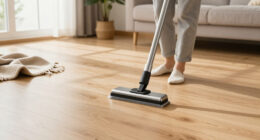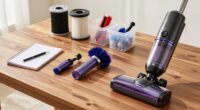
Better vacuuming helps reduce pet dander load by effectively removing hair and dander from your carpets, furniture, and other surfaces. Using a high-quality vacuum with strong suction and a HEPA filter traps small particles that regular vacuums might miss, preventing them from becoming airborne again. Moving slowly and thoroughly over surfaces guarantees deeper cleaning. Keeping your equipment maintained boosts its efficiency. Continue to explore how proper techniques and equipment care can make a real difference in your indoor air.

Get cleaning gear delivered free — and shop member deals
- Fast, free delivery on millions of items
- Access to Prime Big Deal Days deals on October 6–7
- Prime Video, Amazon Music and more included
Key Takeaways
- Better vacuuming removes more pet hair and dander from surfaces, reducing airborne allergen levels.
- Using vacuums with HEPA filters traps small particles, preventing allergen redistribution into indoor air.
- Proper techniques, like slow movements and targeted cleaning, enhance allergen pickup from carpets and furniture.
- Regular maintenance ensures optimal suction and filtration, maintaining effective allergen removal over time.
- Thorough vacuuming decreases pet dander buildup, alleviating allergy symptoms and improving indoor air quality.
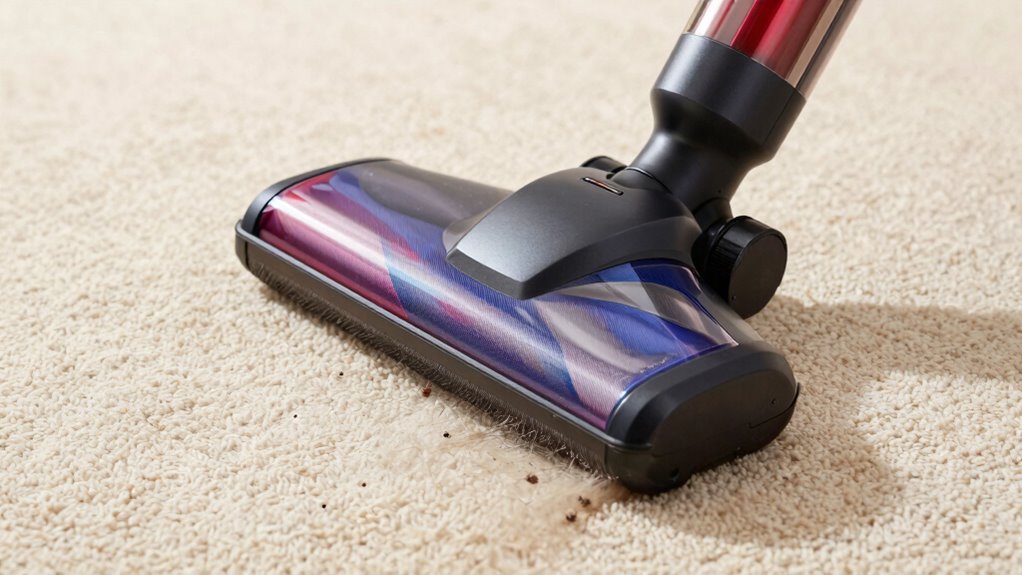
Pet dander can quickly accumulate in your home, triggering allergies and respiratory issues. When you don’t regularly remove these tiny particles, they linger in the air and settle on surfaces, making it harder to breathe comfortably. One of the most effective ways to combat this buildup is through better vacuuming techniques. A high-quality vacuum with strong suction and effective air filtration can make a significant difference in reducing pet dander levels. When you vacuum thoroughly and frequently, you prevent pet hair and dander from becoming embedded deep in carpets and upholstery, which are common reservoirs for these allergens. Using a vacuum equipped with HEPA filters is especially important. These filters trap small particles that standard filters often miss, ensuring that the dander is captured and not simply blown back into the air. When you switch to a vacuum with excellent air filtration, you’re actively removing pet allergies from your environment rather than redistributing them. Consistent vacuuming, particularly in high-traffic areas and places where your pet spends most of their time, helps keep the dander load down, easing allergy symptoms. It’s also helpful to know that air filtration plays a crucial role in maintaining indoor air quality and reducing allergen exposure. It’s also essential to focus on proper vacuuming techniques. Moving the vacuum slowly over carpets and rugs allows it to pick up more dander, while paying attention to corners, baseboards, and under furniture ensures thorough cleaning. Don’t forget to vacuum your furniture, curtains, and bedding regularly, as these surfaces often trap pet hair and dander. Using attachments designed for upholstery makes this process easier and more effective. Remember, the goal isn’t just to tidy up visually but to actively remove as many allergenic particles as possible. In addition to routine vacuuming, maintaining your vacuum cleaner is key. A clogged filter or full dust bin reduces suction power and air filtration efficiency, which means pet dander might escape back into your home’s air. Check and replace filters as recommended, and empty the dust bin frequently to keep your vacuum working at its best. Regular vacuum maintenance also helps ensure optimal performance and allergen removal, contributing to a healthier indoor environment. Incorporating proper vacuuming techniques can further enhance the removal process, making your efforts more effective in reducing allergens. Additionally, understanding the testing accuracy of your vacuum’s filtration system can help you select the most effective equipment for allergen control, especially when considering the spiritual significance of maintaining harmony and balance in your environment.
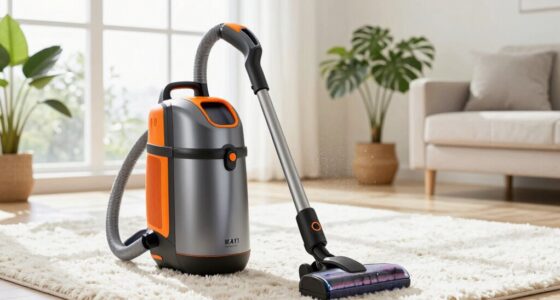
HEPA filter vacuum cleaner for pet dander
As an affiliate, we earn on qualifying purchases.
As an affiliate, we earn on qualifying purchases.
Frequently Asked Questions
How Often Should I Vacuum to Effectively Reduce Pet Dander?
You should vacuum at least twice a week to effectively reduce pet dander. Regular vacuuming removes pet hair and dander, preventing buildup that can trigger allergies. Using a vacuum with a HEPA filter enhances this process by trapping tiny particles. Consistent vacuum frequency keeps pet dander levels low, creating a healthier environment for allergy sufferers. Don’t forget to vacuum furniture, carpets, and pet bedding for the best results.
Are Certain Vacuum Types Better for Pet Allergies?
You’d think a fancy, high-tech vacuum would be perfect for pet allergies, but actually, models with HEPA filters and bagged designs excel at pet hair removal and trapping dander. These vacuums prevent allergens from escaping back into the air. Bagging helps contain pet hair and dander, making cleanup more effective. So, opting for a vacuum with these features is your best bet for creating a healthier, allergy-friendly home.
Can Vacuuming Eliminate All Pet Dander From My Home?
Vacuuming alone can’t eliminate all pet dander from your home, despite common pet dander myths suggesting otherwise. Many vacuuming misconceptions lead you to believe it’s a complete fix, but pet dander particles are often too small to be fully removed. Regular use of a high-efficiency vacuum with a HEPA filter helps considerably reduce dander, but it’s best combined with other measures like frequent cleaning and air filtration for a healthier environment.
What Vacuum Features Help Trap Pet Allergens?
To trap pet allergens effectively, look for vacuums with HEPA filters and sealant technology. HEPA filters capture tiny allergen particles, preventing them from recirculating into your air. Sealant technology creates a tight seal around the filter, ensuring allergens stay trapped inside the vacuum. These features work together to improve air quality, reduce pet dander, and help you maintain a healthier home environment.
Does Vacuuming Improve Air Quality for Pet Allergy Sufferers?
Like a knight defending a castle, vacuuming fights pet allergens, improving your air quality. Regularly cleaning carpets and upholstery removes pet odor and embedded pet dander from carpet fibers, preventing them from lingering in the air. This reduces allergy symptoms, making your environment healthier. By choosing a vacuum with strong suction and HEPA filters, you actively combat airborne pet allergens, creating a fresher, more breathable space for allergy sufferers.
Conclusion
Regular vacuuming can substantially cut down your pet dander load, making your home healthier and more comfortable. Did you know that vacuuming twice a week can reduce airborne pet allergens by up to 50%? That’s a pretty big difference, especially if you or someone in your household suffers from allergies. So, grab your vacuum and make it a habit—you’ll breathe easier and enjoy a cleaner, happier home with your furry friends around.
Fall Picks
fall essentials
As an affiliate, we earn on qualifying purchases.