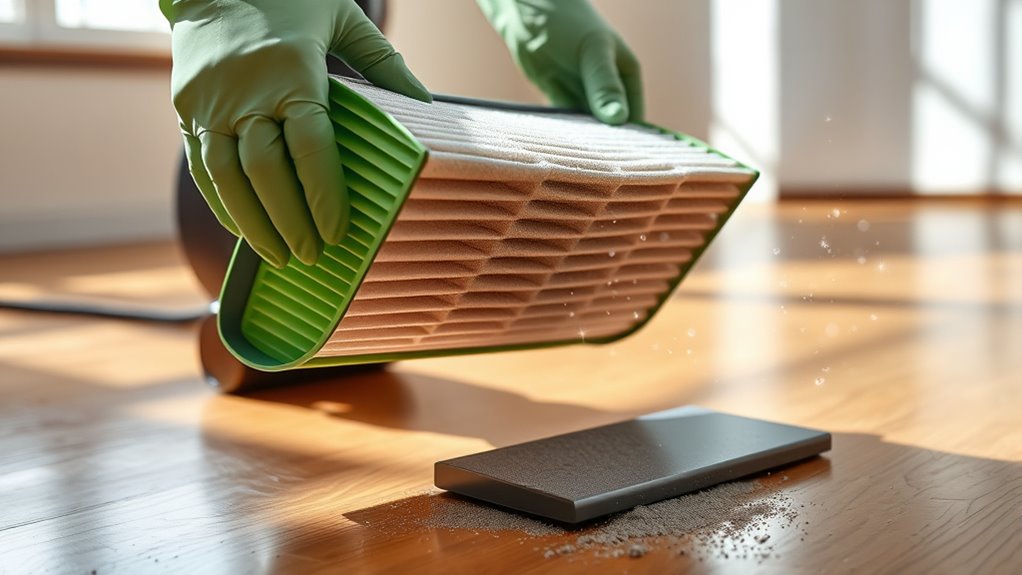

Replacing filters in your HEPA vacuum is vital for keeping your home clean and maintaining ideal vacuum performance. Check your filters every 3 to 6 months, or more often with heavy use. Look for signs like decreased suction or dirty filters to know when it’s time for a change. Make sure you’re using the correct replacement filter and seat it properly. Regular maintenance can prolong your vacuum’s lifespan and enhance cleaning efficiency. Keep going to discover more tips for upkeep!
Key Takeaways
- Check your vacuum’s manual for specific instructions on filter replacement for your HEPA vacuum model.
- Inspect filters every 3 to 6 months, or more frequently with high usage, to maintain optimal performance.
- Look for signs of dirty filters, like decreased suction power and reduced cleaning efficiency, indicating it’s time for a replacement.
- Remove the old filter carefully and ensure the new filter is the correct type and properly seated before use.
- Run your vacuum briefly after replacing the filter to confirm improved performance and airflow.
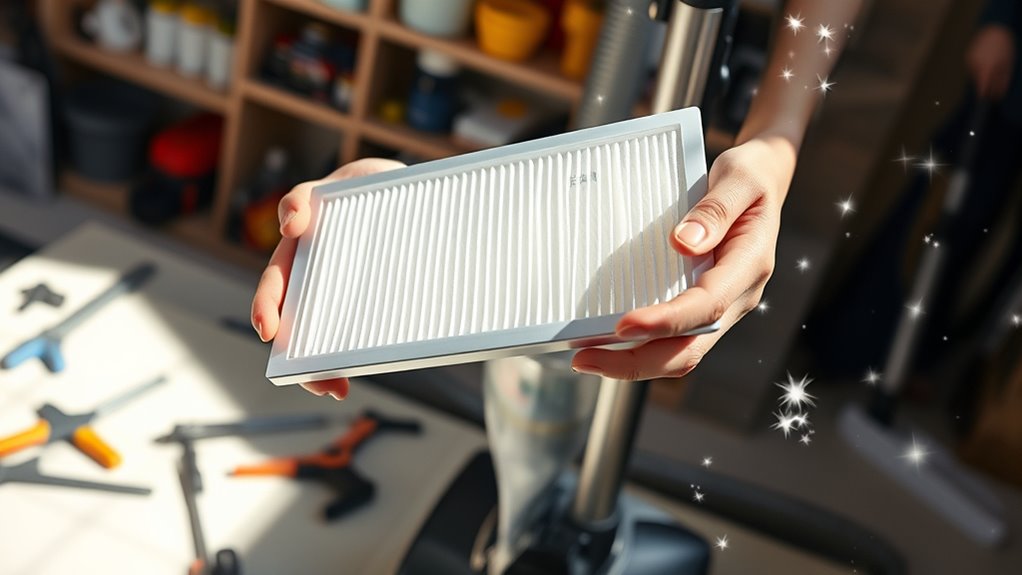
When you rely on a HEPA vacuum for clean air and surfaces, maintaining its filters in top shape is vital. HEPA filters are designed to trap tiny particles and allergens, making sure your home stays fresh and healthy. However, over time, these filters can become clogged with dirt and debris. This is where filter maintenance comes into play. Regularly checking and replacing your HEPA vacuum’s filters can drastically improve its performance and prolong its lifespan.
Maintaining your HEPA vacuum filters is essential for ensuring clean air and surfaces in your home. Regular checks enhance performance and extend lifespan.
First, familiarize yourself with your vacuum’s manual. It usually provides specific guidelines on when and how to replace the filters. Generally, it’s recommended to check your filters every three to six months, depending on usage. If you use your vacuum frequently, you might need to replace the filters more often. Keeping track of your vacuuming habits helps you anticipate when it’s time for a filter change.
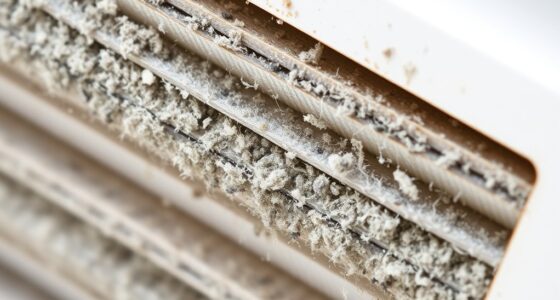
When you notice a decrease in suction power, it’s often a sign that your filters need attention. This is a common point for vacuum troubleshooting. If you’re experiencing issues, don’t just continue using the vacuum and ignore the problem. Instead, stop and inspect the filters. If they’re dirty or discolored, they’re likely due for a replacement. A clean filter allows for ideal airflow, which is essential for effective cleaning.
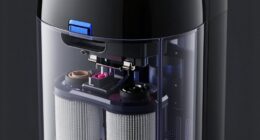
Replacing filters is usually a straightforward process. Most HEPA vacuums have easy-access compartments that make it simple to swap out old filters for new ones. You’ll want to make sure you’re using the correct replacement filter, as using the wrong type can hinder your vacuum’s effectiveness. Once you have the correct filter, remove the old one and insert the new one, ensuring it’s seated properly.
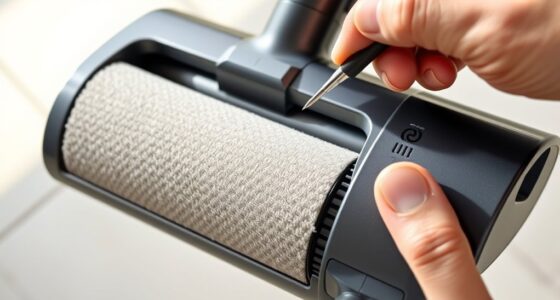
After replacing the filters, it’s a good idea to run your vacuum for a short time to see if the suction improves. If the performance is still lacking, there may be other areas to troubleshoot, such as the hose or brush roll. Keeping these components clean and free from obstructions also contributes to your vacuum’s overall efficiency. Additionally, automation technologies can enhance the efficiency of cleaning routines, making maintenance tasks like filter replacements easier to manage.

6 Pack FSV001 Filter Compatible with Fabuletta FSV101, FSV001, Girnoor G160&G165, Afoddon A300, Lubluelu 202, Oraimo OSV-102/225A, Besswin W26 Cordless Stick Vacuum Cleaners, Nequare Vacuum S181
Compatibility Modles: 6 Pack FSV001 Filters Fit for Fabuletta FSV001 FSV101 Cordless Stick Vacuum Cleaners Series and Girnoor…
As an affiliate, we earn on qualifying purchases.
As an affiliate, we earn on qualifying purchases.
Frequently Asked Questions
How Often Should I Replace My HEPA Vacuum Filter?
You should replace your HEPA vacuum filter every 6 to 12 months, depending on your usage and the filter’s lifespan. If you vacuum frequently or have pets, you might need to replace it more often. Regularly checking the filter can help you determine its condition; if it looks dirty or clogged, it’s time for a replacement. Keeping track of the replacement frequency guarantees your vacuum maintains peak performance and air quality.
Can I Wash My HEPA Filter Instead of Replacing It?
You can’t have your cake and eat it too when it comes to washing your HEPA filter. While some filters are washable, many aren’t, and washing can damage them. Proper filter maintenance is key to keeping your vacuum performance at its best. Check your manufacturer’s guidelines first. If it’s not washable, replacing it regularly is the way to go to guarantee your vacuum keeps sucking up dirt efficiently!
What Are the Signs My HEPA Filter Needs Replacement?
You’ll notice your HEPA filter needs replacement if your air quality decreases or your vacuum loses suction. Watch for increased dust accumulation or musty odors while cleaning, which signal reduced effectiveness. Typically, a filter’s lifespan ranges from 6 to 12 months, depending on usage. If you’re using your vacuum frequently, keep an eye on these signs to guarantee you’re maintaining ideal air quality in your home.
Are There Different Types of HEPA Filters Available?
A variety of HEPA filter materials are available, including fiberglass, pleated paper, and synthetic options. Each type offers different benefits regarding filtration efficiency and durability. Make certain you check the filter compatibility with your vacuum model, as not all filters fit every machine. Selecting the right filter ensures your vacuum performs at its best, capturing allergens and providing cleaner air for your home. Keep your space safe and sound!
How Do I Properly Dispose of Old HEPA Filters?
To properly dispose of old HEPA filters, check if they’re recyclable. Some local recycling programs accept them, reducing their environmental impact. If not, wrap the filter in plastic to contain any allergens and throw it in the trash. Always follow local waste management guidelines for the best disposal practices. You could also explore manufacturer take-back programs, which might offer recycling options and help guarantee responsible disposal of your vacuum filters.

Shark Upright Vacuum, Navigator Lift-Away Deluxe with Large Dust Cup Capacity, HEPA Filter, Swivel Steering, Upholstery Tool & Crevice Tool, Blue, NV360
POWERFUL SUCTION: Deep-clean carpets and tackle bare floors with multi-surface powerful suction.
As an affiliate, we earn on qualifying purchases.
As an affiliate, we earn on qualifying purchases.
Conclusion
Ultimately, keeping your HEPA vacuum’s filters fresh is like giving it a gust of fresh air. By regularly replacing the filters, you guarantee it works at peak performance, capturing dust and allergens that could otherwise linger in your home. So, don’t let those filters collect dust themselves—make it a habit to check and change them as needed. Your cleaner, healthier living space will thank you, and you’ll breathe easier knowing you’re doing your part!
Shark Upright Vacuum, Navigator Lift-Away Deluxe with Large Dust Cup Capacity, HEPA Filter, Swivel Steering, Upholstery Tool & Crevice Tool, Blue, NV360
POWERFUL SUCTION: Deep-clean carpets and tackle bare floors with multi-surface powerful suction.
As an affiliate, we earn on qualifying purchases.
As an affiliate, we earn on qualifying purchases.

keluke Vacuum Filter Replacement Kit Compatible with Dyson V7, V8 Animal, V8 Absolute & SV10 Cordless Vacuum Cleaners, Replaces Part # 965661-01 & 967478-01 (4P)
PRECISE FIT – Specifically crafted compatible with dysonV7 Animal, V7, SV10, and V8 Absolute Vacuums. The post filter…
As an affiliate, we earn on qualifying purchases.
As an affiliate, we earn on qualifying purchases.