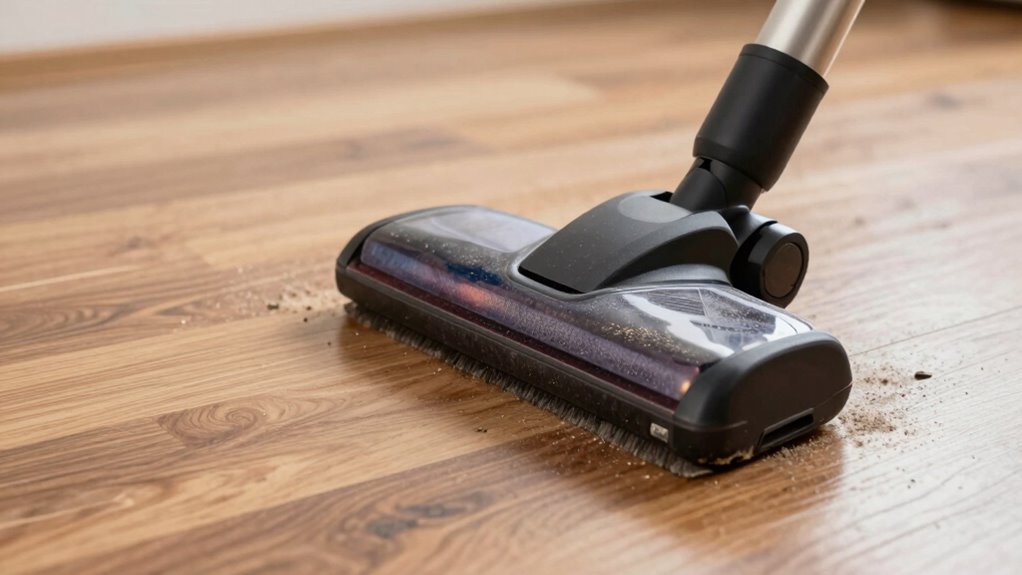

If your vacuum is leaving dust behind on your hardwood floors, it’s likely due to worn or clogged brushes, restricted airflow from dirty filters, or navigation problems that cause missed spots. Regularly inspect and clean the brushes and filters to maintain suction and dust pickup. Poor navigation can also leave areas untouched. Paying attention to these issues can improve your vacuum’s performance, and more tips are available if you want to get the most out of your cleaning device.

Get cleaning gear delivered free with Prime
- Fast, free delivery on millions of items
- Prime Video, Amazon Music and more included
- Member-only deals all year
Key Takeaways
- Worn or clogged brushes reduce dust pickup, especially in corners and along edges.
- Clogged filters limit airflow and suction, allowing dust to escape during cleaning.
- Insufficient suction power fails to lift lightweight dust and fine particles effectively.
- Inaccurate navigation or getting stuck causes missed areas, leaving dust behind.
- Lack of regular maintenance, such as emptying the dustbin and cleaning filters, decreases cleaning efficiency.
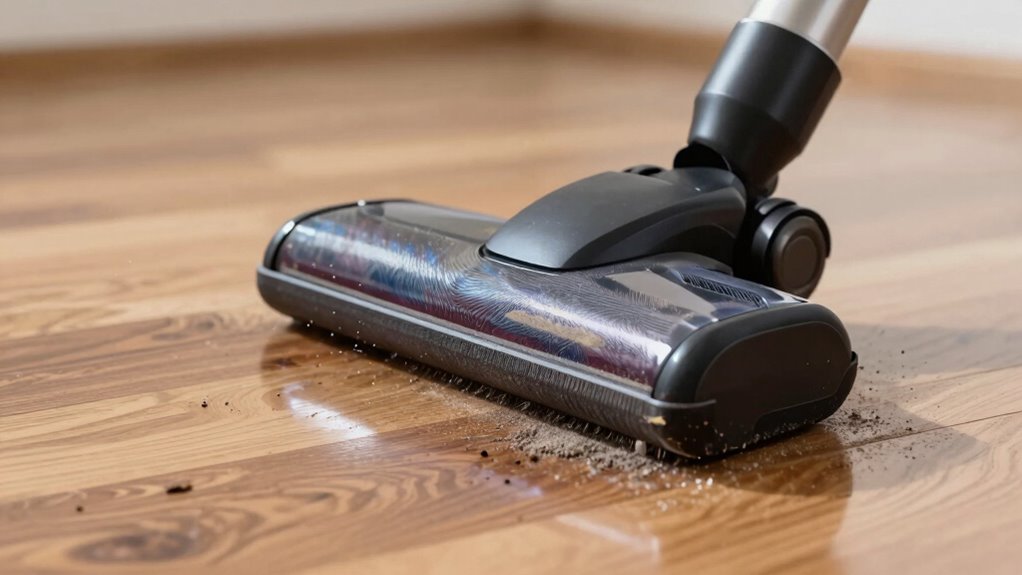
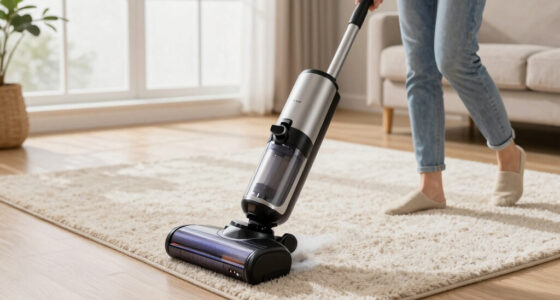
If your vacuum is leaving dust behind on hard floors, it can be frustrating and counterproductive. You expect a clean surface after each cleaning session, but instead, you notice dust spots and debris still clinging to your hardwood floors. One common culprit might be your robot vacuum. While these devices are designed for efficient hardwood floor cleaning, they aren’t always perfect. A robot vacuum’s effectiveness depends on several factors, including brush type, suction power, and how well it navigates your space. If it’s not equipped or maintained properly, it might miss spots or push dust around rather than picking it up.
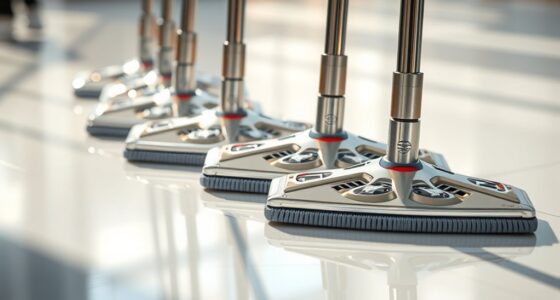
Often, the issue stems from the brushroll or the roller brush. Many robot vacuums rely on brushes to loosen dirt and debris from the surface. If the brush is worn out, clogged with hair, or simply not spinning correctly, it won’t grab dust effectively. This leaves some of the debris untouched, especially in corners or along edges. Additionally, some robot vacuums feature soft or rubberized brushes less effective on hardwood floors, leading to incomplete cleaning. Regularly inspecting and replacing or cleaning the brushes can greatly improve hardwood floor cleaning and reduce dust buildup.
Worn or clogged brushes reduce cleaning effectiveness, especially in corners and along edges. Regular inspection and maintenance are key.
Another factor to think about is the suction strength of your robot vacuum. If the suction isn’t powerful enough, lightweight dust and fine particles can escape before being fully sucked up. In such cases, upgrading to a model with higher suction capacity or ensuring your current vacuum’s filters are not clogged can make a difference. Clogged filters restrict airflow, diminishing suction and leaving dust behind. Regularly cleaning or replacing filters guarantees ideal performance. Additionally, choosing a model with advanced filtration systems can further enhance dust and allergen capture, improving overall cleaning results. Proper filter maintenance**** is essential to maintain optimal suction and filtration efficiency.
Furthermore, the way your vacuum navigates your space impacts its cleaning efficiency. Some robot vacuums rely on sensors or mapping technology to cover every inch of your floor. If it doesn’t scan properly or gets stuck, areas may be missed. Even with advanced navigation**, your vacuum’s path** may not be thorough enough, especially in cluttered or irregularly shaped rooms. Regularly updating your vacuum’s firmware can also improve its navigation capabilities. Manual intervention to reposition your robot or adjusting its settings can help achieve more thorough hardwood floor cleaning.
Finally, the maintenance of the vacuum itself is vital. Emptying the dustbin regularly guarantees that it doesn’t become overloaded and lose suction. Also, check the brushes and filters frequently for dust build-up. When your vacuum is well-maintained, it performs better and leaves fewer dust particles behind on your hard floors. In short, a combination of proper equipment, regular maintenance, and correct usage will help your robot vacuum do a more thorough job of hardwood floor cleaning, leaving your floors cleaner and dust-free. Regularly reviewing the sensor technology and ensuring it functions correctly can further enhance its cleaning coverage.
As an affiliate, we earn on qualifying purchases.
Frequently Asked Questions
Can a Vacuum Be Repaired to Improve Dust Pickup?
Yes, your vacuum can be repaired to improve dust pickup. Regular vacuum maintenance, like replacing filters and cleaning brushes, helps optimize performance. Check that the dust containment system isn’t clogged and that the seals are intact to prevent dust from escaping. If your vacuum still struggles, consider professional repairs or upgrading to a model with better suction power. Proper maintenance guarantees efficient cleaning and keeps dust contained effectively.
Does Vacuum Age Affect Its Cleaning Effectiveness on Hard Floors?
Your vacuum’s age can impact its cleaning effectiveness on hard floors, especially if dust clings to worn brushes or filters. Regular vacuum maintenance helps prevent dust buildup and guarantees efficient pickup. Over time, parts wear out, reducing suction power and making dust cling to surfaces instead of being removed. Keeping your vacuum in good shape and replacing worn components can restore its ability to clean thoroughly, regardless of age.
Are There Specific Vacuums Best for Hard Floor Dust Removal?
Yes, there are specific vacuums best for hard floor dust removal. Look for models offering cordless convenience and a lightweight design, making it easy to maneuver and reach tight corners. Stick vacuums with soft roller heads are excellent, as they gently lift dust without scratching surfaces. These features help you clean efficiently, preventing dust from being left behind, and make the process less tiring and more effective.
How Often Should I Replace Vacuum Filters for Optimal Performance?
Did you know that a vacuum filter’s lifespan typically ranges from 3 to 6 months? For peak performance, you should replace your vacuum filter every 3 to 6 months, depending on usage and manufacturer recommendations. Regular replacement ensures your vacuum maintains strong suction and effectively traps dust. Keep an eye on signs of wear, and don’t delay replacing filters to prevent dust from being recirculated onto your hard floors.
Can Using a Different Attachment Reduce Dust Left Behind?
Using a different attachment can definitely reduce dust left behind, especially if it’s compatible with your vacuum and designed for hard floors. Attachments that are optimized for dust trapping efficiency, like soft brush or wide nozzle tools, help loosen and lift debris more effectively. Make sure the attachment fits well to maintain suction power. Switching to the right attachment can make a noticeable difference in cleaning performance and leave your floors much cleaner.
Conclusion
Don’t let dust defeat your diligent efforts. Double-check your vacuum’s settings, seals, and filters to guarantee a spotless sweep. Regular maintenance minimizes missed messes and maximizes clean floors. Stay steadfast in your cleaning routine, and soon your hard floors will gleam with a pristine polish. With a little care and consistency, you’ll conquer dust’s distraction and enjoy the dazzling difference of a truly tidy home. Keep fighting the fuss—your floors deserve it!
Halloween Picks
halloween
As an affiliate, we earn on qualifying purchases.