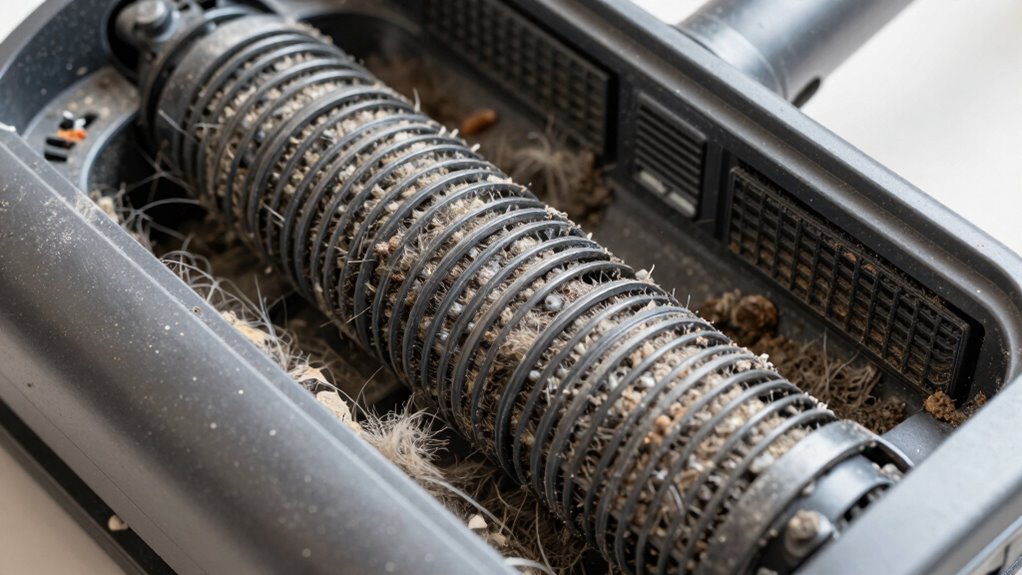

Many vacuum owners overlook cleaning parts like filters, brush rolls, hoses, and airflow pathways, which are essential for maintaining strong suction. Regularly inspecting and clearing clogs, tangles, and debris from these components guarantees your vacuum works efficiently and lasts longer. If buildup is ignored, it can reduce performance and strain the motor. To get the most out of your cleaner, stay on top of these often-forgotten parts—and there’s more you can do to keep it running smoothly.
Key Takeaways
- Clean and dry the dust bin thoroughly to prevent dust buildup and maintain airflow.
- Inspect and replace worn or loose belts to ensure effective brush rotation.
- Clear debris from hoses and filters to sustain proper suction power.
- Remove hair, fibers, or tangled debris from brush rolls regularly.
- Check and clean airflow pathways and vents for clogs or obstructions.
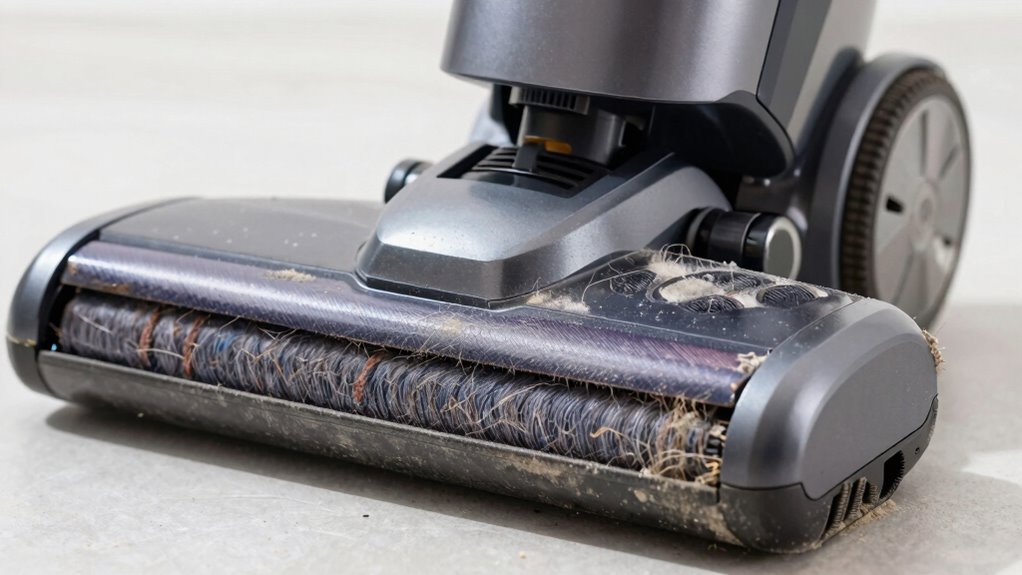
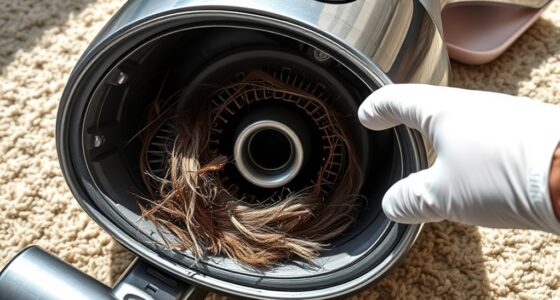
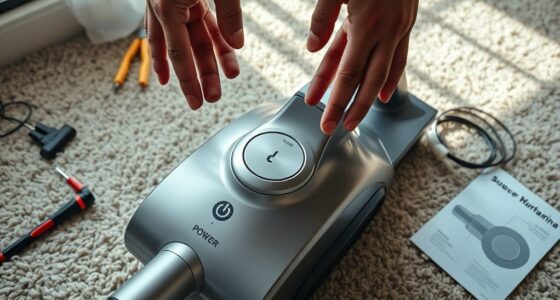
Regularly cleaning certain vacuum parts guarantees your machine runs efficiently and lasts longer. One of the most overlooked areas is dust bin maintenance. Over time, dust and debris can accumulate in the bin, reducing suction power and causing your vacuum to work harder than necessary. To prevent this, make it a habit to empty the dust bin after each use, especially if you vacuum frequently. Take a moment to inspect the bin for any clogs or buildup that might impede airflow. Wash the bin with warm, soapy water periodically to eliminate stubborn dust particles, and confirm it’s completely dry before reinserting it. Proper dust bin maintenance not only improves cleaning performance but also extends the lifespan of your vacuum’s motor. Regularly inspection and maintenance of parts like belts and filters is essential for optimal operation. Next, you should pay close attention to belt inspection techniques. The belt is a crucial component that drives the brush roll and helps pick up dirt effectively. Over time, belts can wear out, become loose, or even break, which hampers your vacuum’s ability to agitate carpets and pick up debris. Regularly inspect the belt for signs of fraying, cracks, or slackness. If you notice any damage or if the belt appears loose, replace it promptly. Many vacuums allow easy access to the belt area—consult your user manual for specific instructions. Maintaining the belt in good condition ensures ideal brush rotation and cleaning efficiency, preventing unnecessary strain on the motor. Additionally, checking airflow pathways and ensuring they are clear can significantly influence overall vacuum performance. An often-overlooked factor is the importance of airflow design in maintaining suction power and efficient cleaning. Ensuring proper air circulation within the vacuum helps maintain optimal suction power. Keep in mind that clogged hoses or filters can also impede airflow, so inspecting these parts regularly is crucial. In addition to dust bin maintenance and belt inspection techniques, don’t forget to check and clean other parts like filters, brush rolls, and hoses. Filters should be cleaned or replaced according to the manufacturer’s recommendations to maintain proper airflow and filtration. Brush rolls can become tangled with hair, string, or fibers, reducing their effectiveness. Regularly removing debris from these parts keeps your vacuum performing at its best. Hoses can also develop blockages; inspecting and clearing them out prevents loss of suction.

2 + 4 Pack Filters for Shark Vacuum Navigator Lift Away Filter Replacement ZU503AMZ NV350 NV351 NV352 NV355 NV356E NV357 NV360 NV370 UV440 UV540, Parts XFF350 XHF350
Perfect Compatible with Shark Navigator Lift Away Models: NV350_26, NV350A_26, NV350E, NV350Q, NV350T, NV350W, NV350W_N, NV350WC, NV351, NV351C,…
As an affiliate, we earn on qualifying purchases.
As an affiliate, we earn on qualifying purchases.
Frequently Asked Questions
How Often Should I Replace Vacuum Belts?
You should replace vacuum belts every 6 to 12 months, depending on usage. Regularly check your vacuum’s belt for signs of wear or fraying, and replace it promptly to maintain peak performance. While doing so, consider vacuum bag maintenance to guarantee maximum suction. Also, inspect the cord for any damage or signs of wear; if needed, replace the cord to avoid safety hazards and keep your vacuum running smoothly.
Can Dirty Vacuum Filters Affect Air Quality?
Imagine a cloud of airborne allergens escaping from a dirty vacuum filter, clouding your home’s air. Yes, dirty filters can greatly impact air quality, trapping fewer allergens and dust. This can compromise your respiratory health, especially if you or family members have allergies or asthma. Regularly cleaning or replacing filters guarantees cleaner air, reducing irritants and helping you breathe easier. Don’t overlook this simple step for healthier indoor air.
What Tools Are Best for Cleaning Vacuum Brushes?
For cleaning vacuum brushes, you should use a sturdy, fine-tooth comb or a small brush with stiff bristles to remove hair and debris effectively. make certain the tools you choose are compatible with your vacuum’s brush type to avoid damage during maintenance. Regular vacuum brush maintenance keeps it functioning efficiently, prolongs its lifespan, and guarantees your vacuum cleans thoroughly. Always check your vacuum’s manual for specific tool compatibility recommendations.
How Do I Know if My Vacuum Motor Needs Servicing?
You’ll know your vacuum motor needs servicing if it’s making strange noises, overheating, or losing suction power. Regular servicing frequency depends on usage, but generally, check the motor every 6 to 12 months. If you notice any unusual sounds or reduced performance, it’s a sign to inspect or replace the vacuum motor. Staying proactive helps extend your vacuum’s lifespan and ensures it runs efficiently.
Are There Specific Cleaning Tips for HEPA Filters?
To keep your HEPA filter effective, regularly check and clean it according to the manufacturer’s instructions. Gently tap or vacuum the filter to remove dust, and replace it when airflow decreases or the filter shows visible dirt. Proper cleaning extends the filter’s lifespan and maintains airflow, ensuring your vacuum performs at its best. Avoid using water unless specified, as moisture can damage the filter and reduce its filtration efficiency.
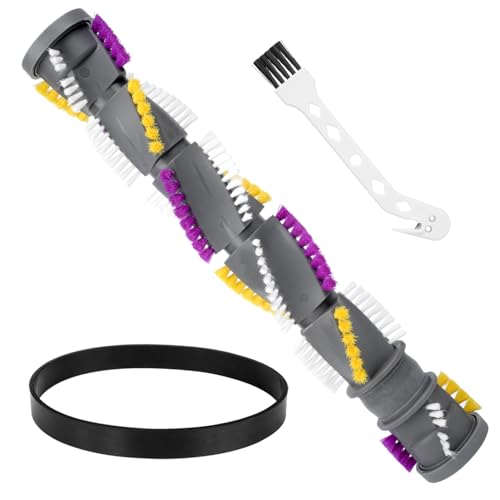
Brush Roll & Belt Kit for Bissell CleanView Swivel Rewind Vacuum Fits 2252 2253 2254 2256 2258 2259 2260 2316 2486 2487 2488 2489 3195 3196 3197 3197A 3198 3198A Replace Parts 1604545 1600159 1611230
Complete Brush Roll & Belt Replacement Kit (#3031120) Restore strong cleaning performance with this complete replacement kit. Includes…
As an affiliate, we earn on qualifying purchases.
As an affiliate, we earn on qualifying purchases.
Conclusion
Think of your vacuum as a living, breathing creature—its health depends on your care. By cleaning those often-overlooked parts monthly, you’re nurturing its importance and ensuring it runs smoothly. Skimping on this maintenance is like ignoring the roots of a tree—you risk weakening the entire structure. Stay diligent, and your vacuum will serve as a loyal, tireless partner in your cleaning routine, consistently keeping your home fresh and inviting.

PetOde 2 Pieces Dryer Vent Cleaner Kit Compatible with Most Vacuum Cleaner, Dryer Lint Brush and Vacuum Hose Attachment with Universal Connector, Quickly Lint Remover
[Stretch Universal Connector] PetOde dryer lint vacuum cleaner attachment is designed with a premium elasticated stretch universal connector…
As an affiliate, we earn on qualifying purchases.
As an affiliate, we earn on qualifying purchases.

Eureka WhirlWind Bagless Canister 2.5L Vacuum Cleaner, Lightweight Vac for Carpets and Hard Floors, NEN110A, Blue
Innovative Multi-Surface Vacuum: Deep clean with EUREKA whirlwind canister vacuum. Which features an integrated airflow control on the…
As an affiliate, we earn on qualifying purchases.
As an affiliate, we earn on qualifying purchases.