To vacuum upholstery correctly, identify your fabric type first. Use the appropriate attachment—such as a brush or upholstery nozzle—and adjust suction based on the fabric’s sturdiness. Vacuum in gentle, overlapping strokes, always following the nap for fabrics like velvet, and work systematically to cover all areas. Regular maintenance of your vacuum guarantees it works efficiently, prolonging its lifespan. Keep environmental factors in mind for the best results—continue to explore for more fabric-specific tips.

Get cleaning gear delivered free with Prime
- Fast, free delivery on millions of items
- Prime Video, Amazon Music and more included
- Member-only deals all year
Key Takeaways
- Identify fabric type and adjust vacuum settings and attachments accordingly to prevent damage.
- Use gentle, overlapping strokes, vacuuming in the direction of nap for velvet and delicate fabrics.
- Employ appropriate nozzles like upholstery or brush attachments for thorough cleaning.
- Regularly clean filters, empty bins, and check for tangled hair to maintain optimal vacuum performance.
- Vacuum in calm environmental conditions, avoiding breezy times near open windows for effective cleaning.
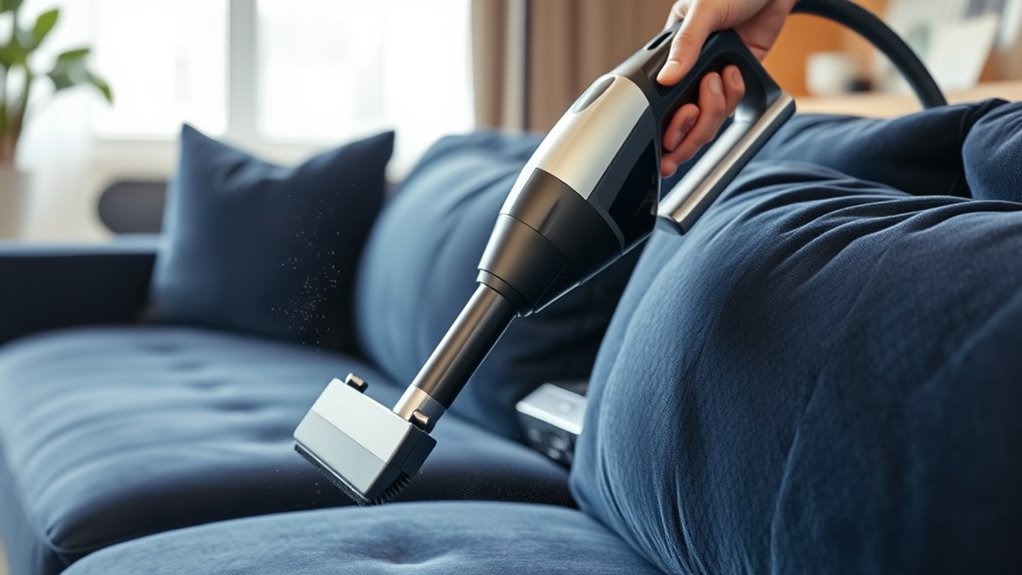
Vacuuming upholstery is an essential step in maintaining a clean and fresh-looking home. It not only removes surface dirt but also helps preserve the fabric’s appearance and longevity. To get the best results, you need to pay attention to fabric care and vacuum maintenance. Different fabrics require different approaches, so understanding how to vacuum each type properly will ensure your furniture stays in top condition.
Vacuuming upholstery preserves fabric appearance and longevity with proper care tailored to each material.
When vacuuming upholstery, start by inspecting the fabric. Light, delicate materials like silk or velvet are prone to damage if handled roughly. For these, use a soft brush attachment or a vacuum with a gentle suction setting. This prevents fibers from pulling or tearing. For sturdier fabrics like microfiber or polyester, you can increase the suction slightly, but always avoid pressing too hard. Using the right attachment is crucial—brush or upholstery nozzles are designed to lift dirt without harming the fabric. Regularly check and clean your vacuum’s filters and attachments as part of vacuum maintenance. Dirty filters reduce suction power and can spread dust back onto your furniture, defeating the purpose of vacuuming. Additionally, understanding the wave and wind effects on the environment can help you choose the best time and conditions for cleaning, especially if your furniture is near open windows or in a breezy area.
When vacuuming, work in slow, overlapping strokes to ensure you cover all areas thoroughly. Pay special attention to seams, crevices, and under cushions where dust and debris tend to settle. For fabrics with nap, like velvet, always vacuum in the direction of the pile to avoid crushing or damaging the fibers. For smooth fabrics, you can go against the grain if needed, but be gentle to prevent pulling. Remember, consistency is key—vacuum your upholstery regularly, ideally once a week, to prevent dirt buildup that can be difficult to remove later.
It’s also wise to keep your vacuum in good shape. Regularly empty the bin or replace the bag, clean the filters, and check the brush rolls for tangled hair or threads. Proper vacuum maintenance ensures optimal suction and extends your vacuum’s lifespan. This not only makes your upholstery cleaning more effective but also saves you money in the long run. When you follow these fabric-specific tips and keep your vacuum well-maintained, you’re investing in the health of your furniture and the air quality of your home.
Ultimately, taking the time to vacuum upholstery correctly means your furniture will look better longer and stay fresher. By understanding the nuances of fabric care and practicing good vacuum maintenance, you turn a simple chore into a routine that keeps your home inviting and clean.
As an affiliate, we earn on qualifying purchases.
Frequently Asked Questions
How Often Should I Vacuum Different Types of Upholstery?
You should vacuum different types of upholstery regularly to maintain cleanliness and extend their lifespan. For everyday use, vacuum at least once a week, focusing on upholstery material that traps dust and dirt. Higher-maintenance fabrics, like velvet or silk, may need more frequent vacuum maintenance—twice a week. Always adjust your vacuum settings and attachments based on the upholstery material to avoid damage while keeping it spotless.
Can I Use a Regular Vacuum on Delicate Fabrics?
You can use a regular vacuum on delicate fabrics, but you need to be careful with vacuum brush compatibility. Opt for a vacuum with gentle suction and a brush attachment designed for delicate surfaces to avoid damage. Always test a small, hidden area first. Cleaning delicate fabrics requires a soft touch, so adjust your vacuum settings accordingly and use the right attachments to keep your upholstery safe and clean.
Should I Vacuum Cushions Separately From the Sofa?
You should vacuum cushions separately from your sofa to maintain proper cushion maintenance and keep your sofa cleaning routines effective. Removing cushions allows you to thoroughly clean both the cushions and the sofa, preventing dust buildup and allergens. Plus, vacuuming cushions individually helps reach hidden dirt and debris, extending the life of your furniture. Make it a habit to vacuum cushions regularly for a cleaner, fresher look and improved overall sofa hygiene.
What Accessories Are Best for Upholstery Vacuuming?
Imagine uncovering the perfect tools to transform your upholstery cleaning routine. The secret lies in selecting the right vacuum cleaner attachments and upholstery cleaning tools. A crevice tool reaches tight spots, while a soft brush gently lifts dirt without damaging delicate fabrics. These accessories guarantee thorough cleaning, revealing fresh, vibrant furniture. Don’t overlook the power of specialized upholstery attachments—they’re your best allies in maintaining a spotless, inviting home.
How Do I Remove Pet Hair Effectively From Upholstery?
To remove pet hair effectively from upholstery, you should use a vacuum with strong suction and a brush attachment designed for pet hair removal. Start by gently brushing the fabric to loosen hair, then vacuum in slow, overlapping strokes. For stubborn hair, dampen a rubber glove or use a lint roller before vacuuming again. These upholstery cleaning tips help make certain your furniture stays hair-free and fresh.
Conclusion
Now that you know how to vacuum your upholstery properly, you can keep your furniture looking fresh and new longer. Remember, regular cleaning can extend the life of your fabrics and improve your home’s air quality. Did you know that vacuuming can remove up to 80% of dust and allergens from your furniture? So, make it a habit to vacuum your upholstery weekly—your furniture and your lungs will thank you for it!
Halloween Picks
halloween
As an affiliate, we earn on qualifying purchases.