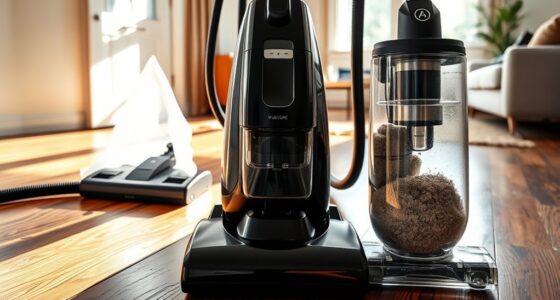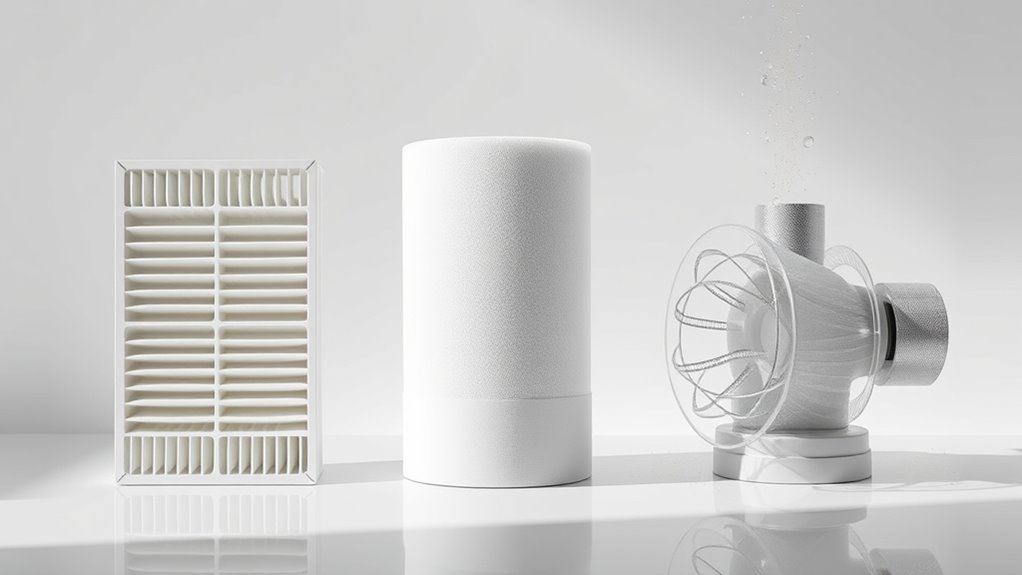

When comparing filtration systems like HEPA, foam, and cyclonic, consider your needs. HEPA filters remove 99.97% of small particles but can restrict airflow and need frequent replacement. Foam filters are washable and reusable, allowing better airflow but trap larger debris. Cyclonic systems separate dust efficiently, require less maintenance, and maintain airflow. Each system has its strengths and weaknesses, so you’ll want to weigh your options carefully. Discover more about each type to make the best choice for your space.

Get cleaning gear delivered free — and shop member deals
- Fast, free delivery on millions of items
- Access to Prime Big Deal Days deals on October 6–7
- Prime Video, Amazon Music and more included
Key Takeaways
- HEPA filters capture 99.97% of particles as small as 0.3 microns, making them ideal for allergy and asthma sufferers.
- Foam filters are reusable and washable, offering cost savings but are less effective at trapping smaller particles.
- Cyclonic filtration systems use centrifugal force for efficient dust separation while maintaining good airflow and requiring less maintenance.
- HEPA filters require frequent replacement every 6-12 months, while foam and cyclonic systems need less frequent upkeep.
- Choosing the right filtration system depends on the balance between impurity removal efficiency and airflow needs.
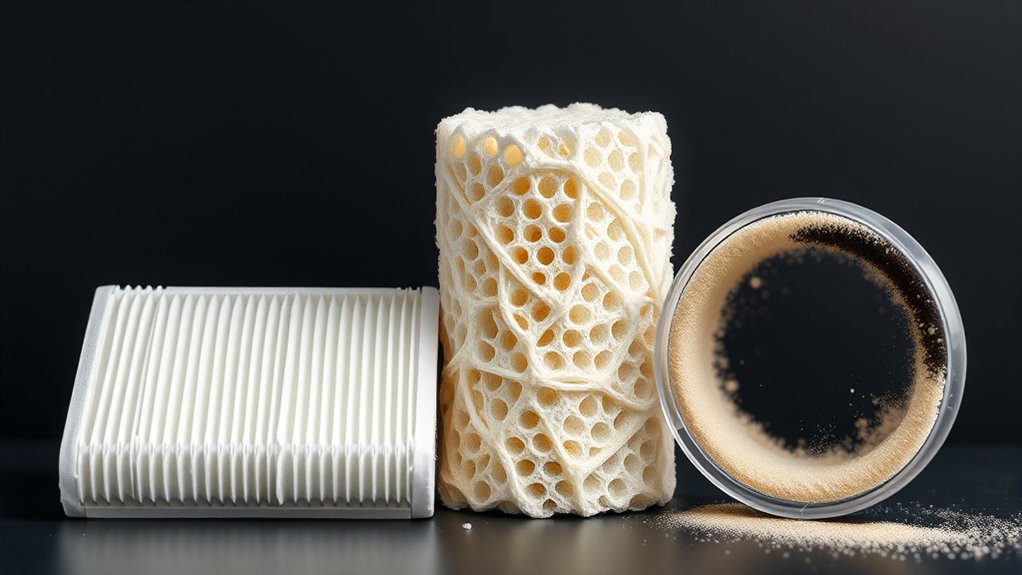
Have you ever wondered how different filtration systems can impact your indoor air quality? When you think about the air you breathe inside your home, it’s essential to consider the type of filtration system you’re using. The right filter can markedly improve airflow efficiency and reduce allergens, bacteria, and dust particles. Let’s explore the three popular filtration systems: HEPA, foam, and cyclonic, and how they stack up against each other.
First up, HEPA filters are often regarded as the gold standard for air filtration. They can capture up to 99.97% of particles as small as 0.3 microns, making them incredibly effective for those who suffer from allergies or asthma. However, while they excel in filtering out impurities, their design can sometimes restrict airflow efficiency. This means that you might need to replace them regularly to maintain peak performance. Depending on your environment, HEPA filters have specific maintenance requirements; you’ll typically need to change them every six to twelve months, depending on usage.
On the other hand, foam filters offer a different set of benefits. They’re reusable and can be washed, which means you won’t have to spend money on replacements as often. This can be a great way to save on maintenance costs. However, their ability to trap smaller particles isn’t as strong as HEPA filters. Foam filters generally capture larger dust and debris, but they may let smaller allergens slip through, which can be a concern if you’re particularly sensitive to air quality. When it comes to airflow efficiency, foam filters tend to perform better than HEPA filters. They allow for increased airflow, making them suitable for environments where high efficiency is vital.
Lastly, cyclonic filtration systems utilize centrifugal force to separate dust and debris from the air. These systems can be remarkably efficient and often require less maintenance than HEPA filters. Because they don’t rely on a physical barrier to trap particles, they maintain good airflow efficiency over time. However, you’ll still need to periodically clean the container or bin that collects the debris, as neglecting this can impact performance. In addition, understanding the differences between various filtration systems can help you choose the best one for your specific needs.
HEPA air purifier replacement filters
As an affiliate, we earn on qualifying purchases.
As an affiliate, we earn on qualifying purchases.
Frequently Asked Questions
How Often Should I Replace My Filtration System?
You should replace your filtration system every 3 to 6 months to maintain ideal air quality. Factors like usage, environment, and filter lifespan can affect this timing. If you notice your air quality declining or your filter looking dirty, it’s time for a change. Regular replacements help guarantee your system runs efficiently and keeps your space free from allergens and pollutants. Don’t wait too long—your health depends on it!
Are There Any Health Risks Associated With Filtration Systems?
Yes, there can be health risks associated with filtration systems if they’re not maintained properly. For instance, a study found that 30% of homes have indoor air quality issues due to malfunctioning filters. If your system isn’t effective, it might circulate allergens and pollutants, worsening respiratory problems. Regularly replacing filters guarantees peak filtration efficiency, keeping your air quality high and minimizing health risks. So, keep an eye on your system’s performance!
Can Filtration Systems Reduce Allergens in My Home?
Yes, filtration systems can markedly reduce allergens in your home. By using effective allergen removal methods, they trap dust, pollen, and pet dander, improving your air quality. As you breathe cleaner air, you might notice fewer allergy symptoms and a more comfortable living environment. Regular maintenance and choosing the right type of filter tailored to your needs will enhance their effectiveness, ensuring your home stays a safe haven for you and your family.
What Maintenance Do Filtration Systems Require?
Filtration systems require regular maintenance to function effectively. You’ll need to check the filter lifespan, as different types have varying durations before replacement. For example, HEPA filters often last up to a year, while foam filters may need more frequent changes. Maintenance costs can add up, so budgeting for replacements is wise. Don’t forget to clean or replace pre-filters as needed to keep your system running smoothly and to reduce allergens efficiently.
How Do I Know Which Filtration System Is Best for Me?
To find the best filtration system for you, consider your specific needs regarding air quality and energy efficiency. If allergies are a concern, a HEPA filter might be ideal. For general dust and particles, foam could suffice, while cyclonic systems are great for maintaining airflow with less clogging. Assess your space, usage patterns, and budget to choose a system that’ll keep your environment clean without markedly increasing your energy bills.
Conclusion
In conclusion, choosing the right filtration system depends on your needs and environment. For instance, if you’re a pet owner, a HEPA filter can effectively trap pet dander and allergens, keeping your home cleaner and healthier. On the other hand, if you’re looking for a cost-effective option for light dust, foam filters may suffice. By understanding the strengths of each system, you can make an informed decision that suits your lifestyle best.
Fall Picks
fall essentials
As an affiliate, we earn on qualifying purchases.